
News Analysis
The Conservatives had a short window this spring to re-establish their ground game in the House of Commons, but with the Liberals governing more from the right compared to before, the lack of a major issue to run with, and their leader’s absence in the House, it has arguably not been an easy task.
In 2024, the Conservatives had clear messaging about what they would do for Canadians once they took power: “Axe the tax. Build the homes. Fix the budget. Stop the crime.” But the resignation of Prime Minister Justin Trudeau, along with the tariffs and talk of having Canada become the 51st U.S. state from newly re-elected President Donald Trump, changed the calculus.
The Liberals chose a new leader who secured his party a return to power in the April election with a promise of a strong response to the U.S. administration and focus on the economy. Liberal Leader and new Prime Minister Mark Carney in many cases enacted policies that the Conservatives agree with and even claim have been “stolen” from their platform.
The Tories, under Pierre Poilievre, have yet to introduce new messaging like their earlier “axe the tax” slogan, despite being prolific with issues to focus on from when Poilievre became leader in 2022. He frequently stressed the need to remove the “gate-keepers” before shifting his attention to the carbon tax, which Carney later nullified by eliminating the consumer portion of the levy.
In the months since their electoral defeat, the Conservatives have attempted to walk a fine line between supporting the Liberal government on legislation similar to promises they themselves made during the election, while also criticizing the government on a case-by-case basis, such as the electric vehicle (EV) mandates and immigration policies.
To be sure, the Tories have remained staunchly opposed to the industrial portion of the carbon tax, which Carney is keeping, as well as a slew of other federal policies that impact the oil and gas sector, such as the Impact Assessment Act. But none have led to slogans or major points of focus for the caucus.
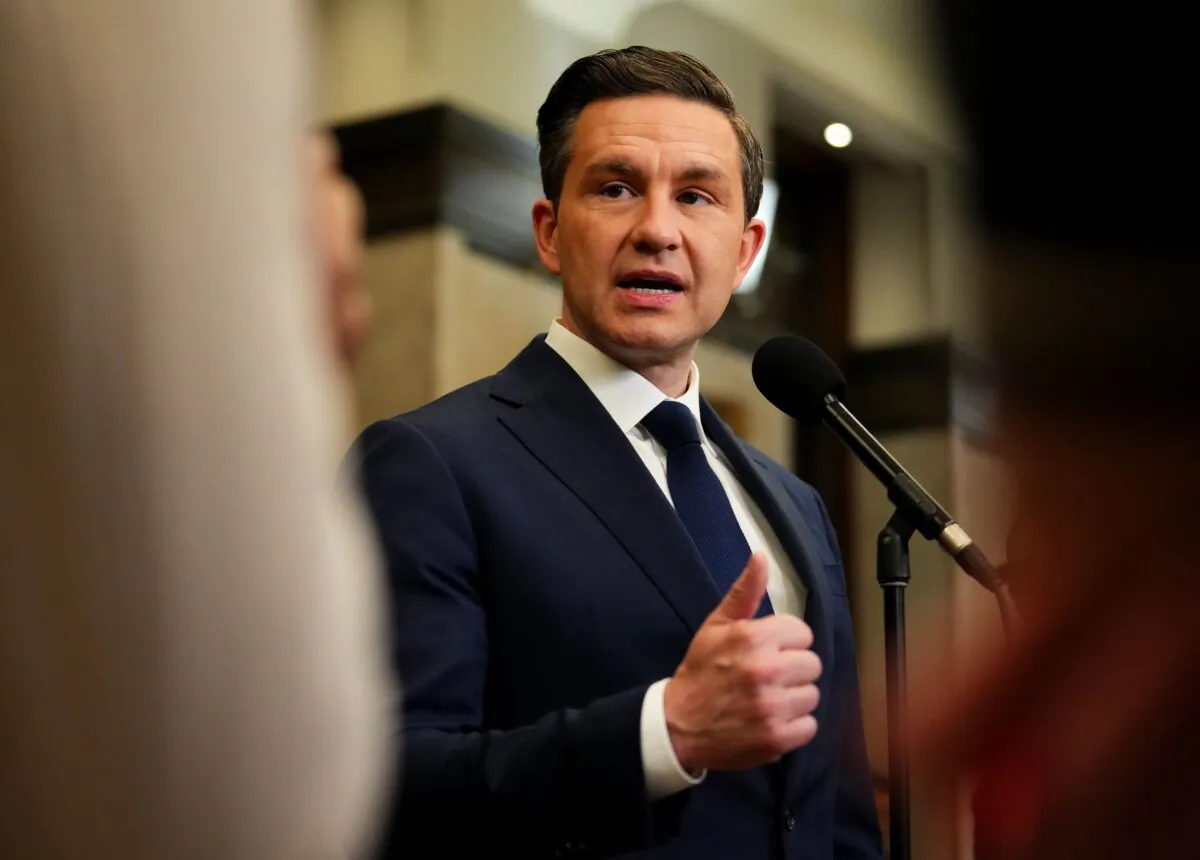
With Poilievre hoping to return to the House of Commons in September following a byelection in August, the Conservatives’ messaging could improve by not having the attention split between Poilievre and Tory House Leader Andrew Scheer. Poilievre will run in the byelection set to be held on Aug. 18 in the Alberta riding of Battle River-Crowfoot after MP Damien Kurek stepped down.
Peter Graefe, an associate professor of political science at McMaster University, said that with the Conservatives facing a “rare situation” of having a leader both inside and outside of the House, the party perhaps felt it did not have strong enough messaging to vote against the Liberals’ major projects bill. He said this may alienate some Conservative voters who were still “licking their wounds” after the election loss.
However, Graefe said the Conservatives’ focus on immigration and the EV mandate are a way to “rally your base and perhaps grow it,” by focusing on issues that are both cultural and economic in nature.
Nelson Wiseman, a professor emeritus of political science at the University of Toronto, said he doesn’t believe there is “any problem” with how the Conservatives have been operating since the election, as they have fallen back into their role of holding the government to account.
“What they need to do is to communicate a strong message to the public that they are the official Opposition, and they’re ready to take the reins of government,” Wiseman said in an interview. “That job as official Opposition is to challenge the government on all kinds of issues now.”
Wiseman added that “what’s going on now is normal after an election for an opposition party.”
Conservative Messaging
Since the House of Commons returned, the Conservatives have positioned themselves to both support the Liberal government and criticize it.
Poilievre said on May 13 that the party would hold the government to account but would not “reflexively oppose everything the government does.” He also encouraged Carney to “steal my ideas” regarding getting rid of the federal carbon tax completely, supporting resource development, and stopping crime.
The Conservatives have since voted in favour of the Liberals’ Bill C-5, the One Canadian Economy Act, which aims to remove federal barriers to interprovincial trade while also supporting the development of major projects that align with the national interest.
However, the Conservatives were critical of the legislation for being too broad as to what exactly constitutes a project being in the “national interest.” Some Conservative caucus members also criticized the government’s accelerated passage of the bill. In addition, the Tories submitted amendments to the bill in committee, saying the amendments address loopholes that may have allowed the government to bypass ethics laws and lobbying rules.
But, overall, the Conservatives supported the bill, saying it’s a small step toward many other changes the country still needs, including the removal of the Impact Assessment Act.
While the Conservatives had made “axing” the federal carbon tax a key promise of their election campaign, Carney undercut their position by ending the consumer portion of the tax shortly after becoming Liberal leader. Although the Tories have suggested that the Liberals would eventually bring back the tax, and have focused on the industrial portion of the tax that remained, they have not made the industrial carbon tax a prominent focal point.
Instead, the Conservatives have shifted their criticism of the Liberals to focus on the EV mandate and immigration policies. Ottawa currently has in place a plan to phase out the purchase of new gas-powered vehicles by 2035, and while its immigration targets were lowered in 2024, they will still result in 395,000 permanent resident admissions in 2025.
Poilievre recently called for imposing “severe limits” on Canada’s population growth. The Conservatives also want the EV mandate scrapped, and to that end introduced a non-binding motion in Parliament in June seeking its removal; however, it was not successful.
Graefe said the Tories are focusing on these issues as a way to defend against the Liberals’ attempts to poach parts of the Conservative electorate. He said the focus on the EV mandate will please “core” Tory supporters with the narrative that the Liberals are out of touch with the needs of Canadians.
Regarding immigration, Graefe said the party is taking a larger risk. He noted that while Canadians have become more opposed to large immigration levels putting strains on sectors such as housing and health-care in recent years, the Liberals have already made moves to reduce immigration.
Poilievre’s Position as Leader
Shortly after the April 28 election, numerous Conservative MPs came out in support of Poilievre’s leadership and indicated they supported him staying on as leader. However, a majority of Tory MPs also recently voted to invoke the Reform Act, which allows for an anonymous vote to review party leadership at any time.
Wiseman said that although “the wounds are deeper” for the Tories this time around compared to previous election losses, given that they were projected to win a majority government just months before the election, the blame should not be laid solely on Poilievre for the election loss. He said Trump’s tariffs and 51st state comments, coupled with his positive relationship with Carney compared with Justin Trudeau, boosted the Liberals’ popularity.
Wiseman believes the Tories would be wise to keep Poilievre as party leader and not vote to replace him using the Reform Act, given how his leadership improved the party’s standing in Parliament. Under Poilievre, the Conservatives added 24 extra seats, while former Leader Erin O’Toole did not lead the party to win any extra seats back in 2021.
The Tories removed O’Toole via the Reform Act in 2022, something Wiseman says happened because many in the caucus felt he had not been forthcoming with his policies because he switched his positions on carbon taxes, gun control, and abortion during the election campaign. Poilievre, on the other hand, was consistent on all of his positions but perhaps waited too long to pivot away from domestic economic issues and toward the trade war with the United States.
“This time, it’s not that Poilievre switched his position—although some argued he needed to pivot early on—but I thought he did pivot, and it didn’t matter,” Wiseman said.
 Friends Read Free
Copy
Facebook
Tweet
Friends Read Free
Copy
Facebook
Tweet