
The Alberta Next Panel has released its final report, outlining seven recommendations to “enhance” the province’s sovereignty within Canada.
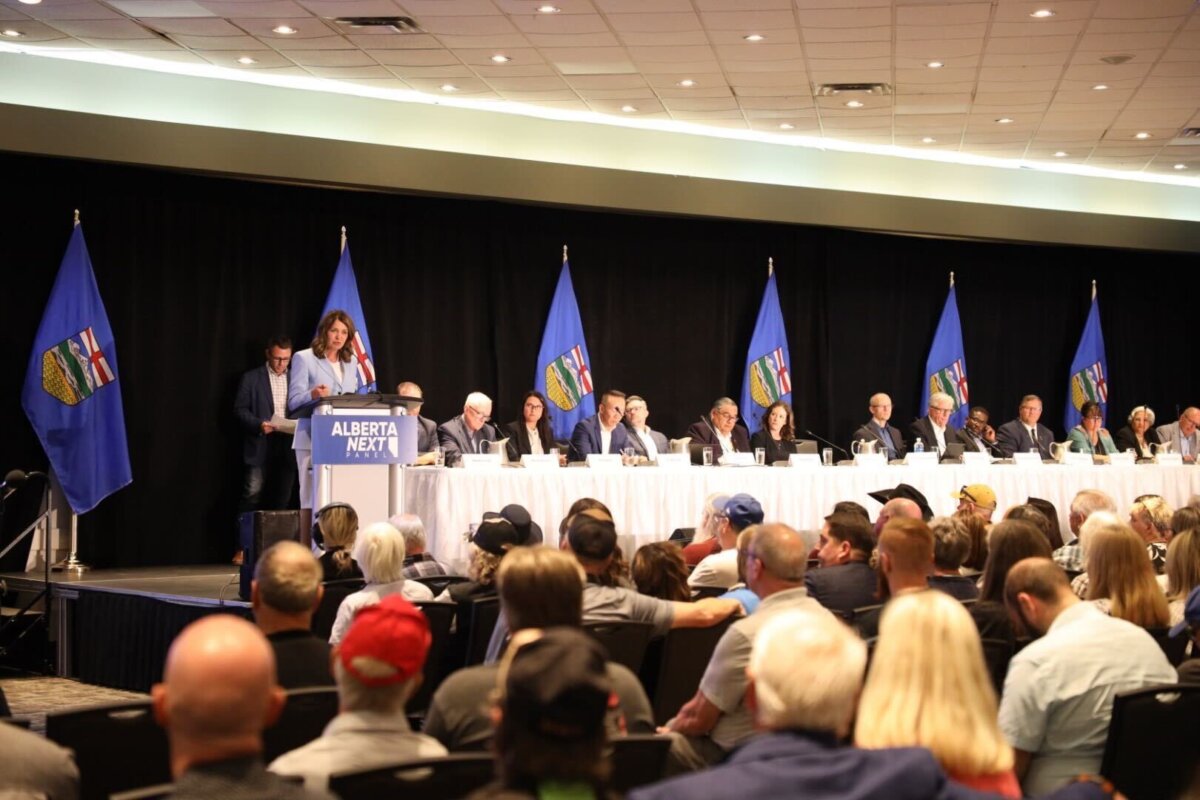
The province announced the report’s release on Dec. 19, saying the government will decide in the coming months which of the report’s recommendations it intends to adopt. The panel, appointed by the province, was tasked with gathering public input on ways to “assert” provincial sovereignty and recommend potential referendum questions for a province-wide vote set for 2026.
Between July and September, the panel held town halls in 10 communities across Alberta and collected thousands of responses through online surveys. It was one of the measures Premier Danielle Smith announced after the federal Liberals’ re-election earlier this year to “protect” the province against current or future “hostile policies” from Ottawa.
“Through Alberta Next, Albertans were clear that for too long, decisions made outside this province have limited Alberta’s ability to grow our economy and chart our own course,” Smith said in a Dec. 19 press release. “This engagement was about confronting those realities and identifying concrete options to take control of our future.”
Recommendations
The panel’s report offers seven recommendations, including holding a referendum on Alberta exercising greater control over immigration to ensure “more sustainable population growth, attracting primarily economic migrants, and limiting eligibility for social services” to citizens and those with valid immigration status. The province says federal immigration policy in recent years has led to levels that have strained social programs.
The report also suggests putting one or more referendum questions on working with other provinces and Ottawa to amend the Canadian Constitution. Proposed constitutional changes would cover granting provinces the power to appoint their own judges, opting out of federal programs without losing funding, and potentially abolishing “the unelected federal Senate.”
The panel also recommends holding a referendum on exiting the Canada Pension Plan and establishing an Alberta Pension Plan. It notes that such a question should only be presented after the province provides a clear proposal outlining the plan’s benefits, how it would be managed, contribution rates, and how it would be implemented.
The provincial government says Albertans pay more than their fair share into the Canadian Pension Plan, contributing roughly $3 billion more each year than Alberta seniors receive in benefits.
The panel recommends against a near-term referendum on Alberta collecting its own personal income taxes, an initiative the province says could allow “more effective and competitive tax policy” and reduce the impact of federal changes to tax policy. Instead, the panel advises conducting a detailed cost-benefit analysis and developing an implementation plan for Albertans to consider in the future.
Similarly, the panel recommends against holding a referendum on equalization and federal transfers, and instead advises the province to “take a leading role” in working with other provinces and Ottawa to reform equalization and fiscal federalism. The goal of the equalization program is to address fiscal disparities among provinces, but Smith argues it has resulted in Alberta “subsidizing” larger economies like Ontario and Quebec.
The panel says the province should take the lead in creating, with other provinces, what it calls a “Canadian Fiscal Commission,” which would propose updates to equalization every five years and track federal redistribution between provinces annually to ensure “improve[d] fairness and transparency.”
Regarding a provincial police force, the panel says Alberta should continue work to establish an Alberta Police Service (APS) to provide policing in rural areas and smaller communities. The province says its current policing contract with the RCMP results in slow response times due to staff shortages and issues with resource allocation.
Under this initiative, community policing services would transition from the RCMP to the APS and municipal police forces. The panel doesn’t recommend a referendum on this matter, as more than 80 percent of Albertans are already served by local municipal police services.
The panel also supports creating institutions to promote “trusted, responsible self-government” in the province.
Alberta NDP Leader Naheed Nenshi has criticized the panel initiative, saying it contributes to separatist sentiment in the province and diverts resources from other priorities.
The premier has said she does not support separation and has hope in a “sovereign Alberta within a united Canada.”
 Friends Read Free
Copy
Facebook
Tweet
Friends Read Free
Copy
Facebook
Tweet