
The Iran-backed Houthi terrorist group has carried out multiple attacks on airports in Saudi Arabia over the past week as the conflict in Yemen continues to widen in the Middle East.
The recent airport attacks carried out by the Houthis come after weeks of increased fighting between the terrorist group and the Saudi-backed Yemeni government following a 2022 U.N.-backed ceasefire.
The Houthis recently made major territorial gains in Yemen, giving the terrorist group significant control over the Red Sea and the Bab al-Mandeb Strait, a key waterway used for international trade. However, Saudi Arabia and Saudi-backed Yemeni government forces have responded by launching operations against the Houthis to reclaim the territory.
Here are four things to know about the attacks on Saudi airports and the widening conflict in Yemen.
Houthi Attacks on Saudi Airports
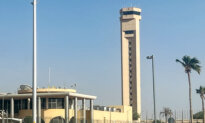
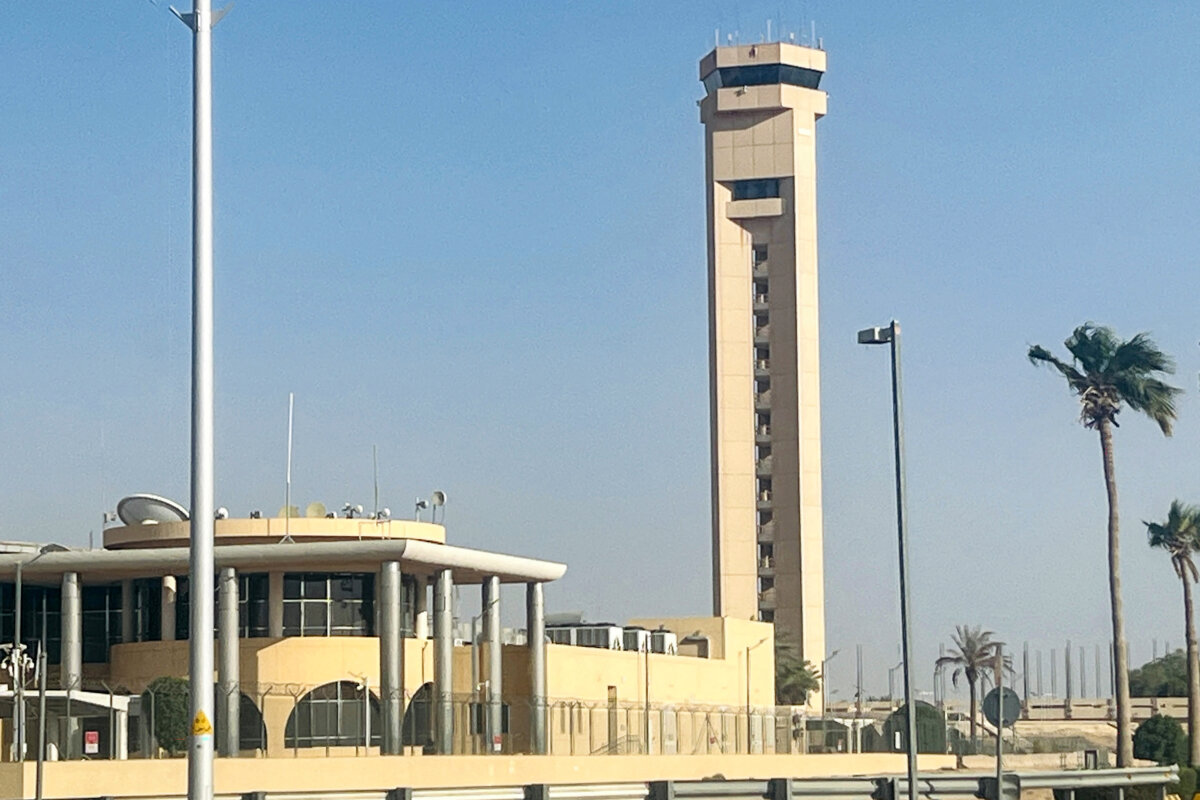
Saturday’s Houthi attack targeting King Khalid International Airport in the Saudi capital of Riyadh killed at least 13 people and injured at least 309 others, with some in critical condition.
Those killed in Saturday’s attack included four Saudi citizens, two Bangladeshi nationals, an Egyptian, an Indian national, a Jordanian, a Palestinian, a Syrian, a Sudanese, and an American.
The attack on the airport in Riyadh involved a barrage of missiles and drones that were not intercepted by Saudi air defenses. Saudi Arabia has launched an investigation to determine how they were able to penetrate its defenses.
The Houthis have threatened additional violence against Saudi Arabia. In a statement carried by Al Masirah television, the Houthi-run foreign ministry in Yemen said, “Unless the Saudi enemy stops its aggression and interference in Yemen, worse is yet to come.”
On Sunday, the Houthis carried out another attack on King Khalid International Airport, which left one dead and 11 others injured. In addition, the Saudi Arabian General Authority of Civil Aviation reported another attack at the King Fahd International Airport in Dammam.
The Houthis also claimed responsibility for an Oct. 7 attack on King Khalid International Airport, as well as attacks on two Saudi Aramco oil facilities.
The terrorist group said the attacks against Saudi Arabia were carried out in response to its support for the Yemeni government forces.
Saudi Response to Houthi Attacks
Saudi Arabia has threatened a “serious” response to the series of airport attacks launched by the Houthis.
“The events of recent weeks are serious,” Saudi Energy Minister Prince Abdul Aziz bin Salman said at the World Petroleum Energy Congress in Riyadh on Monday. “Our response must be equally serious.”
Col. Turki Al-Maliki, spokesman for the Saudi-led Arab coalition forces, described Saturday’s attack as a “full-fledged war crime.”
In response to the previous airport attacks last week, Arab coalition forces targeted Houthi ballistic missile capabilities and weapons storage. Al-Maliki said in a statement on Oct. 9 that the coalition was “working to dismantle and destroy the ballistic missile network of the terrorist Houthi militia.”
The King Khalid International Airport in Riyadh has been closed following Saturday’s attack, with the Saudi General Authority of Civil Aviation extending the closure until Oct. 17. In a statement, the General Authority of Civil Aviation said the closure would “allow for the completion of procedures to ensure the safety and operational readiness of the airport’s facilities.”
The Houthi attacks targeting Saudi Arabia’s airports and the closure of King Khalid International Airport have caused major flight disruptions. As of Monday afternoon, 546 flights had been canceled at the airport, with an additional 655 flights canceled on Sunday, according to flight-tracking website flightradar24.com.
King Fahd International Airport also canceled 85 flights and delayed 68 others on Monday after canceling 58 flights and delaying 115 flights on Sunday.
Widening Conflict
The conflict between the Houthis, Saudi Arabia, and the Saudi-backed Yemeni government forces has widened over the past few months after the Houthis declared a naval blockade against Saudi Arabia in the Bab al-Mandeb Strait on July 20.
In August, Saudi Arabia, Pakistan, and Turkey signed an agreement, establishing an alliance under which an attack on one of the countries would be considered an attack on all three.
In September, the Houthis carried out missile and drone attacks against the Saudi cities of Abha, Khamis Mushait, and Jazan. The terrorist group also targeted Saudi Arabia’s oil infrastructure and an airbase in Khamis Mushait last month.
The Houthis also mounted an offensive operation that resulted in the capture of Perim Island and the port city of Mokha, as well as advances near Yemen’s western city of Taiz, its southern city of Hodeidah, and other key locations.
Following the terrorist group’s advances near the Red Sea coastline and the Bab al-Mandeb Strait, the Saudi-led coalition and Yemen’s government forces have attempted to reclaim the territory.
Last week, Yemeni officials said allied forces had retaken the towns of Bab, Dhubab, and Hadeid near the strait.
Houthi military spokesperson Brig. Gen. Yahya Saree said last month that Saudi Arabia also launched 760 airstrikes against the group in Yemen.
US Response and Potential Involvement
President Donald Trump indicated on Saturday that the United States could potentially join future Saudi attacks against the Houthis.
Asked about the possibility of U.S. military involvement in the conflict, Trump said, “We may. We’re going to look at it. We just found out about the recent attack. So we’ll make a decision. We move very quickly.”
Trump was also asked whether the terrorist group’s attack on the King Khalid International Airport changed his announcement that the United States would not launch additional attacks against Iran before the November midterm elections. In response, Trump said, “Well, we’re going to take a look.”
On Monday, the U.S. Embassy in Riyadh issued an alert advising American citizens to use “extreme caution” at airports in Saudi Arabia. The embassy also advised citizens to remain alert for potential flight cancellations, travel disruptions, and airspace closures.
Reuters and The Associated Press contributed to this report.
 Friends Read Free
Copy
Facebook
Tweet
Friends Read Free
Copy
Facebook
Tweet