
While announcing Canada’s counter-tariffs against the United States on Aug. 25, Finance Minister François-Philippe Champagne said they are “proportionate, targeted, and strategic.”
Canada’s Industry Minister Mélanie Joly was less guarded with her remarks, saying Canada’s dollar-for-dollar tariffs are in part targeting U.S. states, and are meant to put “political pressure” on the White House to remove its tariffs on Canada.
American officials, meanwhile, are suggesting some of Ottawa’s posturing is about domestic politics, with U.S. President Donald Trump accusing Prime Minister Mark Carney of attempting to “gain political support” with his remarks saying Washington is targeting Canada’s French-language protection requirements.
Canada’s Targeted Tariffs
During the first Trump administration, after he imposed tariffs on Canadian steel and aluminum, Ottawa hit the United States with counter-tariffs targeted at specific jurisdictions to ramp up political pressure on the White House to reverse course.
These included, for example, bourbon whiskey, a major export of Kentucky, represented by the then-Republican Senate Majority Leader Mitch McConnell, who would have likely heard from manufacturers to exert pressure on the Trump administration.
Other cases-in-point were counter-tariffs on chocolate affecting major producers in Pennsylvania and on orange juice in Florida, both of which have historically been swing states in presidential elections.
Washington eventually reversed course in 2018, lifting the tariffs on Canadian steel and aluminum.
The second Trump administration has seen a range of tariffs on Canadian exports, while Canada has responded with some of its own counter-tariffs.
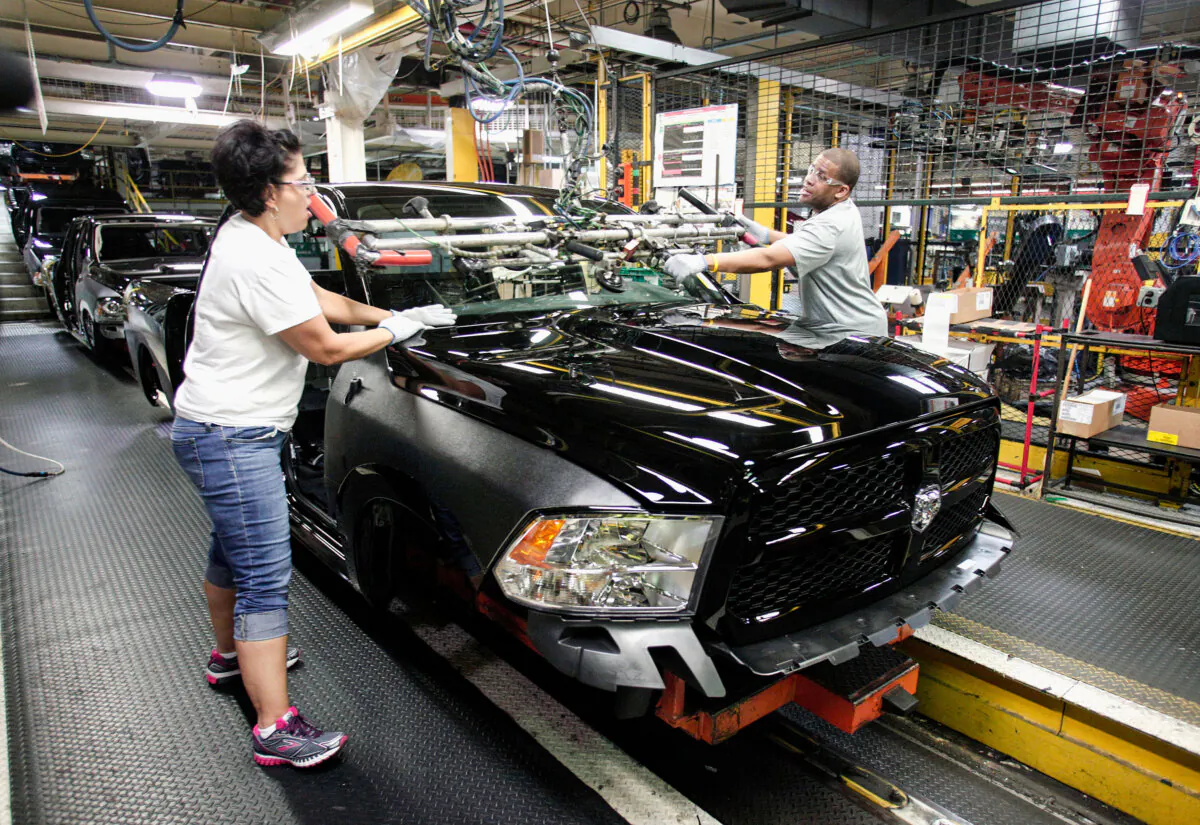
The latest round of Canadian counter-tariffs introduced on Aug. 25 affect nearly 900 American products ranging from steel and aluminum to consumer goods such as appliances, furniture, and lighting.
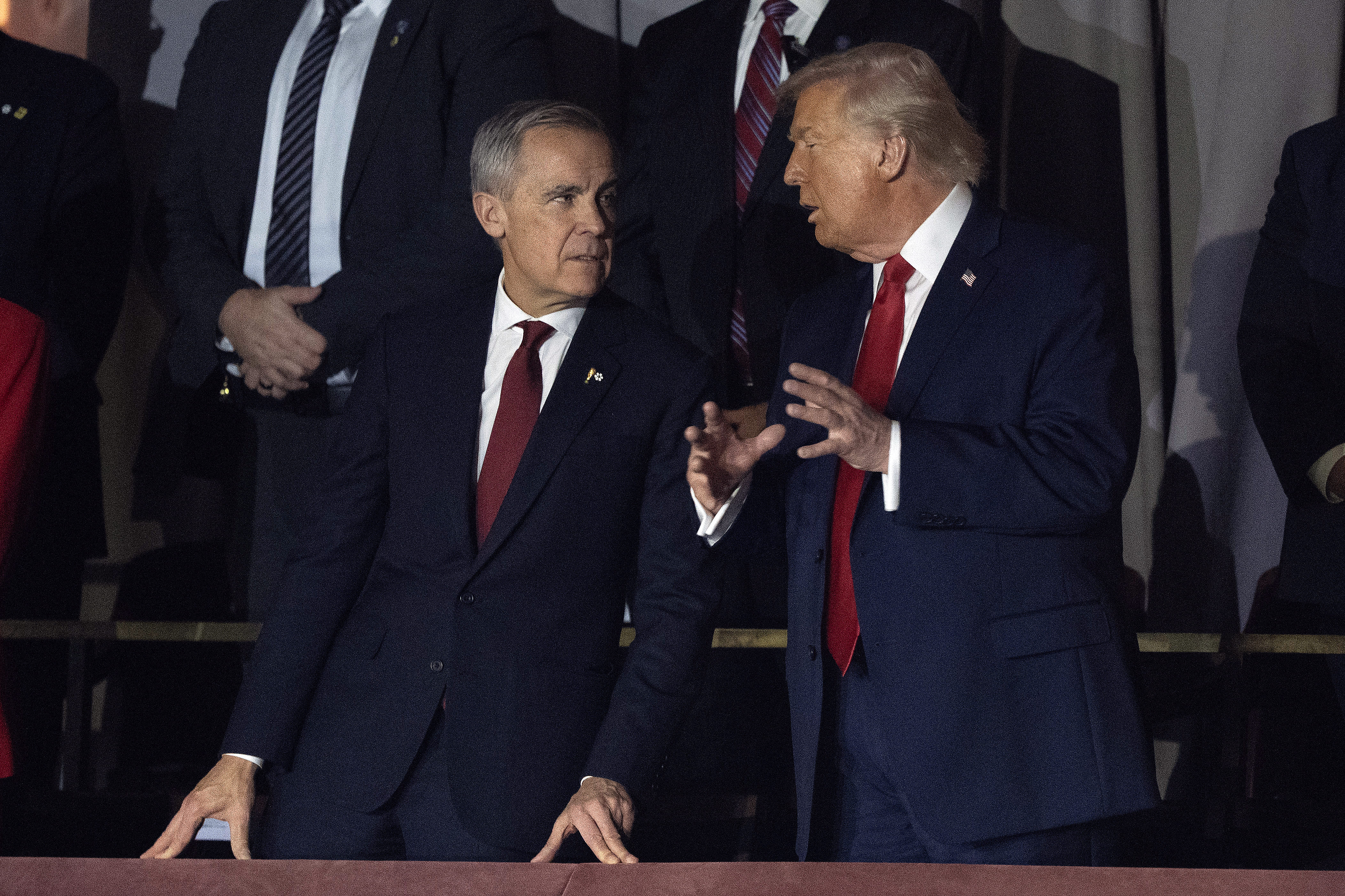 Canadian Prime Minister Mark Carney and U.S. President Donald Trump speak before the FIFA World Cup draw at the Kennedy Center in Washington on Dec. 5, 2025. (The Canadian Press/Adrian Wyld)
Trump has since said he’ll impose new 50 percent tariffs on Canadian autos beginning in 2027, while Canada’s previous counter-tariffs on U.S. autos remain in force. Canada will also raise its tariffs on U.S. steel and aluminum to 50 percent from the previous 25 percent rate as of Sept. 8, along with the other newly announced counter-tariffs.
University of Calgary economics professor Trevor Tombe says that based on his analysis, states hardest hit by Canadian tariffs as a share of their GDP include Michigan (0.34 percent of its GDP), Kentucky (0.28 percent), Indiana (0.21 percent), Missouri (0.2 percent), and Alabama (0.2 percent).
Other affected states include Pennsylvania, Ohio, Mississippi, Wisconsin, Illinois, South Carolina, Tennessee, Iowa, Georgia, Washington, Minnesota, California, New York, North Carolina, Texas, Florida, Alaska, Maine, and Vermont.
Several of the affected states, such as Michigan and Maine, are battlegrounds in the upcoming U.S. midterm elections in November, as Trump’s Republicans attempt to hold their narrow majorities in the two chambers of Congress.
Ontario Premier Doug Ford, who has been blunt in his criticism of the Trump administration and engaged in a war of words and insults with the U.S. president this week, was more direct with his remarks targeting U.S. politics.
“When it comes to the midterms, I have a message to the Americans: Don’t vote-in a person that’s going to kill your jobs,” Ford said on Aug. 24.
Carney cited specific states in his remarks on Aug. 22, listing Michigan, Ohio, Kentucky, and Alabama as states affected by tariffs targeting the auto sector.
“We’re their largest customer for automobiles, more than the European Union, Japan, Korea, many others, combined, and the United Kingdom,” he said, adding that tariffs will lead to job losses in those states.
Carney said that since the U.S. economy is much larger than Canada’s, it “will be difficult to carry out dollar-for-dollar retaliation,” adding that instead, Canada would be taking “more targeted measures.”
While Canada’s announced counter-tariffs target about CA$27.6 billion (US$19.9 billion) worth of American products, matching the $US20 billion Canadian products targeted with Washington’s new 50 percent tariffs, the rate of Canadian tariffs aren’t all to the same level as Washington’s, instead ranging from 15 percent to 50 percent.
“A large package here, to be sure, but not quite full dollar-for-dollar as we normally mean it,” Tombe said in a post.
According to Tombe, the Canadian tariffs primarily affect industrial supplies, capital goods, consumer goods, transport equipment, and food and beverages, in descending order.
Washington has said its new 50 percent tariffs coming into force on Aug. 22 are in response to Canada’s dairy supply management, provincial bans on U.S. alcohol, and Canada’s counter-tariffs on U.S. autos.
US Officials on Canadian Politics
Carney said on Aug. 22 in his first public remarks since the breakdown of trade talks that Canada got “attacked” by the United States. “You’re at war when you get attacked,” he said.
Peter Navarro, senior counsellor to Trump on trade and manufacturing, said in a message to Canadians on Aug. 24 that Carney is on a “dangerous road.”
“Carney gets a political boost every time he talks tough on Trump — but the bill lands on your economy, not his poll numbers,” Navarro said.
U.S. Treasury Secretary Scott Bessent said on Aug. 24 that Carney came to power on an “anti-Trump” platform, referencing how he reversed the Liberals’ fortunes after they trailed the Conservatives by double digits toward the end of former Prime Minister Justin Trudeau’s tenure. Carney won the election in March 2025 with a campaign heavily focused on standing up to Trump.
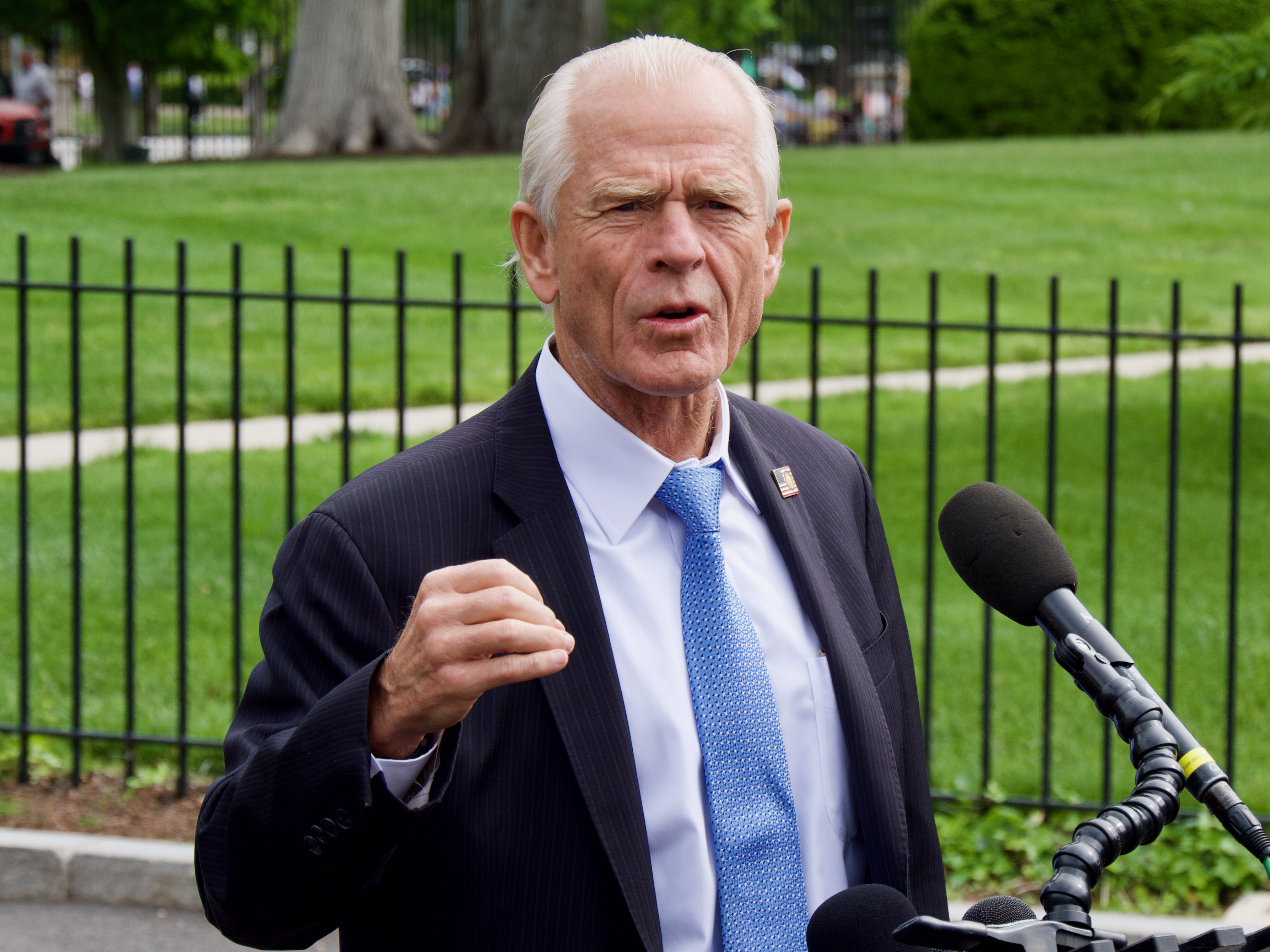 Peter Navarro, senior counselor to the president, speaks to reporters at the White House in Washington on April 30, 2025. (Travis Gillmore/The Epoch Times)
Trump also alluded to Canadian politics as Carney cited Washington objecting to Canada’s French-language protection requirements as one of the three main reasons trade talks collapsed on Aug. 21.
Carney said two of the main reasons the talks failed were that Washington didn’t want to include medium- and heavy-duty trucks among the products getting tariff relief, and that the U.S. side wanted to restrict Canada’s engagement in other trade deals. Carney and Quebec Premier Christine Fréchette, who along with other premiers were briefed on the trade talks by Carney, said the third factor was that Americans took issue with Canada’s requirements for French labelling and user manuals, as well as French content rules.
“We were not prepared to compromise on our sovereignty, the protection of the French language, and our culture,” Carney said.
U.S. Trade Representative Jamieson Greer, who says Canada is to blame for the failure of the talks for walking away from its commitments at the last minute, disputes Carney’s claim, saying Washington’s objection was to Canadian requirements for streaming platforms such as Netflix to pay for the production of French-language content. He characterized the requirement as a tax on American companies.
He also said that the United States had offered to cut tariffs on Canadian steel and aluminum by half and substantially reduce tariffs on autos and softwood lumber, “things that are sensitive for the Canadians,” adding that it doesn’t make economic sense for Ottawa to walk away from the proposed deal, suggesting it may be because of the upcoming federal byelections on Aug. 31.
“Simply, they wanted more. I don’t know if it was political for them, it certainly doesn’t make economic sense. But perhaps for political reasons, they have some byelections coming up,” Greer told CNBC on Aug. 24.
Referencing the French-language dispute, Trump also said the issue is related to Canadian politics.
“I would never interfere with Canadians speaking French! In fact, I have never even thought of doing such a stupid thing,” he said in a social media post on Aug. 25. “This lie was made up by a weak and ineffective Prime Minister in an attempt to gain political support, which he has totally lost, from the people of Quebec. I love French Canadians!”
 Friends Read Free
Copy
Facebook
Tweet
Friends Read Free
Copy
Facebook
Tweet