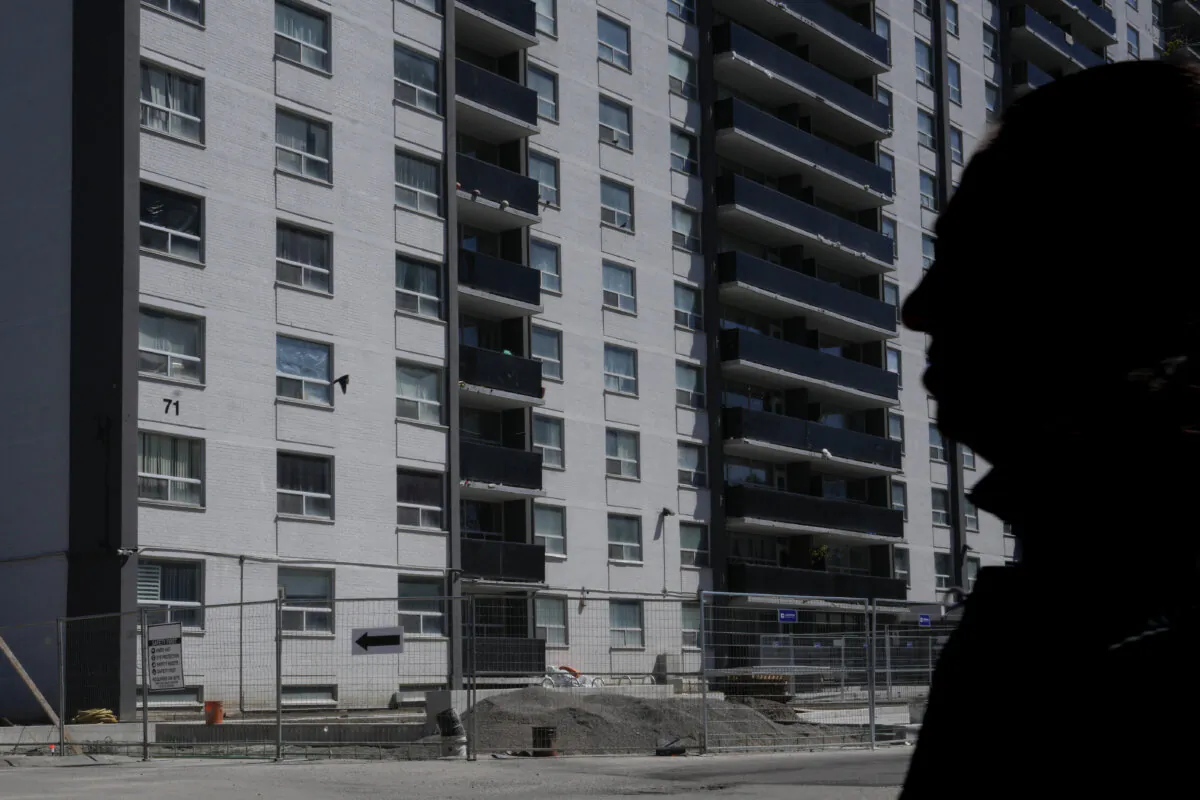

The caps imposed by Canada on foreign students and new residents have led to a decrease in demand for rental housing and a dip in average asking rents across many of Canada’s largest cities, a new report from the country’s housing agency suggests.
The changes in immigration coupled with an increase in new housing supply resulted in a 2 percent to 8 percent dip in the average asking rents for condominiums and purpose-built rentals in Vancouver, Calgary, Toronto, and Halifax over the last year, Canada Mortgage and Housing Corp. (CMHC) said in its mid-year rental market update this week.
“The cap on international student intake and adjustments to their provincial distribution are influencing rental demand in British Columbia, Ontario and Nova Scotia,” the report said, noting that all three provinces saw a decline in work and study permit holders in the first quarter of 2025.
The average asking rents for a two-bedroom purpose-built apartment decreased year-over-year in four out of seven markets, the report said.
Vancouver led with a 4.9 percent reduction in the first quarter of 2025, with Halifax following at 4.2 percent, Toronto at 3.7 percent, and Calgary at 3.5 percent. Average asking rents increased by 3.9 percent in Edmonton, 2.1 percent in Ottawa, and 2 percent in Montreal, when compared to the first quarter of 2024.
Landlords say the time taken to lease vacant units is increasing, particularly for new purpose-built rentals in Toronto, Vancouver, and Calgary, where they are up against a competitive market of well-supplied secondary rentals, such as condos and single-family homes, the report said
“Purpose-built rental operators are responding to market conditions by offering incentives to new tenants such as one month of free rent, moving allowances and signing bonuses,” the report said, noting that some landlords anticipate they may need to lower rents over the next couple of years.
The rental prices for occupied units are still increasing, but at a slower rate compared to the previous year, the agency said. It also noted that higher turnover rents in a number of major rental markets have resulted in reduced tenant mobility, causing longer average tenancy periods and “more substantial” rent hikes when tenants eventually leave.
Affordability Issues
Affordability has worsened over time despite the downward trend in rental prices, CMHC said. Rent-to-income ratios have consistently increased since 2020, particularly in areas such as Vancouver and Toronto where rising turnover rents are contributing to these increases.
The rental price gap in Toronto last year was especially high, with a gap of 44 percent between vacant and occupied two-bedroom units. Edmonton had the smallest gap at approximately 5 percent.
Most major cities are expected to see an increase in vacancy rates this year, driven by slower population growth and a weak job market, the report said.
“As demand struggles to keep pace with new supply, the market will remain in a period of adjustment,” particularly in Ontario due to lowered international migration targets, the report said. “While the market may have abundant supply in the short-term, there is still a need to maintain momentum in new rental supply to meet the needs of projected future population growth and to achieve better affordability outcomes for existing households.”
Market Trends
A separate report released on July 8 noted similar national rental market trends.
Asking rents for all residential properties across Canada in June decreased by 2.7 percent compared to the previous year to settle at $2,125, the latest monthly report from Rentals.ca and Urbanation said. This marks the ninth month in a row of annual rent reductions.
Asking rents for purpose-built apartments decreased by 1.1 percent compared to the previous year, reaching an average of $2,098. In contrast, the asking rents for condominiums saw a decline of 4.9 percent, settling at $2,207. Rents for houses and townhomes also experienced a reduction, falling 6.6 percent, to average $2,178.
British Columbia and Alberta reported the largest declines in June, with asking rents decreasing by 3.1 percent year-over-year in both provinces, resulting in an average of $2,472 in B.C. and $1,741 in Alberta
Ontario saw a 2.3 percent reduction to $2,329, Manitoba recorded a 1.3 percent drop to $1,625, and Quebec had a 0.9 percent decrease to $1,960.
The average asking rent in Nova Scotia fell by 0.1 percent to $2,268, while Saskatchewan stood out as the only province to show year-over-year growth, achieving a 4.2 percent increase to reach an average of $1,396.
The Canadian Press contributed to this report.
 Friends Read Free
Copy
Facebook
Tweet
Friends Read Free
Copy
Facebook
Tweet