
India and the European Union have reached a free trade agreement aimed at deepening economic and strategic ties between two of the world’s largest markets.
“This agreement will bring major opportunities for the people of India and Europe,” Indian Prime Minister Narendra Modi said in a virtual address to an energy conference on Jan. 27.
“It represents 25 percent of the global GDP and one-third of global trade.”
The India–EU free trade agreement will link more than 2 billion people across a market representing nearly a quarter of global economic output. The deal follows a decade of negotiations.
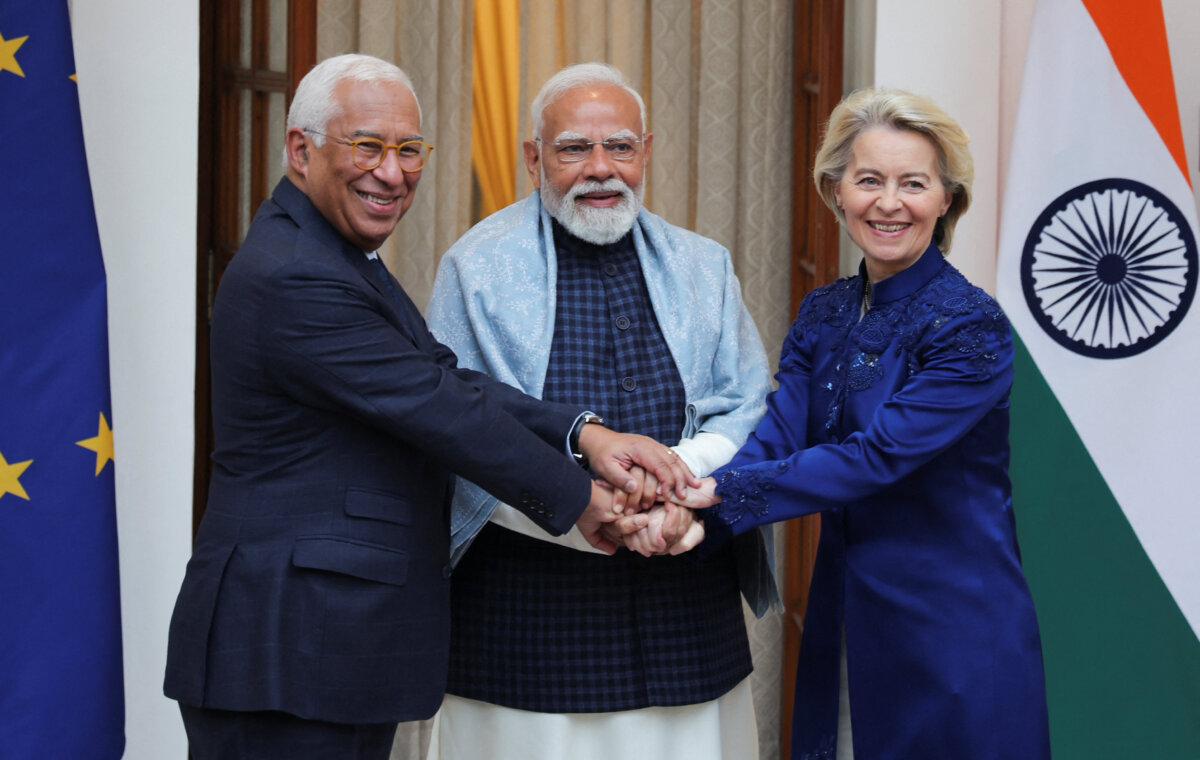
Modi made further comments while appearing at a joint news conference in New Delhi on Jan. 27 with European Commission President Ursula von der Leyen and European Council President Antonio Costa.
Modi said the partnership with the EU “will strengthen stability in the international system” at a time of “turmoil in the global order.”
“Europe and India are making history today. We have concluded the mother of all deals,” von der Leyen said in a post on X on Tuesday. “We have created a free trade zone of two billion people.”
The agreement is expected to take effect early next year, following ratification by the European Parliament and approval processes within EU member states.
The European Commission (EC) described the deal as a “historic, ambitious and commercially significant free trade agreement.”
The agreement could lead to an increase in Indian migration to the EU.
Leaders agreed on “circular pathways” for Indian workers, students, researchers, and seasonal workers in shortage occupations to come to Europe.
Under the agreement, India will gradually reduce tariffs on a wide range of goods.
Duties on cars, currently 110 percent, will be lowered over time to as little as 10 percent, according to the EC. Tariffs on car parts will be fully eliminated after a transition period of five to 10 years.
Tariffs of up to 44 percent on machinery, 22 percent on chemicals, and 11 percent on pharmaceuticals will also be largely removed, the EC said.
India has also agreed to reduce tariffs on European wine. Duties on premium wines will fall from 150 percent to 20 percent, according to EU officials.
However, New Delhi excluded certain agricultural products from the agreement.
Dairy items such as milk and cheese, along with cereals, were left out of the deal, with Indian officials citing “domestic sensitivities” surrounding those sectors.
EU and India already trade more than 180 billion euros ($214 billion) worth of goods and services per year, with the EU saying that the deal is expected to double EU goods exports to India by 2032.
India’s average annual salary is around $4,000–$5,000, compared with roughly 40,000 euros ($47,000) across the EU, according to official EU data.
Relations between the United States and the EU have at times been strained by disagreements over tariffs and by tensions linked to U.S. pressure over Greenland, adding uncertainty to ongoing trade discussions.
U.S. Treasury Secretary Scott Bessent publicly expressed concern that the India–EU agreement could enable Europe to fund parts of the Russia–Ukraine war indirectly by routing energy trade through India.
In August, the United States raised tariffs on some Indian imports to 50 percent in part as retaliation for India’s continued imports of Russian oil.
“We have put 25 percent tariffs on India for buying Russian oil. Guess what happened last week? The Europeans signed a trade deal with India,” Bessent told ABC News on Jan. 26.
“They—and just to be clear again, the Russian oil goes into India. The refined products come out, and the Europeans buy the refined products. They are financing the war against themselves.”
The Associated Press contributed to this report.
 Friends Read Free
Copy
Facebook
Tweet
Friends Read Free
Copy
Facebook
Tweet