
Indonesia’s defense minister said on May 19 that a letter of intent signed last month with U.S. Secretary of War Pete Hegseth did not commit Jakarta to granting U.S. military aircraft access to Indonesian airspace.
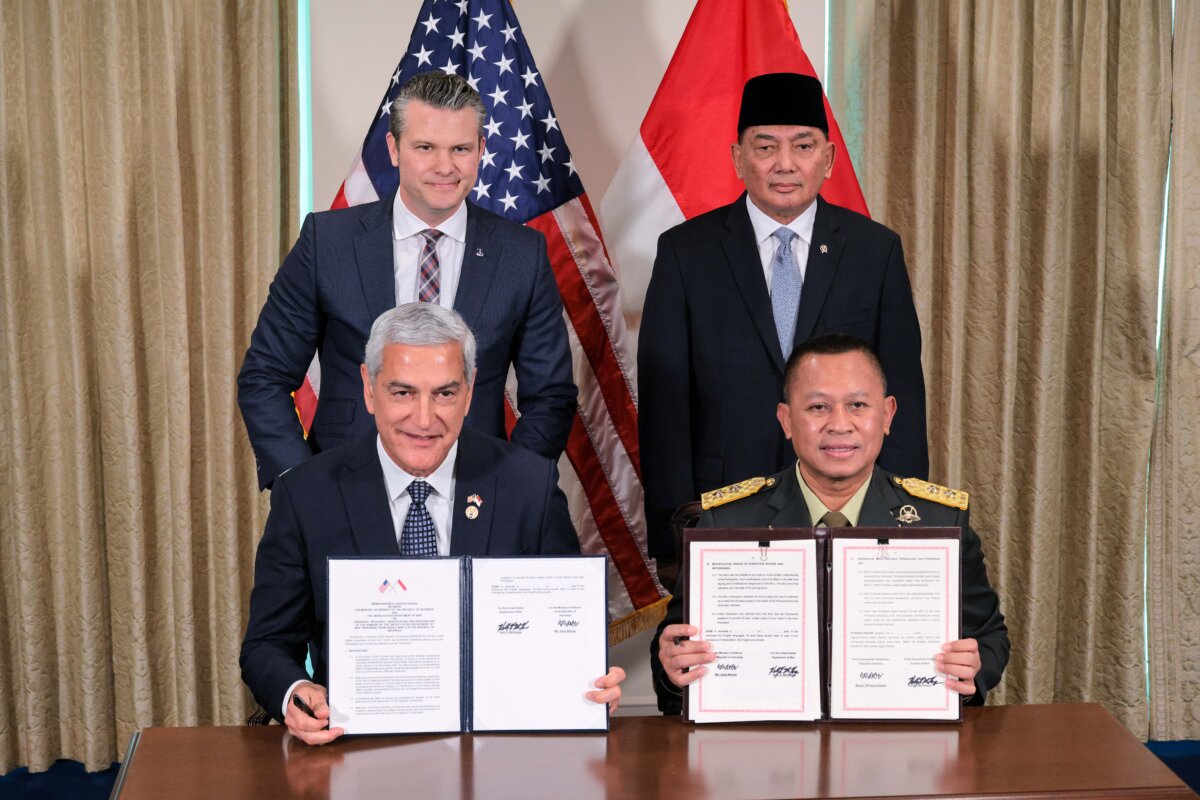
The letter of intent signed in Washington mentioned respecting each country’s territorial integrity, the need for a mechanism if Indonesia agreed to airspace access, and respect for local laws, Defense Minister Sjafrie Sjamsoeddin told a parliamentary hearing.
“We made not a single commitment with the U.S. on airspace,” Sjamsoeddin said. ”We uphold the constitution and our national interests.”
Sjamsoeddin said the partnership includes modernizing Indonesia’s military, but “it does not mention any military equipment.” He said the United States would help train Indonesian soldiers.
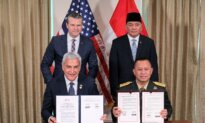
Hegseth met with Sjamsoeddin at the Pentagon on April 13.
According to a Pentagon readout of the meeting, Chief Pentagon spokesman Sean Parnell said that the two leaders “agreed to elevate the U.S.-Indonesia bilateral defense relationship to a Major Defense Cooperation Partnership.”
“This new partnership will serve as a framework to enhance operational collaboration, partner on defense modernization, and increase training and interoperability,” he added.
On April 13, Indonesia’s Ministry of Defense said that Jakarta and the United States were discussing a proposal to give U.S. military aircraft access to Indonesian airspace, but that no deal had yet been reached.
At the time, the defense ministry said in a statement that the two countries were still discussing the letter of intent and that only a preliminary draft was under discussion internally.
The draft is neither final nor binding, the ministry added.
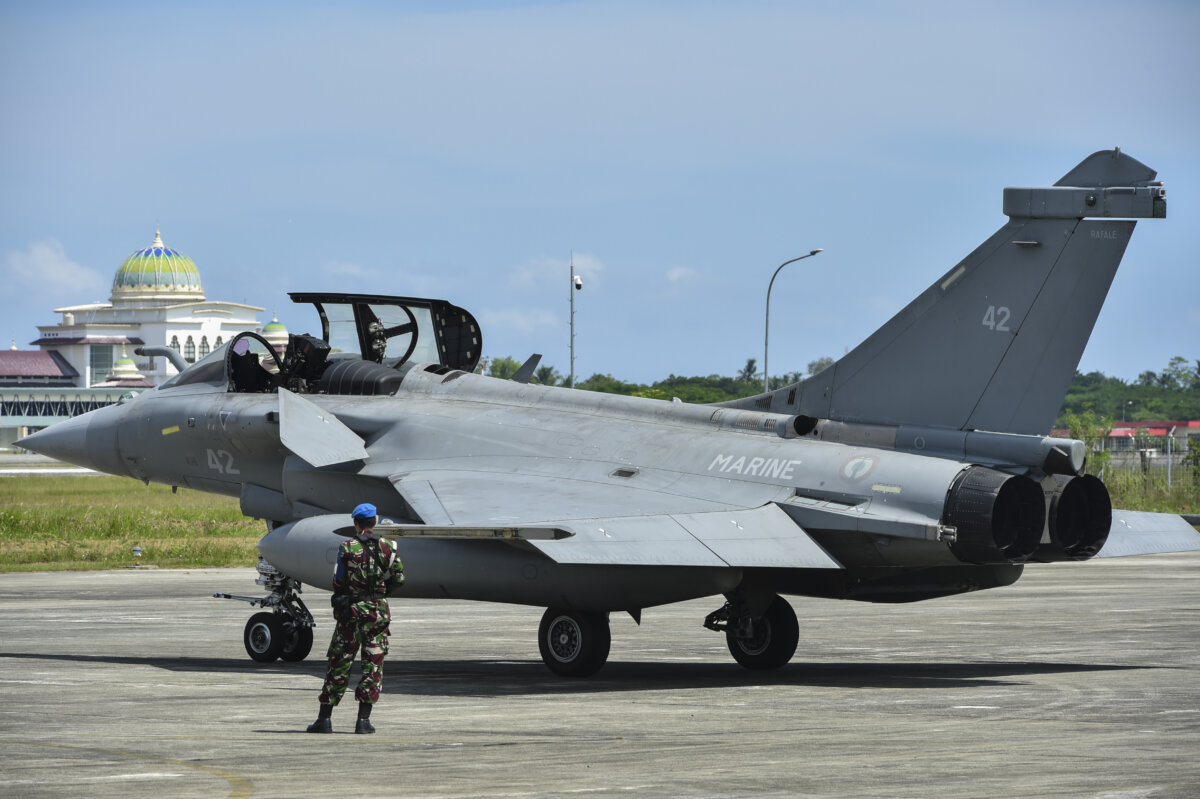
Control over Indonesian airspace belongs to Indonesia, the ministry said, adding that deals with other countries will protect Indonesia’s sovereignty and adhere to Indonesian law.
Washington is seeking to deepen defense ties across the Indo-Pacific, where the United States and China are competing for influence and access. Indonesia has pursued a non-aligned foreign policy that maintains economic relations with both powers.
In a 2022 report, Goldman Sachs analysts projected that Indonesia would be the world’s fourth-largest economy by 2050.
China remains Indonesia’s largest trading partner, according to the Observatory of Economic Complexity (OEC), with trade ties spanning critical minerals, infrastructure, and major projects such as the Jakarta-Bandung high-speed railway, built under the Chinese communist regime’s Belt and Road Initiative.
OEC data show Indonesia exported about $66 billion worth of goods to the CCP in 2024.
Washington has also moved to deepen economic ties with Jakarta.
A framework for a U.S.–Indonesia reciprocal trade agreement was announced in July 2025, followed by a final agreement in February 2026. Under the deal, the United States maintained a 19 percent tariff on most Indonesian goods, while Indonesia agreed to remove tariff barriers on more than 99 percent of U.S. products.
Jakarta has clashed with Beijing over Chinese fishing and coast guard activity near the Natuna Islands, where China’s sweeping maritime claims overlap with Indonesia’s exclusive economic zone.
An international tribunal in 2016 rejected the Chinese regime’s expansive sovereignty claims, concluding that China has no legal basis to claim historic rights to the South China Sea.
The CCP refused to acknowledge this ruling and instead enacted its own maritime legislation, granting power to its coast guard to detain foreign individuals for up to 60 days if they enter the waters claimed by China.
Reuters and Dorothy Li contributed to this report.
 Friends Read Free
Copy
Facebook
Tweet
Friends Read Free
Copy
Facebook
Tweet