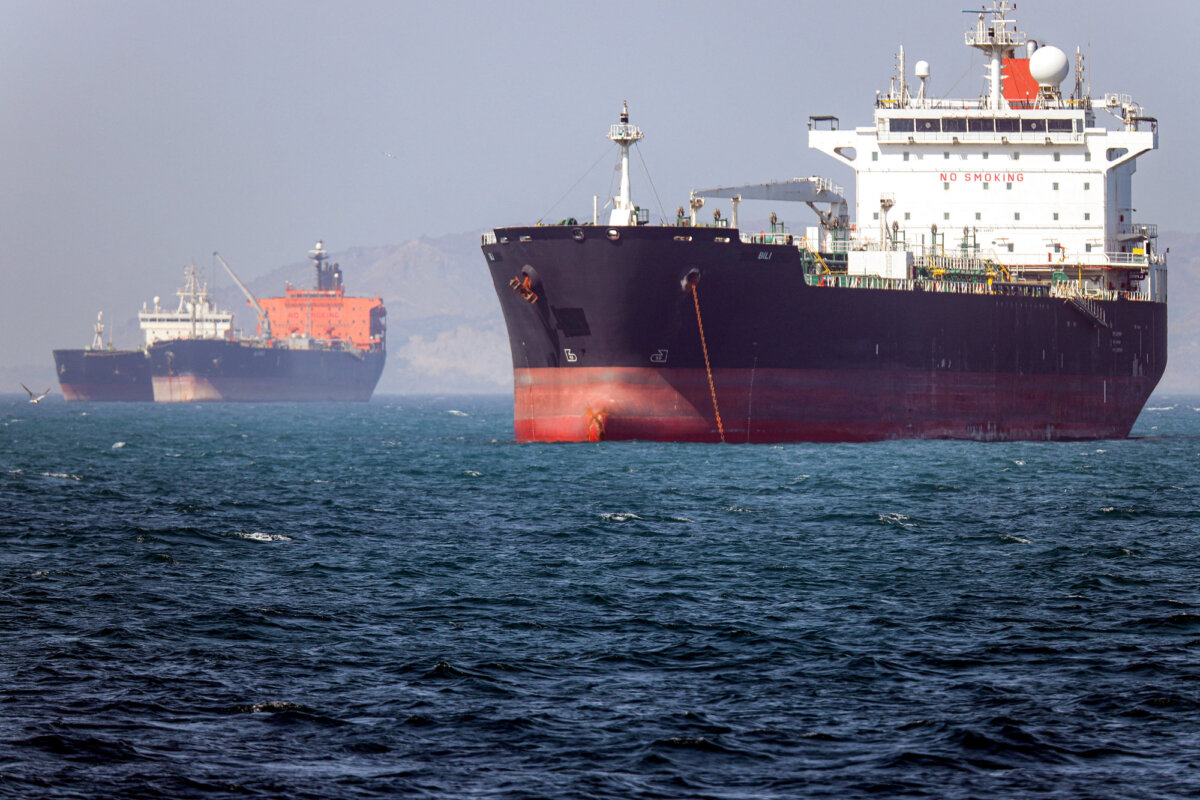

Iran is not seeking to charge tolls to vessels passing through the Strait of Hormuz, Iranian Foreign Ministry spokesperson Esmail Baghaei said on May 25.
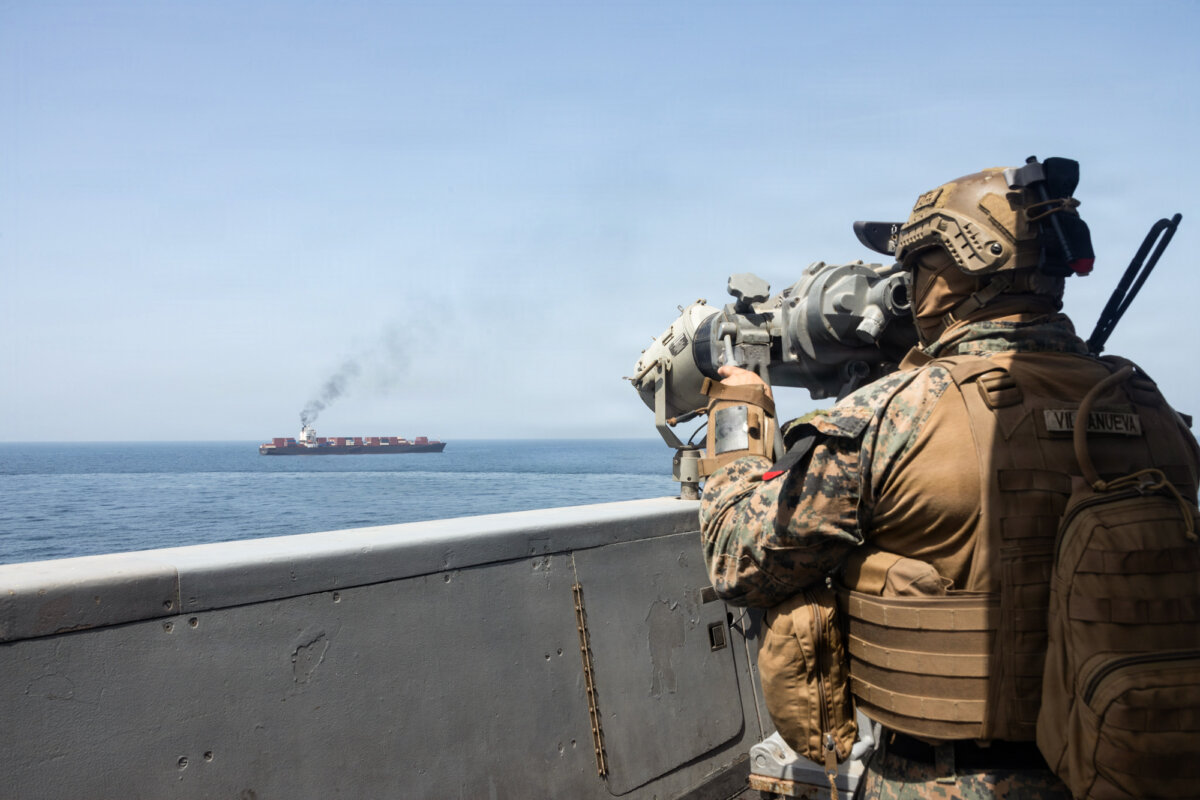
During a press conference in Tehran, Baghaei said that Iran and Oman are working together on a protocol to ensure safe maritime passage through the key shipping lane, adding that the Islamic Republic does not charge ships sailing through the strait, and highlighting the need to use precise terminology when discussing the situation.
“First, the measures by Iran and Oman to draft a protocol or mechanism to ensure the safe passage of ships through the Strait of Hormuz are a responsible step and are in accordance with international law, both for the interests and national security of Iran and Oman as coastal states, and for the public good of the international community,” he said, according to a May 25 post on the Iranian Foreign Minstry’s Telegram account.
“Naturally, in this process, the services that are provided—navigation services, plus the necessary measures to protect the environment of the Strait of Hormuz, the Persian Gulf, and the Sea of Oman—require the collection of fees. Therefore, these should not be referred to as a ‘toll’ or ‘duty.’ Iran and Oman are making responsible efforts along this path, and we hope to reach a final outcome as soon as possible.”
Baghaei also said that Iran and Oman are seeking an effective mechanism for safe passage because each believes the crucial maritime thoroughfare should remain usable for the entire world, according to an earlier Telegram post on May 25.
When asked about British and French plans related to the Strait of Hormuz, he said no country other than Iran and Oman is currently present in the strait, according to another Telegram post from the Iranian Foreign Ministry.
The UK government confirmed its commitment to contribute mine-clearing support, including autonomous mine-hunting equipment, specialist personnel, and supporting vessels, for the strait, earlier this month, but said it would only do so as part of a future multinational defensive mission that “would become operational when conditions allow.”
Paris, likewise, has said it would be involved in such an operation.
British sailors stationed in the UK’s overseas territory of Gibraltar are currently preparing to ship out to the Strait of Hormuz, but have not yet been ordered to deploy.
U.S. Secretary of State Marco Rubio said on May 25 that U.S. President Donald Trump will not accept a “bad deal” with Iran as the two sides continue to negotiate.
Rubio warned that unless the agreement is good for the United States, Trump will move to resolve the issue “another way,” hinting at the possibility of renewed attacks.
Rubio’s remarks, made during a media briefing in India, came amid reports that an agreement to end the Iran standoff had been largely negotiated, with Trump saying that America’s relationship with Iran was becoming “much more professional and productive” but that care must be taken in the final stretch of talks to ensure the deal is right.
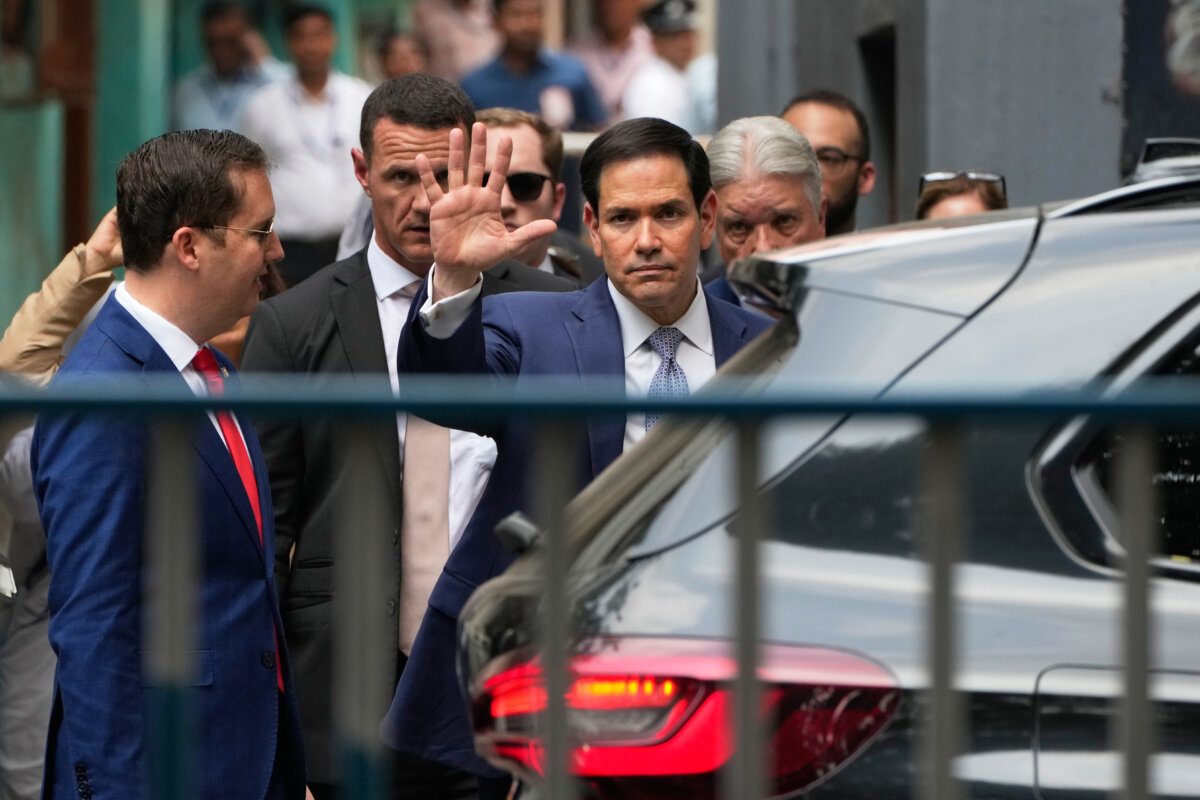
“The President said he’s not in a hurry. He’s not going to make a bad deal,” Rubio said. “Let’s see what happens. We’re going to give diplomacy every chance to succeed before we explore the alternatives.”
While the terms of the agreement currently being hashed out remain unclear, much of the talks have focused on Iran’s nuclear program and on Tehran’s restrictions in the Strait of Hormuz, which have sent prices of oil and other key commodities soaring.
Trump’s latest signal on the status of the talks came in the form of a May 24 post on Truth Social, which featured an image of a bomb attached to an airplane, apparently ready to drop.
The president preceded the bomb post with a post insisting that the deal with Iran—if it is ultimately reached—would be a “good and proper one,” including blocking Iran’s path to acquiring a nuclear weapon.
Tom Ozimek and The Associated Press contributed to this report.
 Friends Read Free
Copy
Facebook
Tweet
Friends Read Free
Copy
Facebook
Tweet