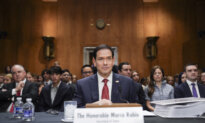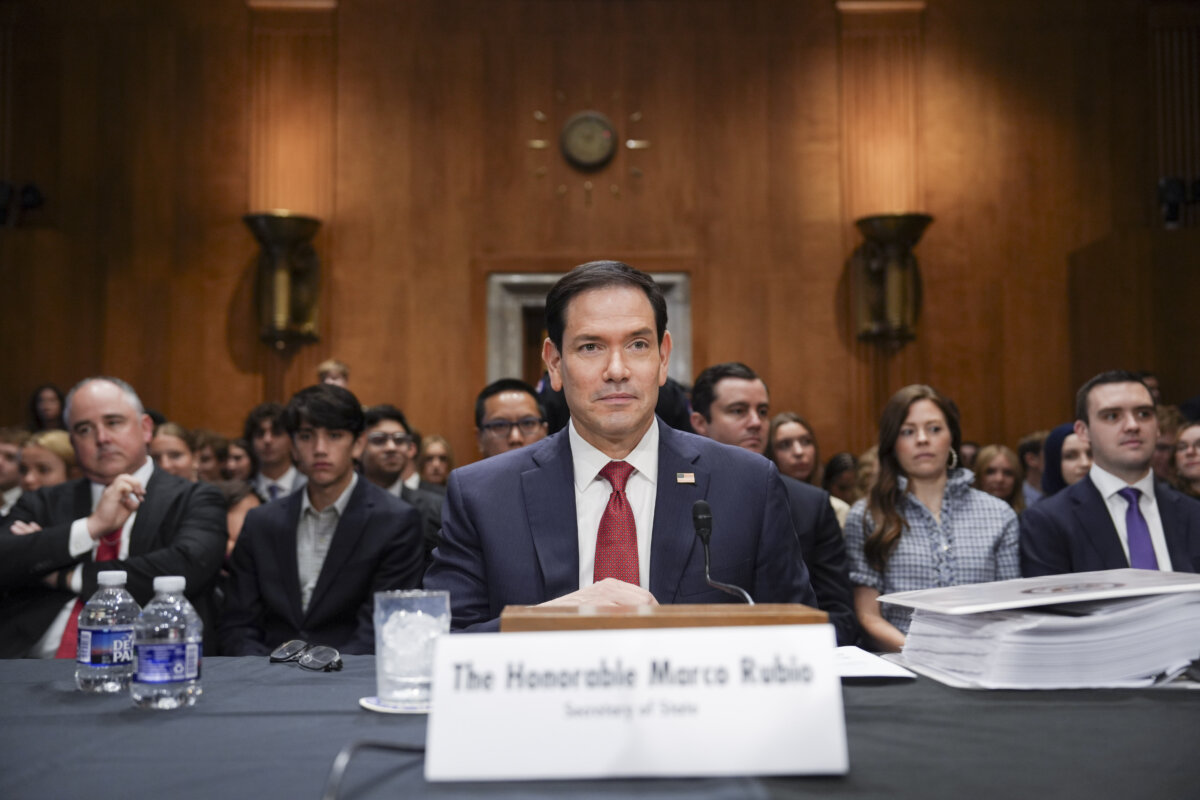
WASHINGTON—Iranian negotiators have shown increasing willingness to negotiate over aspects of their nation’s nuclear program, U.S. Secretary of State Marco Rubio told senators on June 2.
“For the first time, certainly in my memory, they have agreed to negotiate aspects of their nuclear program that just a month ago, or just a year ago, they were refusing to even mention, much less enter into discussions about,” Rubio said in testimony before the Senate Foreign Relations Committee.
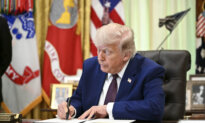
Last week, U.S. President Donald Trump announced a set of terms for a deal he was considering with Iran.
The terms Trump described would have allowed U.S. access to damaged Iranian nuclear facilities to recover and dispose of highly enriched uranium. He said the deal would also see the full restoration of maritime traffic through the Strait of Hormuz and the lifting of a U.S. blockade of Iranian ports.
Following Trump’s announcement, Iranian Foreign Ministry spokesman Esmail Baghaei said U.S. and Iranian negotiators were continuing to exchange messages but that they had not reached a final agreement.
In the days that followed, U.S. and Iranian forces traded fire, threatening an already delicate ceasefire that has been in place since April 7.
Tehran also increasingly raised objections to Israel’s intensifying military operations in Lebanon against Hezbollah, a designated terrorist organization aligned with Iran.
In a post on X on June 2, Iranian Parliament Speaker Mohammad Bagher Ghalibaf said that, if Israeli military operations in Lebanon continued, “we will not only halt the path of negotiations, but we will also be in direct confrontation with the enemy.”
In his testimony on Tuesday, Rubio said that even if Washington and Tehran don’t reach a deal, recent U.S. military options have degraded the conventional military capabilities that could insulate the Iranian nuclear program from outside intervention.
“If it doesn’t work out, then obviously we still have a problem with respect to their nuclear ambitions, but what they won’t have is the conventional shield to hide behind any longer,” he said.
Rubio said there is the possibility that Washington and Tehran can reach an agreement in the coming days, though he warned that progress is slowed by a fractured Iranian leadership and their reliance on intermediaries to relay communications.
He said Iran’s new supreme cleric, Ayatollah Montaba Khamenei, is likely involved in the negotiations despite being injured during the same series or strikes that killed his father, Ayatollah Ali Khamenei, on Feb. 28. The younger Khamenei has, thus far, avoided public appearances since filling the leadership vacancy left by his father.
“I would imagine, given what’s happened to multiple leaders in that system, being very public is probably not something that’s recommended for them internally,” Rubio said.
“But that said, I think there are indications out there that he is increasingly engaging at some level, although all of his communications have been in writing and through intermediaries.”
 Friends Read Free
Copy
Facebook
Tweet
Friends Read Free
Copy
Facebook
Tweet