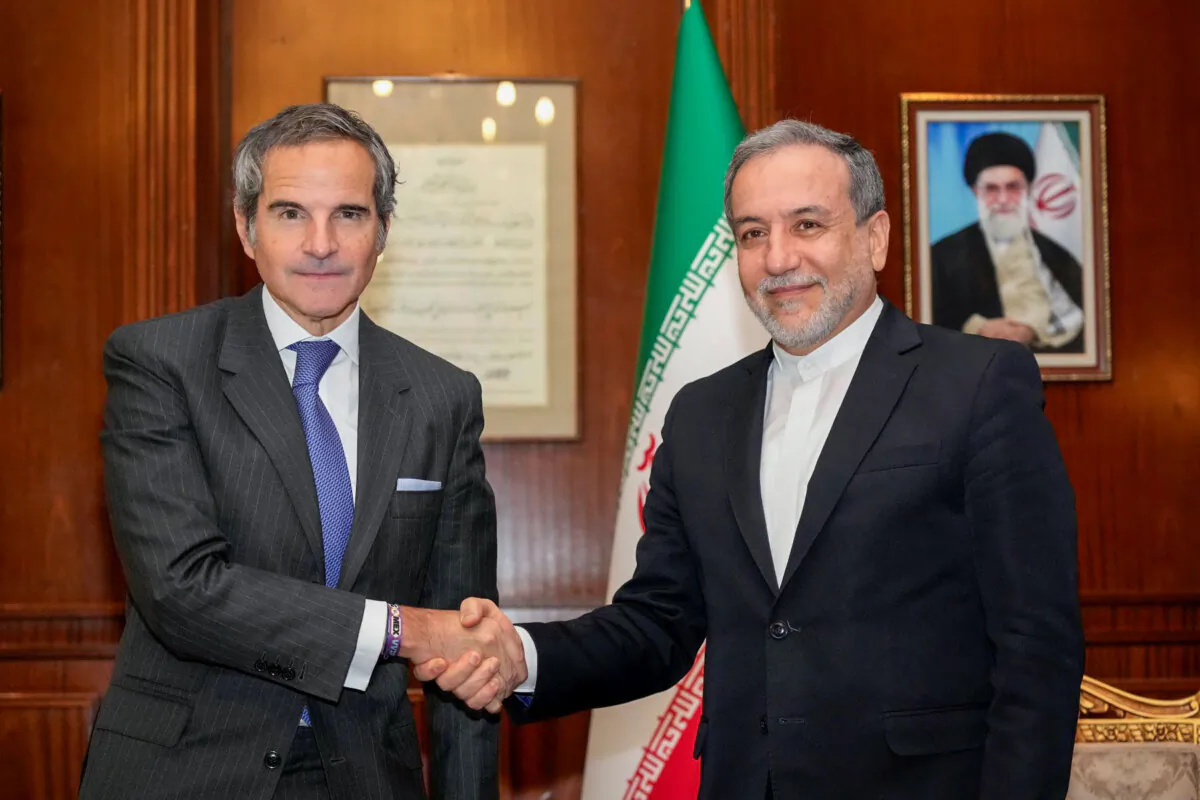

The International Atomic Energy Agency’s 35-nation board of governors passed a resolution on June 12 declaring Iran noncompliant and in breach of its obligations under the Nuclear Nonproliferation Treaty.
The resolution, backed by France, Britain, and Germany (known as the E3), along with the United States, is expected to bring the issue before the U.N. Security Council. Iran immediately responded by announcing plans to establish a new enrichment facility “in a secure location.”
The decision by the U.N. nuclear watchdog’s board of governors, meeting in Vienna, comes as the U.S. State Department warned of a heightened security risk in the Middle East and began reducing the number of staff at embassies in the region.
In a statement to the board of governors of the International Atomic Energy Agency (IAEA) on June 9, Director General Rafael Grossi said he is seriously concerned about Iran’s “rapid accumulation of highly enriched uranium.”
In a quarterly report published in November 2024, the IAEA said Iran—which denies it is seeking to build nuclear weapons—had continued to enrich uranium up to a 60 percent concentration of U-235. Uranium must be enriched to at least 90 percent to be considered weapons-grade.
Iran and the United States are currently trying to negotiate a new deal to replace the 2015 Joint Comprehensive Plan of Action (JCPOA), with a sixth round of negotiations due to take place in Muscat, the capital of Oman, on June 15.
U.S. President Donald Trump has repeatedly said Iran cannot be allowed to have a nuclear weapon and has stated that either Israel or the United States could launch airstrikes against Iran’s nuclear facilities if negotiations fail.
On May 28, Trump said he had told Israeli Prime Minister Benjamin Netanyahu not to take any action that might disrupt the U.S.–Iran nuclear program talks.
In a joint statement, carried by Iran’s state-owned IRNA news agency, the Iranian Foreign Ministry and Iran’s Atomic Energy Organization said the IAEA’s latest report was “entirely political and biased” and said Tehran “has no choice but to respond to this political resolution.”
In a reference to the United States, Britain, France, and Germany, the statement said, “These actions by the four countries take place while they remain silent regarding the Zionist regime’s exclusion from the Non-Proliferation Treaty (N.P.T.) and its development of weapons of mass destruction programs, including nuclear weapons.”
Iran could face the reimposition of all U.N. sanctions—known as the snapback mechanism under the 2015 Joint Comprehensive Plan of Action (JCPOA) nuclear deal—which were lifted following the agreement, signed in 2015.
In his first term in office, Trump unilaterally withdrew the United States from the JCPOA and imposed tough economic sanctions on Tehran.
Trump wrote in a Feb. 5 social media post, “I want Iran to be a great and successful Country, but one that cannot have a Nuclear Weapon.”
“They seem to be delaying, and I think that’s a shame,” Trump said in a recent interview. “I’m less confident now than I would have been a couple of months ago. Something happened to them.”
In November 2024, the IAEA’s board of governors passed a resolution that condemned Iran for failing to cooperate fully with the agency’s inspectors who have been monitoring its nuclear program.
The resolution passed on June 12 stated, “[The board] stresses its support for a diplomatic solution to the problems posed by the Iranian nuclear program, including the talks between the United States and Iran, leading to an agreement that addresses all international concerns related to Iran’s nuclear activities, encouraging all parties to constructively engage in diplomacy.”
Iran Claims Nuclear Contamination by Saboteurs
In a quarterly report published on May 31, 2025, the IAEA said: “On May 28, 2025, Iran presented to the agency the results of its intelligence investigation into possible explanations for the nuclear material traces found at Varamin and Turquzabad.
“Iran alleged that a clandestine network involving Iranians, some with dual citizenship, was involved in a number of activities aimed at, inter alia, creating false accusations to discredit Iran, in collaboration with foreign nationals of at least three, named, countries.”
The report said Iran claimed that this network had possibly been responsible for planting contaminated nuclear material but could provide no evidence of sabotage despite the presence of security cameras at both sites.
A major Iranian opposition group, the National Council of Resistance of Iran (NCRI), said on June 10 that the regime in Tehran has developed a “much more sophisticated” plan to maintain its secret nuclear weapons program.
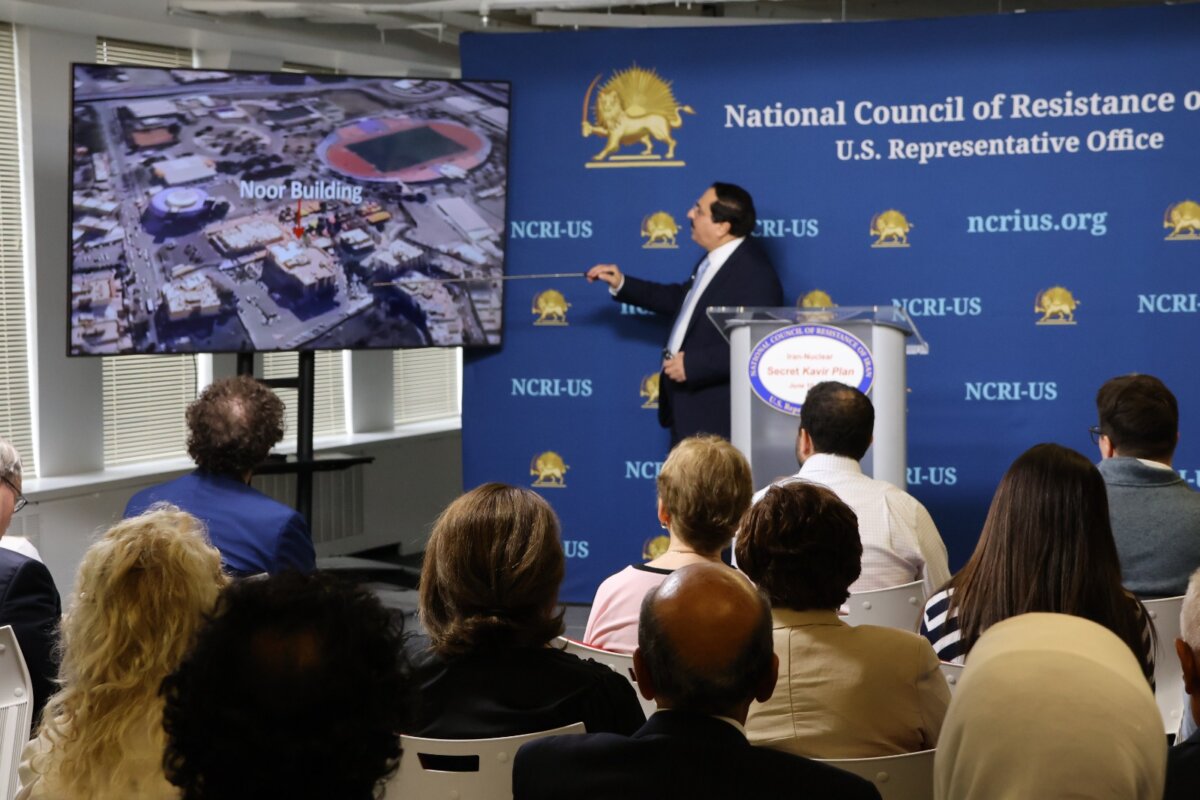
Alireza Jafarzadeh, deputy director of the NCRI, said at a news conference in Washington that the regime has replaced its clandestine nuclear program, known as the Amad Plan, with a new initiative called the Kavir Plan.
Jafarzadeh said it was “very clear that the nuclear weapons program of the Iran regime was never halted.”
On June 12, the leader of the NCRI, Maryam Rajavi, welcomed the IAEA’s resolution and said in a statement sent to The Epoch Times that there was an “immediate imperative” to activate the snapback mechanism and dismantle the regime’s nuclear facilities “without further delay.”
T.J. Muscaro and Reuters contributed to this report.
 Friends Read Free
Copy
Facebook
Tweet
Friends Read Free
Copy
Facebook
Tweet