Israel launched new attacks on Tehran and Beirut while Iran continued its assault on the Gulf states, as the Iran War entered its third week.
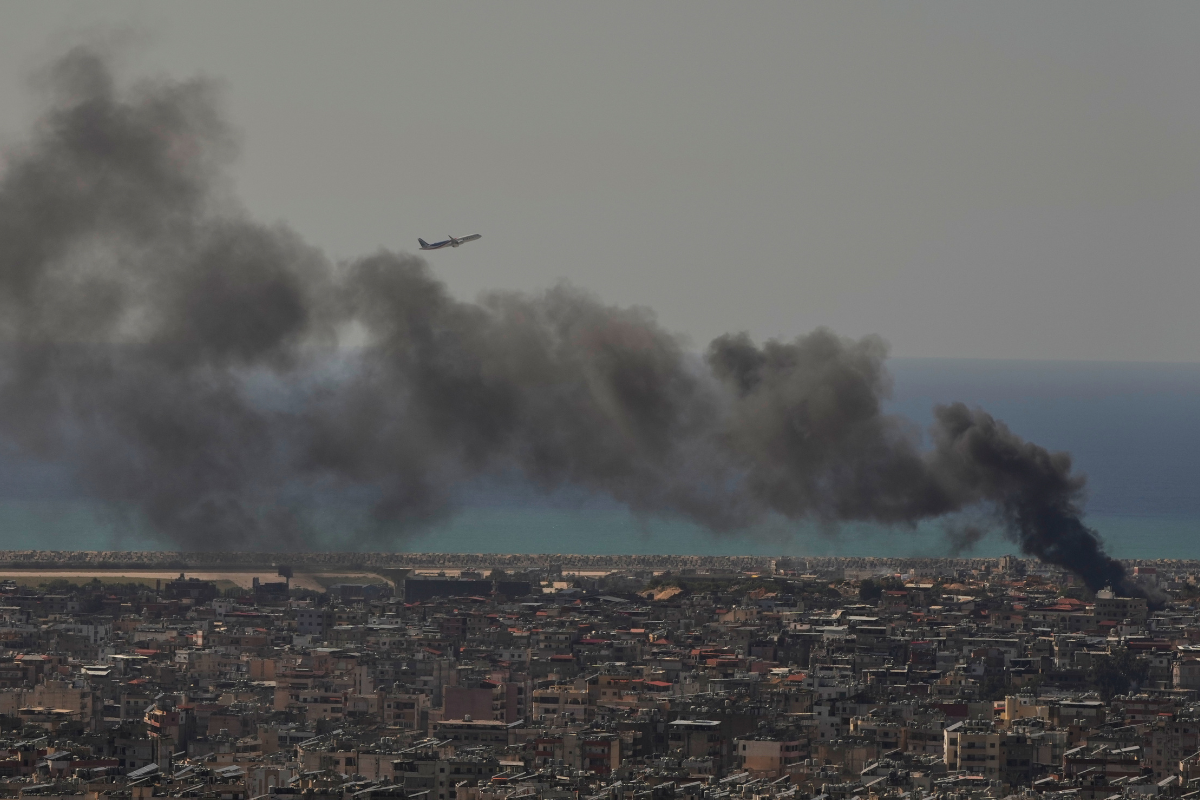
The Israeli military said on March 17 that it was renewing attacks on Iran and Lebanon, with strikes on Beirut targeting terrorist group Hezbollah, which is backed by Tehran.
“The [Israel Defense Forces] has begun a widescale wave of strikes against Iranian terror regime infrastructure across Tehran,” the military said on Telegram.
“Additionally, the IDF has begun an additional wave of strikes on Hezbollah terror infrastructure in Beirut.”
IDF Chief of the General Staff Lt. Gen. Eyal Zamir said that the Israeli military continues to act against multiple targets in Iran to degrade the Islamic regime’s apparatus and military capabilities, as well as targeting the Islamic Revolutionary Guard Corps.
“The operation against Hezbollah and the neutralization of threats to northern communities continues to serve as another central operational arena,” Zamir said.
The chief of general staff said the IDF is conducting “precise and targeted ground operations” in Lebanon.
“We will continue to act decisively to remove threats to the residents of Israel.”
Israel said on March 17 that it had killed two senior Iranian military figures.
Israeli Defense Minister Israel Katz said the military had killed security chief Ali Larijani, who the IDF described as a senior figure in the Iranian leadership and a close associate of the assassinated Iranian leader Ayatollah Ali Khamenei.
Katz also said that Gholamreza Soleimani, who led the Basij militia, had been killed.
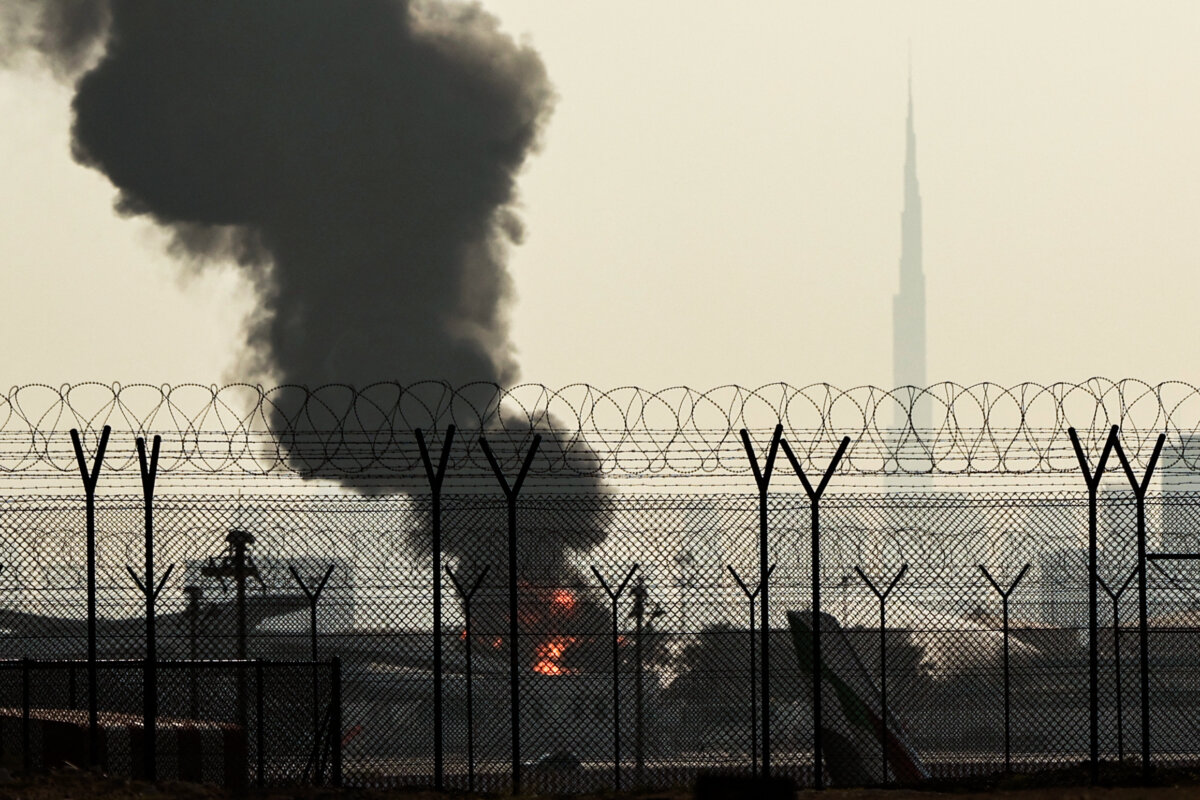 The Dubai skyline with the landmark Burj Khalifa skyscraper (R) is pictured as a smoke plume rises from an ongoing fire near Dubai International Airport on March 16, 2026. (AFP via Getty Images)
Israel also faced another day of bombardment from Iran, with the IDF issuing a statement via Telegram that it had identified missiles launched from Iran and was operating defensive systems to intercept the threat.
Several Gulf nations have reported intercepting missile and drone attacks from Iran. This includes Saudi Arabia, whose Ministry of Defense said it intercepted over a dozen drones on March 17 over its oil-rich eastern province, according to a series of posts on the department’s X account.
In a post on X, the Qatari Ministry of Defence said in the early hours of March 17 that its armed forces had intercepted an Iranian missile attack. The ministry then posted, several hours later, that it had intercepted a second wave of missiles.
The Ministry of Defence of the United Arab Emirates (UAE) said in a March 17 post that by 3:42 p.m. local time, it had already engaged 10 ballistic missiles and 45 unmanned aerial vehicles (UAVs). The post continued that since the start of the Iranian aggression, it had engaged 1,642 UAVs, 15 cruise missiles, and 314 ballistic missiles.
Gulf states were also reporting fatalities and injuries as a result of missile attacks.
The Abu Dhabi Media Office said via X that a Pakistani national had died after shrapnel fell in the Baniyas area of the UAE capital, after air defense systems intercepted a ballistic missile.
The Embassy of Pakistan in Abu Dhabi said on X that it was “profoundly saddened” by the loss of one of its citizens, and that it was in close coordination with local authorities to support the bereaved family and facilitate the repatriation process.
Kuwait’s Ministry of Health said that two medics were injured when missile shrapnel fell on an ambulance center. Both individuals are stable, the ministry said in a post on X.
 Friends Read Free
Copy
Facebook
Tweet
Friends Read Free
Copy
Facebook
Tweet