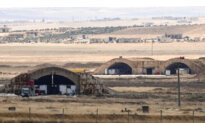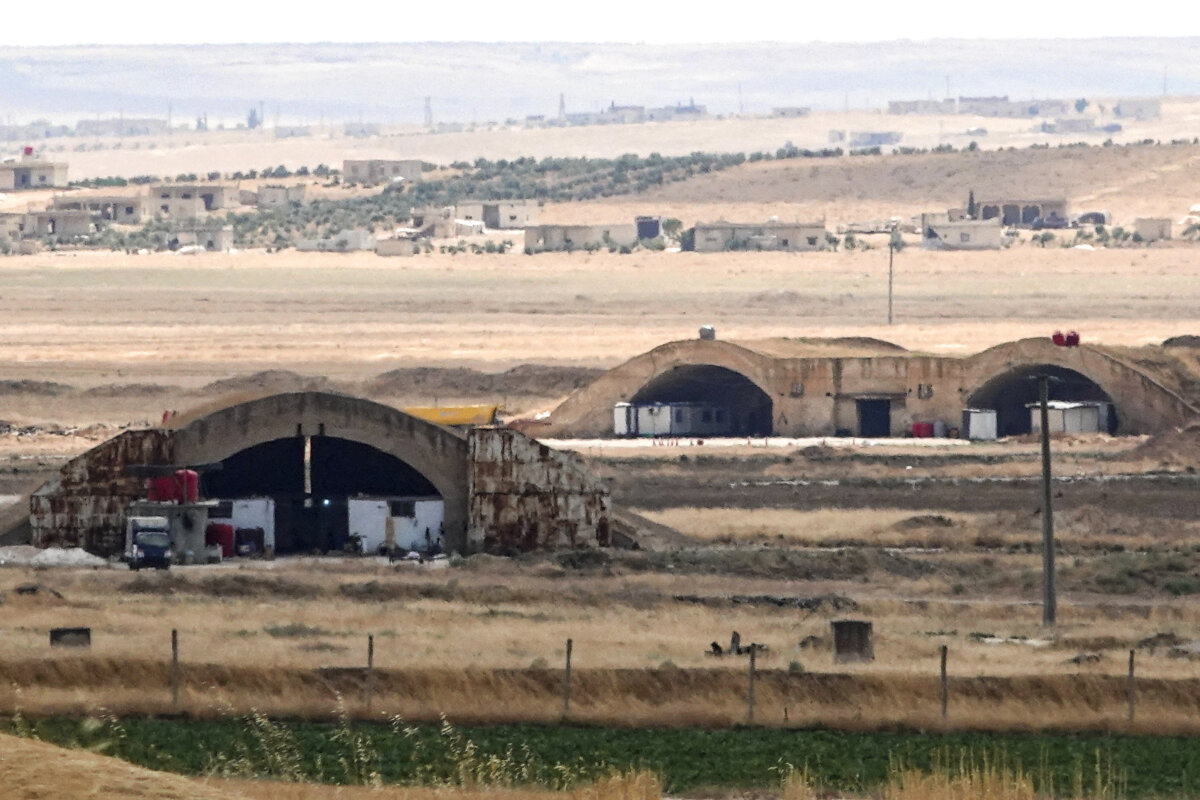

Israel and Turkey have deepened their dispute over Syria after Israel defended its strike on a Syrian military airbase, saying it was preventing a Turkish military buildup.
Turkey and Syria rejected Israel’s claim, saying no such deployment was planned.
The latest exchange followed Israeli strikes on Abu al-Duhur Airbase in Syria’s Idlib province on Aug. 18, which Israel has linked to concerns that Turkey was seeking to expand its military footprint inside Syria.
The United States expressed concern over the Israeli strike and called for renewed diplomatic engagement between the parties.
Israeli Prime Minister Benjamin Netanyahu said the operation was intended to send a clear warning to Turkey after Israel concluded that Ankara planned to establish a military presence farther south in Syria.
“We will not tolerate a Turkish military establishment in Syria that threatens Israel,” Netanyahu said in a video posted on X on Aug. 19. “We made the message clear: Don’t. Apparently, they didn’t hear it well enough, so we made sure they understood it better.”
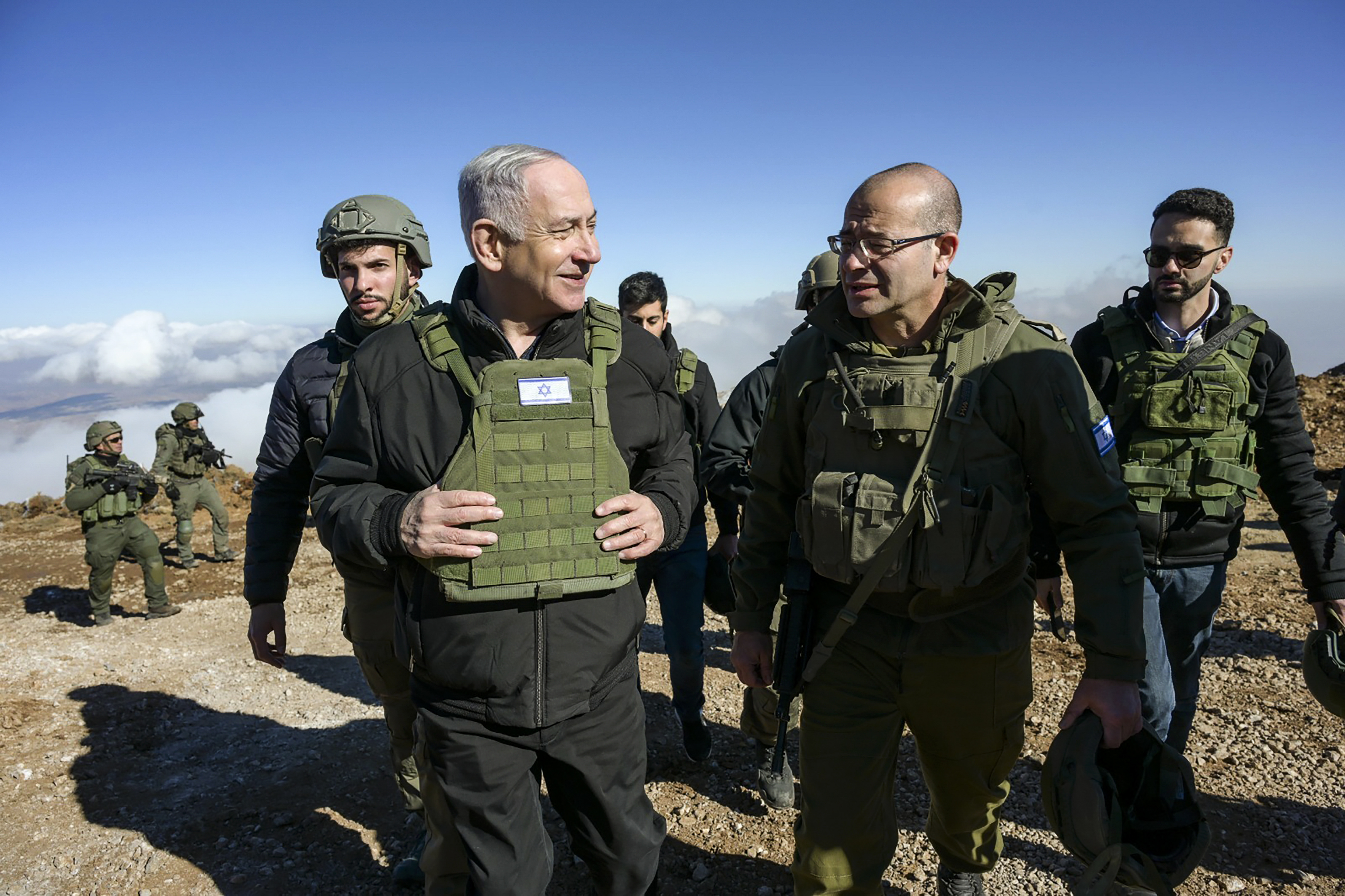 Israeli Prime Minister Benjamin Netanyahu (L) visits Israeli forces in a buffer zone inside Syria on Dec. 17, 2024. (Israel Government Press Office via AP)
“Israel will not allow any actor to threaten its security,” Katz wrote on X.
The Israeli military also signaled it was prepared to respond to any emerging threats from Syria.
During a visit to Israel’s security zone in southern Syria on Aug. 19, Israel Defense Forces (IDF) Chief of Staff Lt. Gen. Eyal Zamir said the military was closely monitoring developments across the Syrian front.
“We will not allow hostile forces to establish themselves on our borders, and we will know how to use our operational capabilities precisely where and when needed,” Zamir said.
He added that Israel must prevent both terrorist threats and “the formation of a significant military threat” near its frontier.
Syria, Turkey Reject Israel’s Justification
Syrian officials rejected Israel’s explanation for the strike, saying they had already made clear that Damascus had no plans to establish a Turkish military base at Abu al-Duhur.
Syrian Foreign Minister Asaad al-Shaibani said in written responses published by Axios on Aug. 19 that his government had informed Israel before the strike that there was “no intention to establish a Turkish base there, nor to establish a permanent Turkish military presence or deploy Turkish forces at the site.”
Al-Shaibani also disputed Israel’s claim that the airfield posed an immediate military threat. He said that the facility was “largely empty,” remained under rehabilitation, and had not yet become fully operational.
He acknowledged that Turkish military officers had visited the site several days before the strike but said the visit was part of routine military cooperation involving “training and the exchange of expertise.”
Syria was rebuilding its military institutions with assistance from several countries, including Saudi Arabia, Jordan, Qatar, Russia, and Turkey, he said, adding that Syria had the sovereign right to cooperate with any country.
Turkey also rejected Israel’s account of events, saying no Turkish military personnel were present at the airbase before or during the strike.
Turkish defense ministry spokesperson Rear Admiral Zeki Akturk said on Aug. 20 that Israel’s attack on Abu al-Duhur Airbase was intended to undermine Syria’s “stability, security, unity and integrity,” as well as damage its infrastructure.
“We state that there was no Turkish military delegation at the [Abu al-Duhur Airbase] in Syria before or during Israel’s attack on the base,” Akturk said.
Turkey would continue supporting Syria, he added, as it rebuilds its institutions and armed forces under what Ankara calls the “single army” principle.
U.S. special envoy for Syria Tom Barrack said on Aug. 18 that Washington was “deeply concerned” by Israel’s strikes on Abu al-Duhur Airbase, describing them as “an unnecessary escalation” that did not contribute to regional stability.
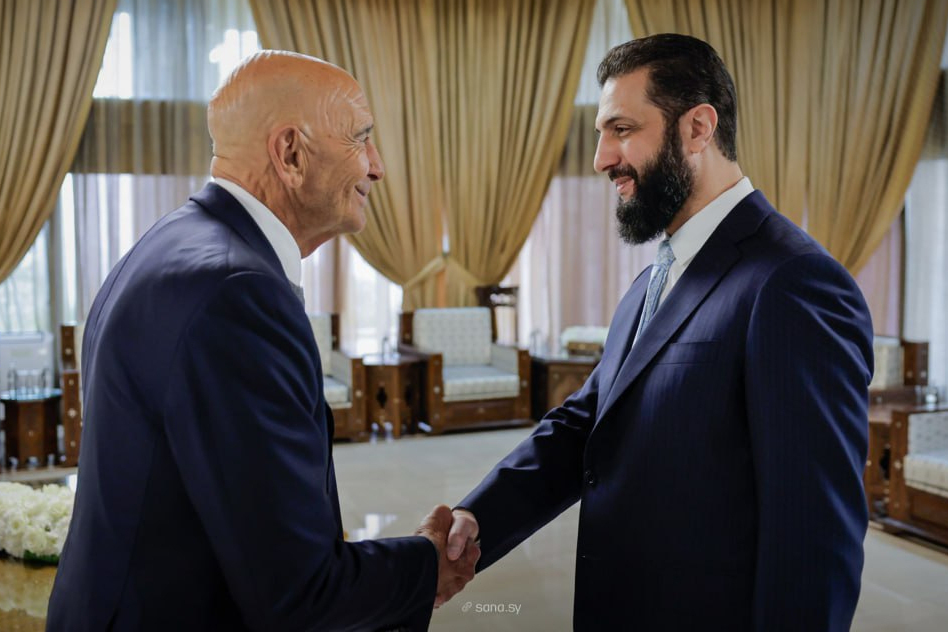 U.S. Ambassador to Turkey and special envoy to Syria Tom Barrack (L) shakes hands with Syrian President Ahmad al-Sharaa, in Damascus, Syria, on Jan. 18, 2026. (SANA via AP)
“The United States has in the past, and will continue in the future, to host discussions to encourage diplomatic cadence over kinetic frustration for both nations,” Barrack said.
He added that lasting de-escalation would require sustained dialogue and urged all parties to prioritize diplomacy over further military action.
The dispute highlights the increasingly different visions Israel and Turkey have for Syria following former President Bashar al-Assad’s removal from power.
After forces led by Ahmed al-Sharaa overthrew Assad in December 2024, Turkey emerged as one of Syria’s closest security partners, providing military training, helping rebuild state institutions, and expanding its diplomatic support for the new government.
Ankara has also strengthened regional defense ties, including through a recently announced defense pact with Pakistan and Saudi Arabia.
Israel, meanwhile, has expanded its military operations inside Syria since Assad’s ouster. Israeli forces moved into strategic territory, including the Syrian side of Mount Hermon, and have carried out repeated strikes across the country.
Israel says those operations are intended to prevent hostile groups from establishing positions near its border and to protect the Druze minority in southwestern Syria.
Tom Ozimek contributed to this report.
 Friends Read Free
Copy
Facebook
Tweet
Friends Read Free
Copy
Facebook
Tweet