The Israeli military said a series of strikes that it conducted on a hospital in Gaza on Aug. 25 that killed rescue workers, medics, and journalists, was intended to target a camera that they believe was being remotely operated by Hamas.
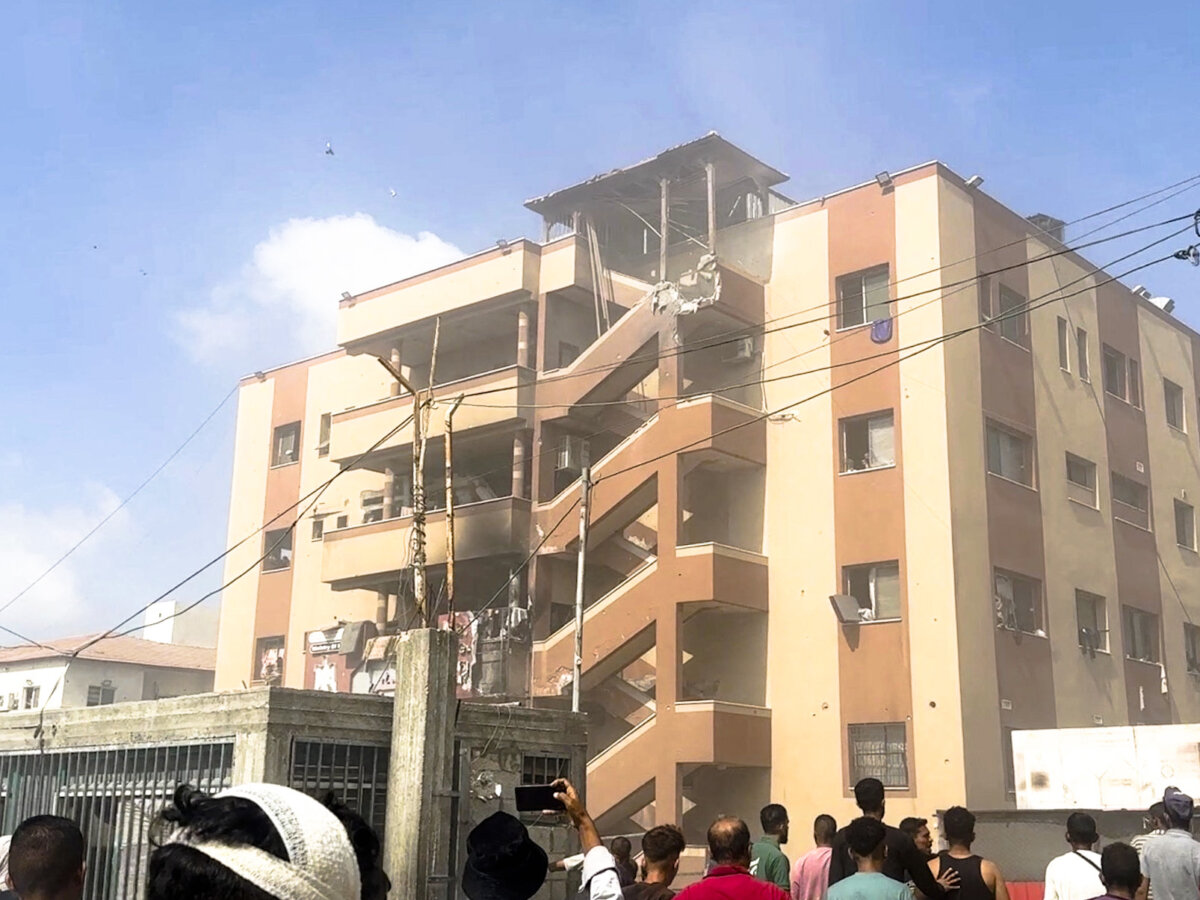
Footage and witness accounts of the incident indicate that Israeli forces initially struck a section of the Nasser Hospital in Khan Younis. As rescue workers, medics, and journalists arrived on the scene of the damaged hospital section, a second strike occurred, killing and wounding several more individuals.
Local health officials said at least 20 people were killed and scores more were injured. Exact casualty figures cannot be independently verified.
The Israeli government was quick to acknowledge reports of civilian casualties in the two strikes. It expressed regret for those losses and announced that it would investigate the incident.
Following up on the matter in an Aug. 26 statement, the Israel Defense Forces (IDF) said its initial inquiry found that troops from the IDF Golani Brigade had “identified a camera that was positioned by Hamas in the area of the Nasser Hospital that was being used to observe the activity of IDF troops, to direct terrorist activities against them.”
The IDF said its concerns about the alleged Hamas camera were further validated “by the documented military use of hospitals by the terrorist organizations throughout the war, and by intelligence confirming Hamas’ use of the Nasser Hospital to carry out terrorist activities since the start of the war.”
“In light of this, the troops operated to remove the threat by striking and dismantling the camera, and the inquiry showed that the troops operated to remove the threat,” the IDF stated.
Citing Palestinian health officials, Reuters reported that one of their Gaza-based contractors, a cameraman named Hussam al-Masri, had been killed near a Reuters live broadcasting position during the initial strike.
Among those killed in the second strike were Mariam Abu Dagga, who worked on a freelance basis for the Associated Press; Mohammed Salama, who worked for Qatari broadcaster Al Jazeera; Moaz Abu Taha, another freelancer for a variety of outlets including Reuters; and Middle East Eye correspondent Ahmed Abu Aziz.
Hatem Khaled, a photographer who also did contract work for Reuters, was injured in the strikes.
According to the IDF statement, investigators determined that six of the people killed in the strikes on the hospital were Hamas members, whom the IDF identified as Jum’a Khaled Jum’a al-Najjar, Hisham Tayseer Ibrahim Quweder, Imad Abd al-Hakim Ali al-Shaer, Muhammad Ahmad Salem Abu Hadaf, Salah Yusuf Muhsin Barbakh, and Omar Kamal Shahada Abu Teim.
“The Chief of the General Staff added that six of the individuals killed were terrorists, one of whom took part in the infiltration into Israeli territory on Oct. 7th. At the same time, the Chief of the General Staff regrets any harm caused to civilians,” the IDF stated.
Concluding its statement, the IDF vowed to continue investigating the strike, including aspects of the authorization and decision-making process for strikes such as those seen on Aug. 25, and the type of weapons used in such strikes.
In an Aug. 25 joint statement, Reuters and The Associated Press demanded a quick and thorough investigation into the strikes that killed their journalists and other civilians.
“The IDF has a duty under international law to protect journalists and civilians and to take all feasible precautions to prevent harm. Striking a hospital, followed by a second strike while journalists and rescuers were responding, raises urgent questions about whether these obligations were upheld,” Reuters and The Associated Press said on Aug. 25.
 Friends Read Free
Copy
Facebook
Tweet
Friends Read Free
Copy
Facebook
Tweet