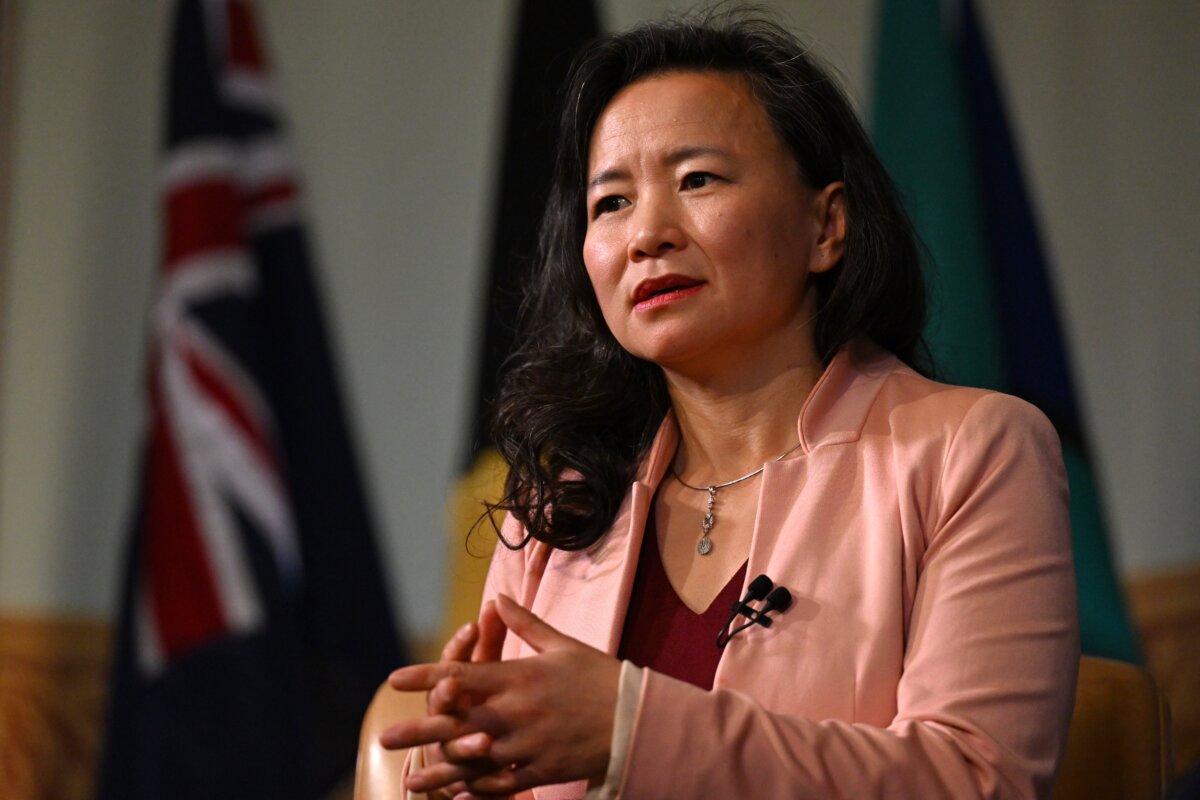

BRISBANE, Australia—Journalist Cheng Lei, who was arbitrarily detained by the Chinese Communist Party (CCP) for over 1,000 days, warns that fear of Beijing still runs far and deep in Australia.
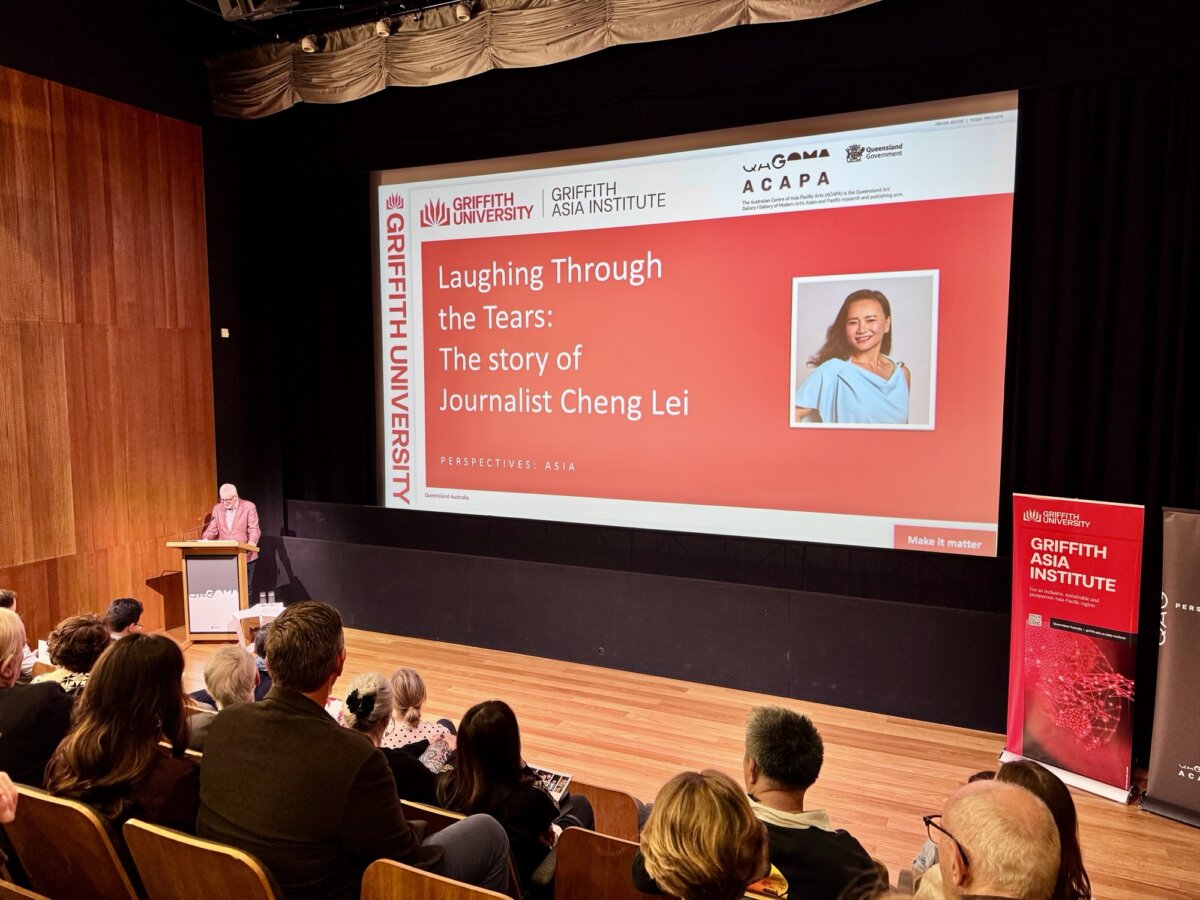
“Sometimes when I’m with Chinese Australians, there will be this [situation]: If we’re taking a group photo, a few will opt out because they say, ‘I’m going to China soon.’ And that makes me feel weird,” Lei told an audience at the Gallery of Modern Art in Brisbane.
“It’s not right that the fear extends this far and this deep,” Lei said during the launch of her book, “Cheng Lei, A Memoir of Freedom,” with the Griffith Asia Institute.
In another example, Lei said she participated in a forum in Canberra where one of the guests was known to have anti-CCP views.
At the time, the organisers had trouble finding a Chinese interpreter to assist with translation into English.
“So I had to do it [interpreting the speeches], which is fine, but this is in our capital city, Canberra,” Lei said.
“And the fear goes to so many people that they sometimes don’t feel that it’s fear anymore, or they don’t think they’re losing their freedom this way because they haven’t had total freedom for a while.”
In fact, during the Questions and Answers segment of the evening, one young Hong Kong lady asked not to be photographed over concerns about her family in the city.
In 2020, the CCP’s rubber stamp legislature passed the National Security Law, which effectively ended the independence and democratic system of Hong Kong. The situation forced thousands of Hong Kongers to leave the once-vibrant city.
Meanwhile, Lei also said Australia’s trade dependency on China was a big issue.
“We benefit, we prosper from the business, but we also want to uphold our values,” she said.
“At the end of the day, I feel it’s my responsibility to defend freedom, and many others are trying to do the same—if we uphold our own integrity, if we speak up when there is repression of freedom—and it’s such a difficult and delicate balance [to maintain].”
A Political Pawn in Beijing’s Coercion Against Australia
In August 2020, Lei, who was a news anchor for the China Global Television Network, a Chinese state-owned English-language news channel, was detained without reason as part of the CCP’s ongoing coercion against the Australian government.
The former Morrison government had publicly outlined the need for an independent global inquiry into the origins of COVID-19, a move which saw Beijing roll out a series of arbitrary restrictions on Australian exports to China.
Regarding Lei, the CCP later charged her with “illegally supplying state secrets overseas,” claiming she had provided sensitive information to a foreign organisation. Lei rejected the charge.
The journalist was eventually sentenced to 2 years and 11 months in prison before being released in October 2023.
During her detention, Lei reported being subjected to repeated interrogation and harsh treatment, which took a toll on her physical and mental health.
Comments Come Amid Broader Concerns of ‘Transnational Repression’
Lei’s comments came amid a renewed global push against the issue of “transnational repression.”
According to the Group of Seven nations, transnational repression (TNR) represents an “aggressive form of foreign interference whereby states or their proxies attempt to intimidate, harass, harm or coerce individuals or communities outside their borders.”
The strategy deploys a range of methods that ultimately has a “chilling effect” on speaking out against human rights abusers or publicly calling out regimes that engage in the activity.
“TNR often impacts dissidents, journalists, human rights defenders, religious minorities, and those identified as part of diaspora communities,” the G7’s statement said.
New Zealand authorities have outright blamed the CCP for being the “most active” foreign regime trying to manipulate the government or society to be amenable to its interests.
In an assessment by the country’s domestic spy agency, a range of case studies were presented demonstrating the tactics used, including controlling information between affected communities and political leaders.
“A New Zealand government official was looking to arrange an opportunity to share important security advice with a community but was discouraged by a community leader who has undertaken activity in support of a foreign state’s objectives,” one case study said.
Concern About Influence of Chinese Advisor to Former Premier
In fact, Lei shared a similar view when asked about whether she received help from then-Victorian Premier Daniel Andrews during her ordeal.
“My partner at the time, Nick [Coyle], was in contact with Dan’s executive assistant or chief of staff about him bringing up my case, as all of the Australian premiers or other officials who were going to China were briefed to do by DFAT (Department of Foreign Affairs and Trade),” Lei revealed.
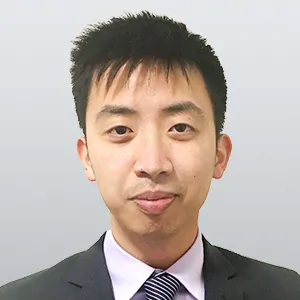
“He had the talking points, and he would not have been the only one to do so. But maybe, under the advice of his Chinese advisor [Marty Mei], and maybe in consideration of the post-political riches that he wanted to gain in China, he did not [help].”
Lei said there were reasons given for not presenting her case.
“He said it was because there was nobody from the judicial system present. That is not the point,” Lei said.
“And I would love to see him face to face and ask him why, and see the look on his face.”
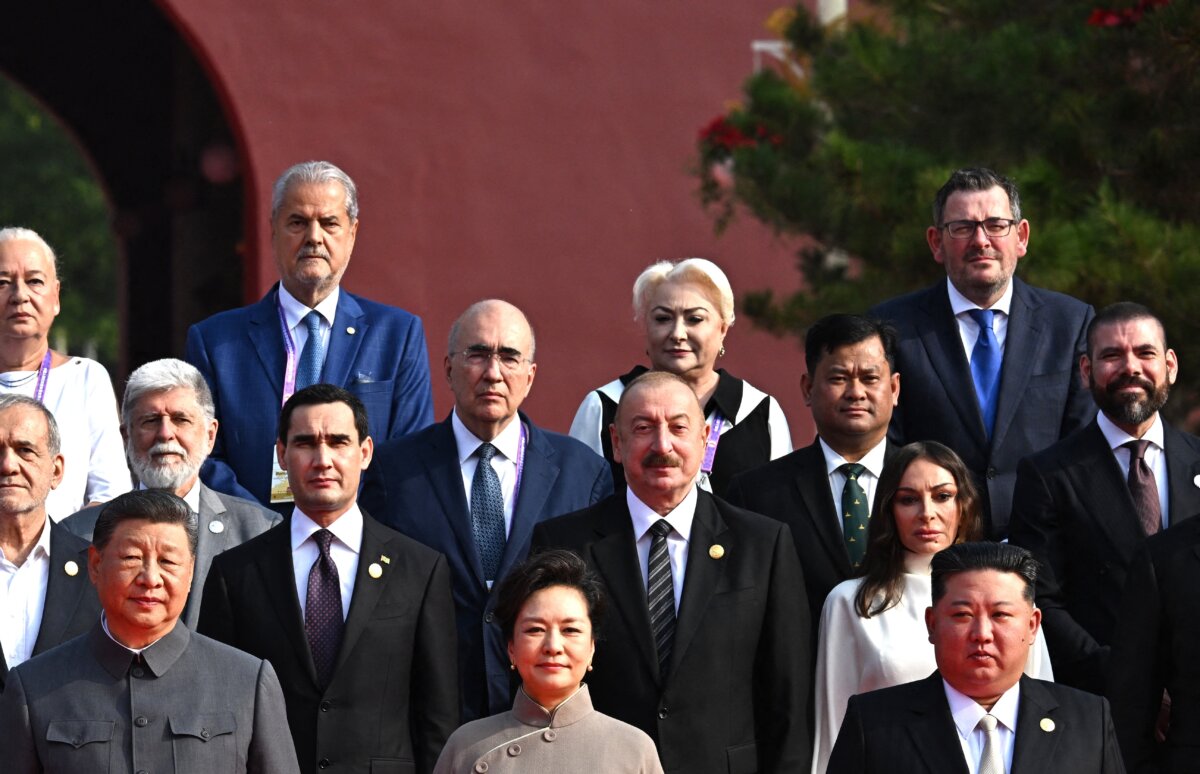
Last week, Andrews faced fierce scrutiny for his decision to attend Beijing’s military celebration of the end of the Second Sino-Japanese War, appearing in photograph with authoritarian leaders Vladimir Putin and Kim Jong Un.
 Friends Read Free
Copy
Facebook
Tweet
Friends Read Free
Copy
Facebook
Tweet