
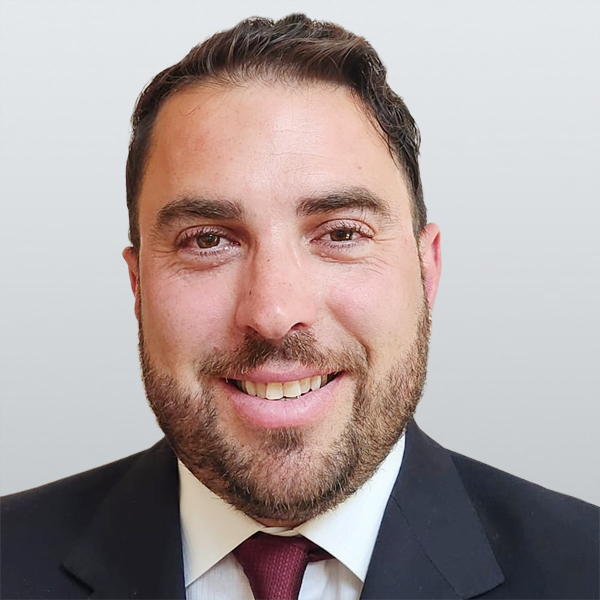
A federal court judge has deferred deportation for a Lebanese drug dealer due to the convict having a “suspicious lung lesion” that could be a tumour.
Justice Angus Grant said in his Feb. 11 decision that despite past convictions for possessing fentanyl and hydromorphone for the purpose of trafficking, Lebanese citizen and Canadian permanent resident Mohamad Kassar’s deportation will be stayed in order to ensure essential medical treatment is not interrupted.
“Given [Kassar’s] medical vulnerability, and given his dependence on uninterrupted treatment to avoid morbidity and potential mortality, I am satisfied that [he] has provided clear, convincing, and non-speculative evidence of the harm that he would experience if his removal is not deferred,” Grant wrote in his decision, noting that Kassar had first come to Canada 35 years ago as a permanent resident.
Specifically, Grant pointed to evidence of Kassar’s medical conditions provided in letters from his doctor Meshari Tallaa that said Kassar has “a suspicious lung lesion that may be lung cancer,” and also has depression, chronic obstructive pulmonary disease, and chronic pain.
Grant said there is clear evidence that Kassar’s conditions require uninterrupted access to all his medications and that if he is returned to Lebanon, he may face pharmacies being out of stock and prescription drugs sometimes being hard to obtain, making deportation at this time a threat to his life.
Case
Kassar was convicted of the two drug charges in 2018 and sentenced to serve consecutive sentences of 36 months for the fentanyl charge and nine months for the hydromorphone charge, according to court documents.
Due to his convictions a deportation order was issued against Kassam in 2019. Canadian law allows the deportation of permanent residents who have been convicted of serious crimes.
A pre-removal risk assessment filed by Kassar was rejected in June 2020, and he was released on parole in June 2021.
However, numerous delays then occurred in Kassar’s deportation, according to Grant, who noted that the Canada Border Services Agency (CBSA) “appears to have taken no steps to remove Mr. Kassar for several years” after the deportation order was legally enforceable.
In April 2025, Kassar then filed a humanitarian and compassionate (H&C) application with Immigration, Refugees and Citizenship Canada to overturn his deportation, followed by applying last month for a temporary resident permit (TRP). Grant noted that both applications are still pending a decision.
On Jan. 22, CBSA ordered Kassar to report for deportation from Canada. However, he applied a week later for a deferral of deportation because he still had the H&C and temporary resident applications pending. This deferral was denied by the CBSA on Feb. 2, which led to Kassar’s application for judicial review and motion for a stay of removal.
“I am convinced that a serious issue arises as to whether the officer adequately considered whether Mr. Kassar’s medical conditions, when considered in light of the healthcare system in Lebanon, posed an immediate impediment to removal,” Grant said of the CBSA’s Feb. 2 denial of Kassar’s deferral request.
The CBSA said in its Feb. 2 denial that Kassar’s claim that he wouldn’t be able to dependably receive treatment for his conditions if back in Lebanon “speculative,” and also said his documentation “lacked detail on follow-up tests related to the malignancy of the lung lesions.”
Deferral
Grant noted in his ruling that despite Kassar’s health conditions possibly being “chronic and lifelong,” the decision to defer his deportation “was not an indefinite one” and does not depend on whether his health gets better.
“Rather, it was tied to his request that his removal be deferred until a determination could be made on his H&C or TRP applications,” Grant wrote. “While the request to defer pending a first level H&C determination may amount to an indeterminate and lengthy one, the same cannot necessarily be said about the TRP application.”
Grant said that despite granting a stay in Kassar’s deportation, he takes the gravity of the case seriously.
“I do not take this fact lightly. The opioid crisis in this country is real, and it has harmed many people,” Grant wrote, adding that “in most circumstances, the balance of convenience would favour the strong public interest in removing non-citizens who have played a role in that crisis.”
Opioid-related deaths have taken the lives of more than 50,000 Canadians since 2016, according to Health Canada.
Conservatives Respond
Conservative Leader Pierre Poilievre commented on the case, saying Kassar is attempting to “dodge accountability” for his crimes.
“A non-citizen criminal convicted of trafficking deadly opioids is exploiting Canada’s healthcare system to stall deportation and dodge accountability,” Poilievre posted Feb. 20 on X.
“Canadians trying to access care shouldn’t be pushed aside so criminals like this can game the system. Charge him. Convict him. Deport him.”
 Friends Read Free
Copy
Facebook
Tweet
Friends Read Free
Copy
Facebook
Tweet