
Kazakhstan’s parliament on Nov. 12 passed a law through its lower house banning “LGBT propaganda” online or in the media, mandating fines for violators and sentences of up to 10 days in prison for repeat offenders.
The legislation was voted through the Majilis, the former Soviet republic’s junior chamber, with unanimous support.
Lawmaker Yelnur Beisenbayev defined “propaganda” in late October in relation to the legislation as “dissemination of information about non-traditional sexual orientation and commitment to it whether publicly or through the use of mass media … including intentionally distorted information for an indefinite number of people in order to shape positive public opinion,” Tengri News reported.
Kazakh Education Minister Gani Beisembayev, speaking in support of the bill, told lawmakers: “Children and teenagers are exposed to information online every day that can negatively impact their ideas about family, morality, and the future.”
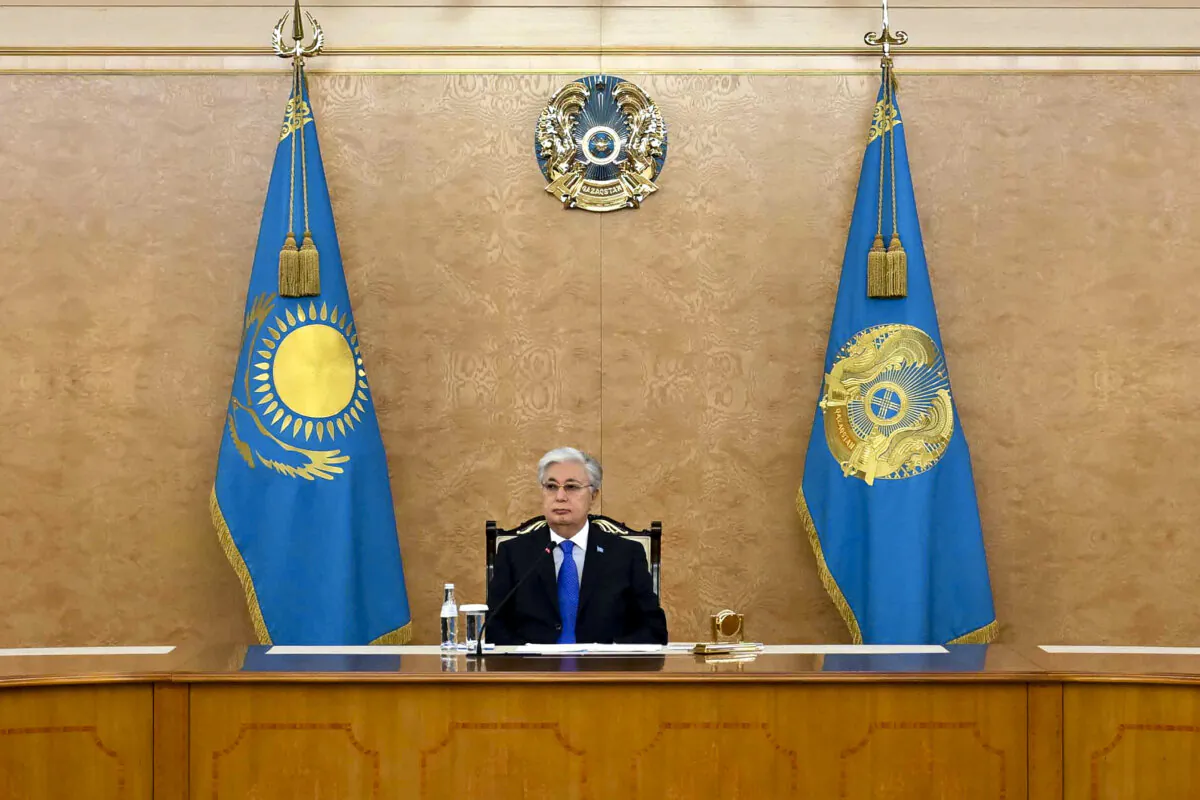
The bill will now be voted on in the Kazakh Senate and, if it passes, will go to President Kassym-Jomart Tokayev for his signature before it becomes law.
The legislation is likely to go the distance as both houses of the parliament are controlled by parties loyal to the president, who has indicated his support.
Tokayev, who has been Kazakhstan’s head of state since 2019, has in recent months repeatedly stressed the need to uphold “traditional values.”
In March, at a meeting of the Kazakh National Kurultai (Congress), he said, “For decades, so-called democratic moral values, including LGBT, have been imposed on many countries, and under this guise, international nongovernmental foundations and organizations have grossly interfered in their internal affairs.”
Tokayev also went on to accuse the nongovernmental organizations of having “stolen” billions of dollars in the course of their liberal evangelism, and praised U.S. President Donald Trump for his administration’s work to “identify large-scale abuses and expose the political hypocrisy of the deep state and restore traditional moral values deserves support,” the Kazinform International News Agency reported.
The majority-Muslim, but largely secular country, legalized homosexuality in the 1990s; however, social attitudes within Kazakhstan remain deeply conservative.
Pressure groups have warned against the new bill, saying that it amounted to “censorship” and would violate Astana’s international commitments to human rights.
“Together with Kazakhstani civil society, we call on lawmakers to reject these draft amendments before they become law. Banning so-called ‘LGBT propaganda’ is not about protecting children, it’s about institutionalizing stigma, fear, and censorship,” Amnesty International’s Eastern Europe and Central Asia Director Marie Struthers said.
The Kazakh bill bears similarities with laws passed in Hungary and Slovakia earlier this year.
Slovakia passed an amendment to its constitution that recognizes only two sexes, along with other measures in September, which states that the nation only recognizes male and female, and that Bratislava retains its sovereignty in matters of “national identity,” especially in fundamental cultural-ethical questions.
It also bans surrogacy and places tighter restrictions on who is eligible to adopt a child, heavily favoring married couples.
Hungary also passed a constitutional amendment recognizing only two sexes earlier this year.
Russia, too, introduced a similar law in 2023. Moscow describes the international LGBT movement as an “extremist organization.”
Reuters contributed to this report.
 Friends Read Free
Copy
Facebook
Tweet
Friends Read Free
Copy
Facebook
Tweet