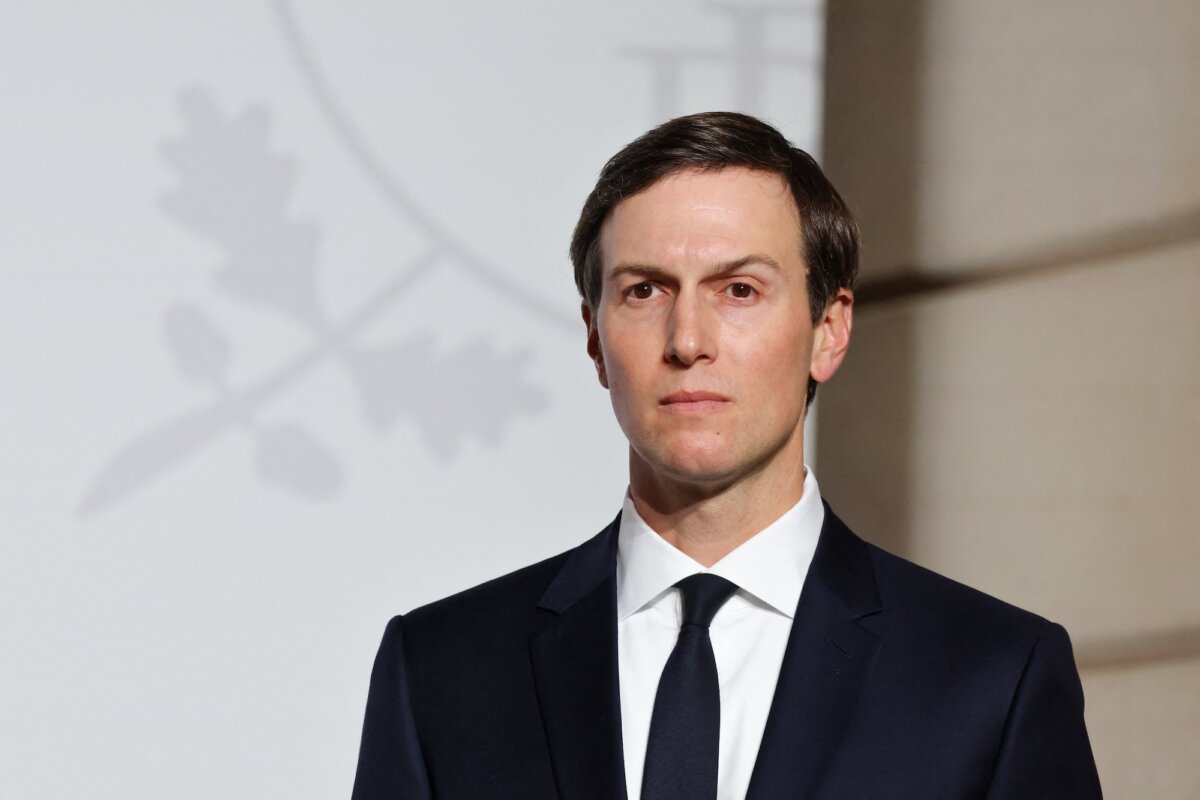

U.S. special envoy Jared Kushner and Israeli Prime Minister Benjamin Netanyahu agreed on Aug. 17 that the Hamas terrorist group must disarm before the Gaza Strip is rebuilt or Israeli forces withdraw from the territory, according to Israeli officials and Kushner’s account of the talks.
The nearly four-hour meeting in Jerusalem focused on bridging differences between Israel and the Trump administration over a 15-point road map intended to advance U.S. President Donald Trump’s broader peace plan for Gaza.
Senior Israeli officials told Epoch Magazine Israel that Netanyahu and Kushner agreed that U.S. Maj. Gen. Jasper Jeffers, commander of the International Stabilization Force in Gaza, would oversee Hamas’s disarmament.
The officials said the two sides also agreed that Israeli troops would not withdraw until Gaza had been fully demilitarized. Netanyahu rejected a separate request from Kushner that Israel halt targeted killings in the territory, they said.
Kushner offered a similar account in an interview with Fox News, saying the two sides had resolved several concerns and misunderstandings over how the road map would be implemented.
“We have a plan to rebuild Gaza, but we will not allow Gaza to be rebuilt until the demilitarization occurs,” Kushner said.
“Once we get [Hamas] into full compliance and we’re able to get the demilitarization done, then we’ll discuss the Israeli withdrawal.”
Kushner said the ultimate objective remained a complete Israeli withdrawal from Gaza, but only after Hamas had been “really demilitarized” and a governing structure capable of maintaining security was in place.
“We don’t want Gaza to ever be a threat to Israel again,” he said.
Working Groups Established
Netanyahu’s office described the discussions as “deep and constructive” and announced the formation of two working groups.
The first will focus on the “disarmament and demilitarisation of Gaza,” which Israel and the U.S.-led Board of Peace agreed should be completed promptly and “before any reconstruction happens in Gaza,” the prime minister’s office said in an Aug. 17 statement.
The second group will address sanitation, clean water, and other public health problems affecting Gaza residents and Israelis.
Senior Israeli officials told Epoch Magazine Israel that Jeffers, an infantry and special operations officer, would supervise the surrender of weapons by Hamas.
Israeli President Isaac Herzog also met with Kushner and Board of Peace High Representative Nickolay Mladenov in Jerusalem.
“I was impressed that Israel’s security interests are an important and central element of their plan,” Herzog said in a statement, noting that he encouraged efforts to secure “a brighter and more secure future” for Israel, Gaza, and the wider region.
Kushner also addressed U.S. negotiations with Iran, confirming backchannel contacts between Washington and Tehran that are “probably more robust” now than ever before.
Despite communications that Kushner described as “very positive and active,” he said Tehran was “not showing any interest in doing something that makes sense for [the United States].”
Iran must be prepared to reach a “real deal” that rules out nuclear weapons and support for terrorism, Kushner said, noting that Trump was willing to remain patient rather than “rush” into an agreement that fails to lock in key U.S. objectives.
Hamas Faces 90-Day Test
The Jerusalem talks followed Kushner’s meeting in Cairo with senior Hamas official Khalil al-Hayya, mediators, and representatives of the Palestinian technocratic committee expected to assume civilian control of Gaza.
Kushner said Hamas reaffirmed its commitment to Trump’s 20-point peace plan and the accompanying 15-point road map, including a pledge to surrender its weapons.
“He signed a document on it last week and further reiterated his commitment,” Kushner said of al-Hayya, when asked whether the Hamas official had pledged that the group would disarm.
“They said all the right things.”
Kushner cautioned that it remained difficult to trust the U.S.-designated terrorist group following its Oct. 7, 2023, attack on Israel.
“We’re going to give them a chance to perform, but it’s going to have to be based on actions and steps,” he said. “I hope it will be true.”
Kushner said weapons removal could begin within 30 days, with Hamas tunnels potentially filled in over the following 60 to 90 days.
“That would be the elimination of a huge security threat for Israel—almost an unthinkable achievement,” he said. “And if they don’t follow through on their commitment, everyone will see that they’re not genuine about peace.”
Kushner added that if Hamas fails to live up to its promise to disarm, “then Israel will have a lot more support from the U.S. and others to go and finish the job in the appropriate way.”
Hamas said in a statement following the Cairo meetings that its delegation supports Trump’s 20-point peace plan for Gaza and the follow-on 15-point implementation road map put forward by the Board of Peace, while accusing Israel of failing to adhere to the plan’s ceasefire condition and of withholding clear approval of the road map.
After Kushner’s visit to Israel, Hamas spokesman Hazem Qassem told AFP that the group remains committed to the U.S.-backed plan.
 Friends Read Free
Copy
Facebook
Tweet
Friends Read Free
Copy
Facebook
Tweet