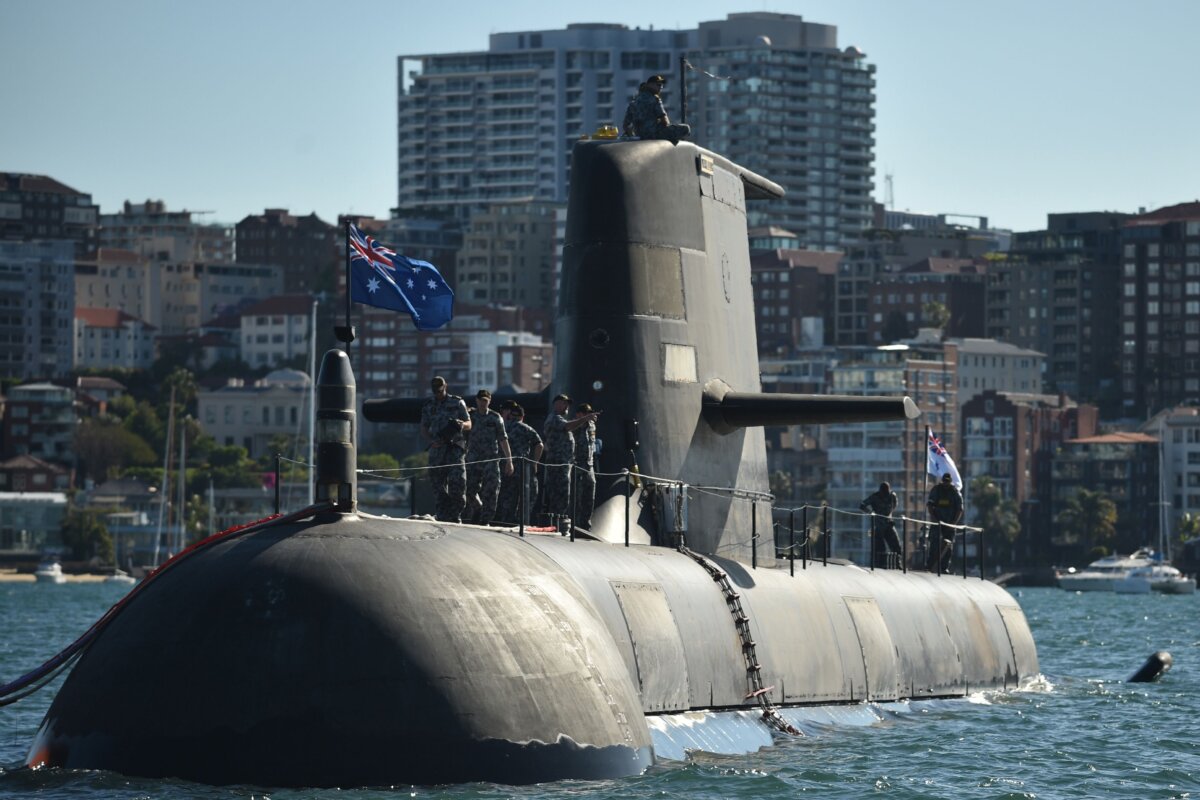

Billions of dollars have been set aside to extend the lifespan of the ageing Collins class of submarines before AUKUS ships become part of the fleet.
The Albanese government announced on May 19 it will be changing its sustainment approach to the boats, meaning the six submarines won’t have their decades-old propulsion generators replaced.
Rather, an analysis of each submarine will take place to determine what needs to be replaced in order to keep the boats in service.
The program is expected to cost $11 billion.
HMAS Farncomb, the second of the Collins-class submarines to enter service in the Australian Navy, will undergo its extension service within weeks and will take longer than two years.
The navy has operated the fleet which entered service from the mid-1990s, but the boats have recently faced corrosion issues and maintenance delays.
The government claims the change to their sustainment won’t impact the plan to give each submarine an extra 10 years of life.
Australia’s promised nuclear-powered submarines under the AUKUS program are first set to arrive in the early 2030s.
The Collins-class boats were listed a “product of concern” in late 2024, as only one of the six submarines were fully operational.
This resulted in “enhanced ministerial oversight” of the submarines’ sustainment.
Defence Minister Richard Marles said extending the life of all six Collins-class submarines was “critical to maintaining that edge as we transition the navy from conventional to nuclear-powered submarines.”
Defence Industry Minister Pat Conroy said the life of type extension was a critical capability decision.
“Strong collaboration with Defence industry partners will be essential to keeping the Collins-class fleet available as we move towards a nuclear-powered submarine capability,” he said.
By Tess Ikonomou in Canberra
 Friends Read Free
Copy
Facebook
Tweet
Friends Read Free
Copy
Facebook
Tweet