

Latvian President Edgars Rinkevics on May 19 dismissed Russia’s accusation that his country was allowing Ukraine to prepare drone launches from its territory.
“Russia is lying by claiming that Latvia allows any country to use Latvian airspace and territory to strike Russia or any other country,” he wrote in a post on X.
A spokesperson for the Ukrainian Foreign Ministry also dismissed Moscow’s claims about the preparation of drone attacks against Russia from Latvia, labeling them “falsehoods” that Ukraine refutes.
“Ukraine does not use the territory or airspace of Latvia in its operations against Russia and does not intend to do so,” Heorhii Tykhyi, the ministry’s spokesman, said in a May 19 post on X. “Russian lies are merely an extension of its broader propaganda campaign aimed at destabilising public opinion in Latvia and the wider Baltics. We thank our Latvian friends for seeing right through them.”
Earlier on May 19, Russia’s Foreign Intelligence Service (SVR) said Kyiv was in the process of preparing to make an unmanned aerial vehicle (UAV) strike from Latvian territory, as well as from other Baltic states.
“According to the information received, Kyiv does not intend to limit itself to using the air corridors provided to the Ukrainian Armed Forces by the Baltic states. Drones are also planned to be launched from these countries,” the SVR said in a May 19 statement. “The hope is that this tactic will significantly reduce flight times to targets and increase the effectiveness of terrorist attacks.”
The SVR said Latvia had agreed to the operation despite fears of becoming a target of a retaliatory strike from Moscow, adding that Ukraine had managed to convince the Latvian government that the precise launch sites of the drones would be “impossible to determine.”
The Russian intelligence agency also said that Ukraine’s Unmanned Systems Force personnel had already been deployed to Latvia and were stationed at the Latvian military bases of Adazi, Selija, Lielvarde, Daugavpils, and Jekabpils, adding that Riga’s membership of NATO will not protect them from “just retribution.”
The trading of diplomatic barbs came the same day a NATO military jet shot down a suspected Ukrainian drone over Estonia.
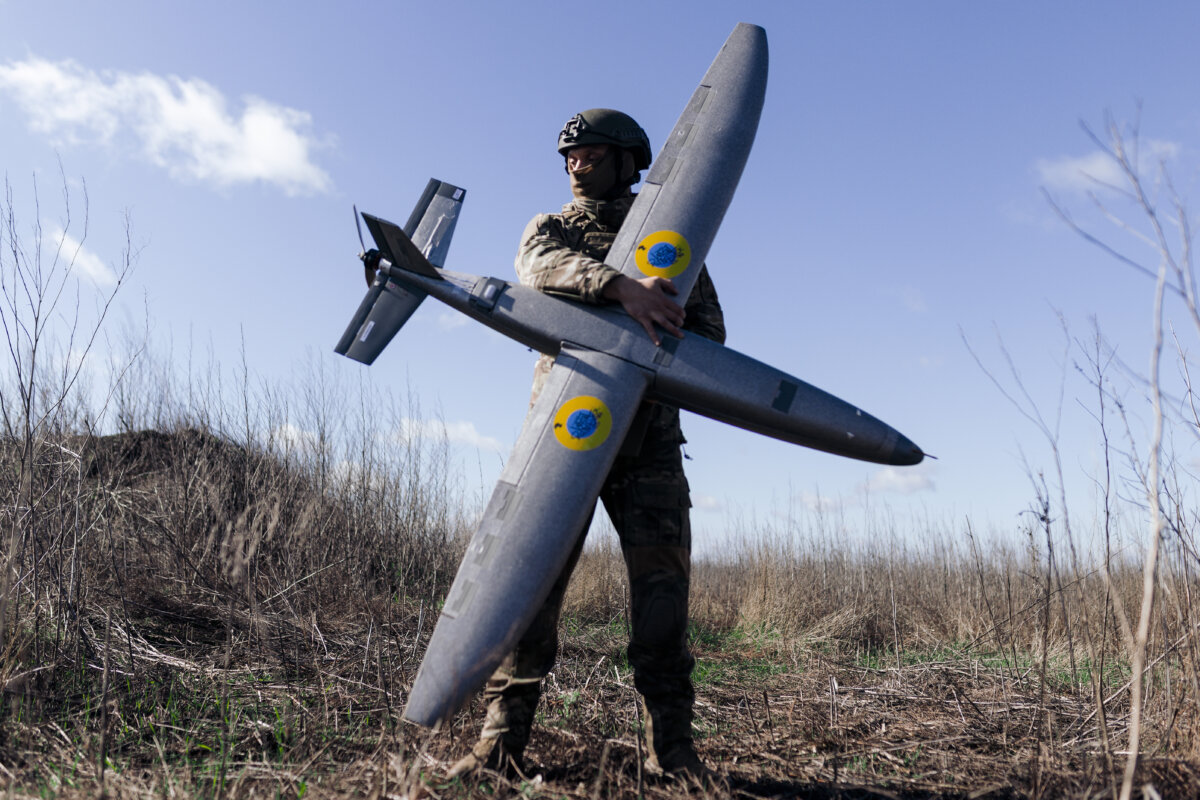
“The unmanned aerial system was likely of Ukrainian origin,” the Estonian military said in a statement.
It was shot down by a Romanian NATO fighter jet on a training flight at 12:14 p.m. local time.
“The incident occurred under the conditions of heavy electronic warfare, including GPS spoofing and jamming, by Russia,” the Estonian military added.
The military further stated that the UAV had been under constant monitoring before entering Estonian airspace, and that the target was “visually identified” before being taken down.
Latvia issued its first air threat alert over a possible drone entering its airspace on May 19, telling residents near the Russian border to stay indoors, with NATO Baltic Air Police jets summoned to the area.
Latvian authorities later said they found no evidence that a drone had entered its airspace.
Estonia blamed Russia for the incursions, with Estonian Foreign Minister Margus Tsahkna saying in a post on X that it was “the direct result of Russia’s war and provocations.”
Tykhyi said that Russia had redirected its UAV into Estonian airspace using “electronic warfare.”
“We apologise to Estonia and all of our Baltic friends for such unintended incidents,” Tykhyi wrote in a separate post on X.
Ukraine has stepped up long-range drone attacks on Russia, including around the Baltic. Since March, several Ukrainian military drones have strayed into the airspace of NATO members Finland, Latvia, Lithuania, and Estonia, which all border Russia, with those nations calling for better protection earlier this month.
Latvian Prime Minister Evika Silina resigned on May 15 over the government’s handling of the incursions.
On May 7, Latvia and Lithuania called for NATO to increase air defenses over the region after two suspected stray Ukrainian drones crossed over the border with Russia and crashed in Latvia, one of which exploded at an oil storage facility.
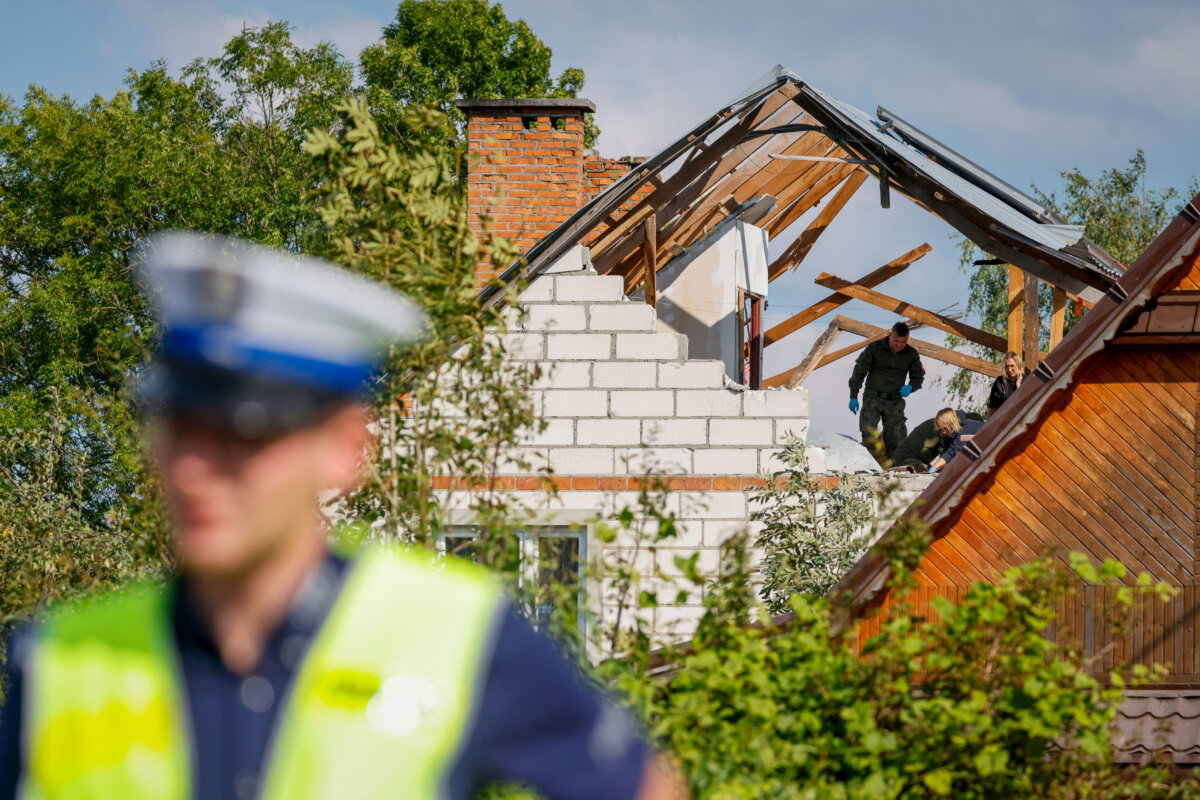
Last year, Polish authorities said that a home in the village of Wyryki-Wola had likely been hit by a Russian drone that entered Poland’s airspace on the night of Sept. 9.
Polish Coordinator of Special Services Tomasz Siemoniak told Polish television later that month that the house was likely hit by a missile fired from a Polish F-16 fighter jet.
“Everything indicates that it was a missile fired by our plane, defending Poland, defending the fatherland, defending our citizens,” Siemoniak said at the time.
Reuters contributed to this report.
 Friends Read Free
Copy
Facebook
Tweet
Friends Read Free
Copy
Facebook
Tweet



























