
Lebanese Parliament Speaker Nabih Berr said that Lebanon was included in the ceasefire deal between the United States and Iran on April 8.
He told London-based international news outlet Asharq Al-Awsat that the deal covers the fighting in his country, and that Israel is violating the agreement.
Berri said he had contacted Pakistan, a key mediator, to inform it of the Jewish state’s failure to comply, and asked it to talk to Washington to pressure Israel to end its strikes inside Lebanon.
He said he had been contacted by more than one party and received confirmation that Lebanon was included in the ceasefire.
Pakistan, too, has said Lebanon is covered by the deal, with Pakistani Prime Minister Shehbaz Sharif, whose government helped broker the deal, saying it was effective immediately “everywhere including Lebanon and elsewhere.” He invited both sides to Islamabad for further negotiations aimed at a comprehensive agreement.
“Both parties have displayed remarkable wisdom and understanding,” Sharif said in a post on X, expressing hope that the upcoming “Islamabad Talks” would deliver “sustainable peace.”
Lebanese Prime Minister Nawaf Salam, however, told Asharq Al-Awsat on April 8 that “no one negotiates for Lebanon except for the Lebanese state,” in his first comments since the two-week ceasefire was reached.
Salam declined to go into details about ongoing contacts, but stressed that Lebanon is mobilizing all efforts to help the country out of the crisis that he says it was dragged into against its will.
Lebanese President Joseph Aoun’s office released an April 8 statement on X, saying he “stressed the continuation of the Lebanese state’s efforts so that regional peace may extend to Lebanon in a firm and lasting way, in accordance with the principles on which the Lebanese have agreed: namely, the full sovereignty of their state over all its territory, its liberation from any occupying presence, and the restriction of the right to decide on war and peace and to use legitimate force to its constitutional institutions alone, and to no one else.”
Israel, however, has said that the deal doesn’t apply to its neighbor to the north and stepped up its assaults after the deal was announced by Washington.
The office of Prime Minister Benjamin Netanyahu said on April 8 posts on X that it supports American efforts to ensure that Tehran no longer poses a terror, nuclear, or missile threat to the United States, Israel, the region, or the world.
“The United States has told Israel that it is committed to achieving these goals, shared by the US, Israel and Israel’s regional allies, in the upcoming negotiations,” the prime minister’s office said. “The two-weeks ceasefire does not include Lebanon.”
The Israel Defense Forces (IDF) reiterated the comment from Netanyahu’s office about Lebanon, saying it will continue “to conduct targeted ground operations against Hezbollah.”
“The IDF will continue to operate across all fronts to defend Israel,” it said.
The Israeli offensive against the Iran-backed terror group in Lebanon began days after the start of the war, after Hezbollah fired rockets at Israel to avenge Iranian leader Ayatollah Ali Khamenei’s killing in an air strike on Feb. 28.
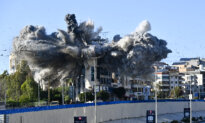
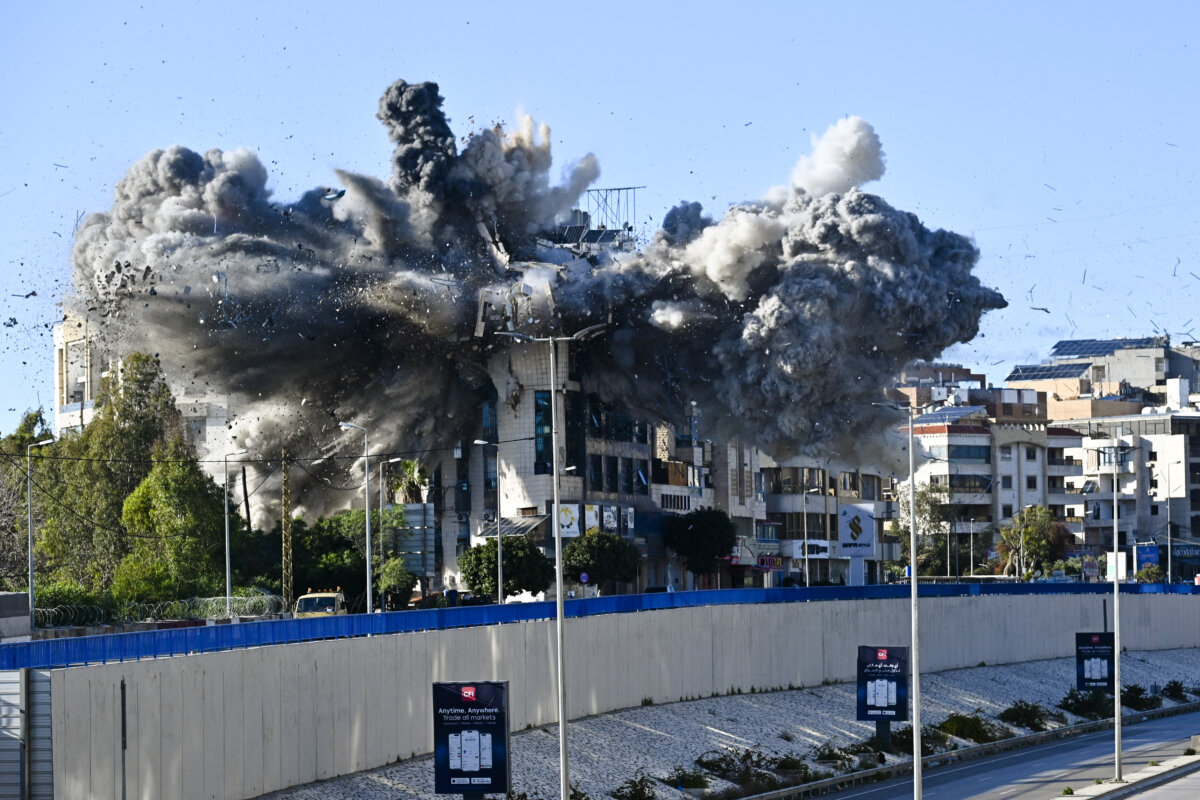
On April 8, Israel carried out its heaviest strikes on Lebanon since the conflict with Hezbollah began, as the Iran-aligned group paused attacks on northern Israel and Israeli troops in the country, Reuters reported.
Explosions hit Beirut, with more than 100 Hezbollah command centers and military sites targeted in the capital, the Bekaa Valley, and southern Lebanon, the IDF said in an April 8 post on X.
Meanwhile, in the United States, PBS White House correspondent Liz Landers said in an April 8 post on X that President Donald Trump had told her that the deal did not apply to Lebanon, labeling it a “separate skirmish.”
U.S. Vice President JD Vance also told reporters on April 8, while on a state visit to Budapest, Hungary, that Lebanon wasn’t included in the deal.
“I think this comes from a legitimate misunderstanding. I think the Iranians thought that the ceasefire included Lebanon, and it just didn’t. We never made that promise. We never indicated that was going to be the case,” Vance said.
“What we said is that the ceasefire would be focused on Iran, and the ceasefire would be focused on America’s allies, both Israel and the Gulf Arab states. Now, that said, the Israelis, as I understand it—again, I’m supposed to get a full report when I get on the plane—have actually offered to, frankly, check themselves a little bit in Lebanon because they want to make sure that our negotiation is successful. That’s not because that is part of the ceasefire.”
White House press secretary Karoline Leavitt also told an April 8 press briefing that “Lebanon is not part of the ceasefire; that has been relayed to all parties involved in the ceasefire.”
The Iranian regime-backed Islamic Republic News Agency (IRNA), however, reported in a Telegram post on April 8 that the country’s Supreme National Security Council had said that the agreement included “the cessation of war on all fronts, including against the heroic Islamic resistance in Lebanon,” and that Leavitt’s comment “clearly violates the ceasefire.”
This feeling was later echoed by Iranian Parliamentary Speaker Mohammad Bagher Ghalibaf, who said in an April 8 statement posted to X that there had been a “violation of 3 key clauses of the 10-point proposal,” giving most prominence to the situation in Lebanon.
Ghalibaf said that what had been agreed was “an immediate ceasefire everywhere, including Lebanon and other regions, effective immediately.”
He further added that the entry of a drone into Iranian airspace and the “denial of Iran’s right to enrichment (of uranium)” made the prospect of a bilateral ceasefire or negotiations unreasonable.
French President Emmanuel Macron also stated on April 8 that the ceasefire agreement “fully includes Lebanon” and described the inclusion of Beirut in the two-week truce as “a good and even essential thing.”
“What we are witnessing today, both from what we have seen with the [Israeli] strikes and the occupation of southern Lebanon, cannot be a long-term solution, we know that,” Macron said during a defense council meeting on April 8.
Victoria Friedman and Reuters contributed to this report.
 Friends Read Free
Copy
Facebook
Tweet
Friends Read Free
Copy
Facebook
Tweet