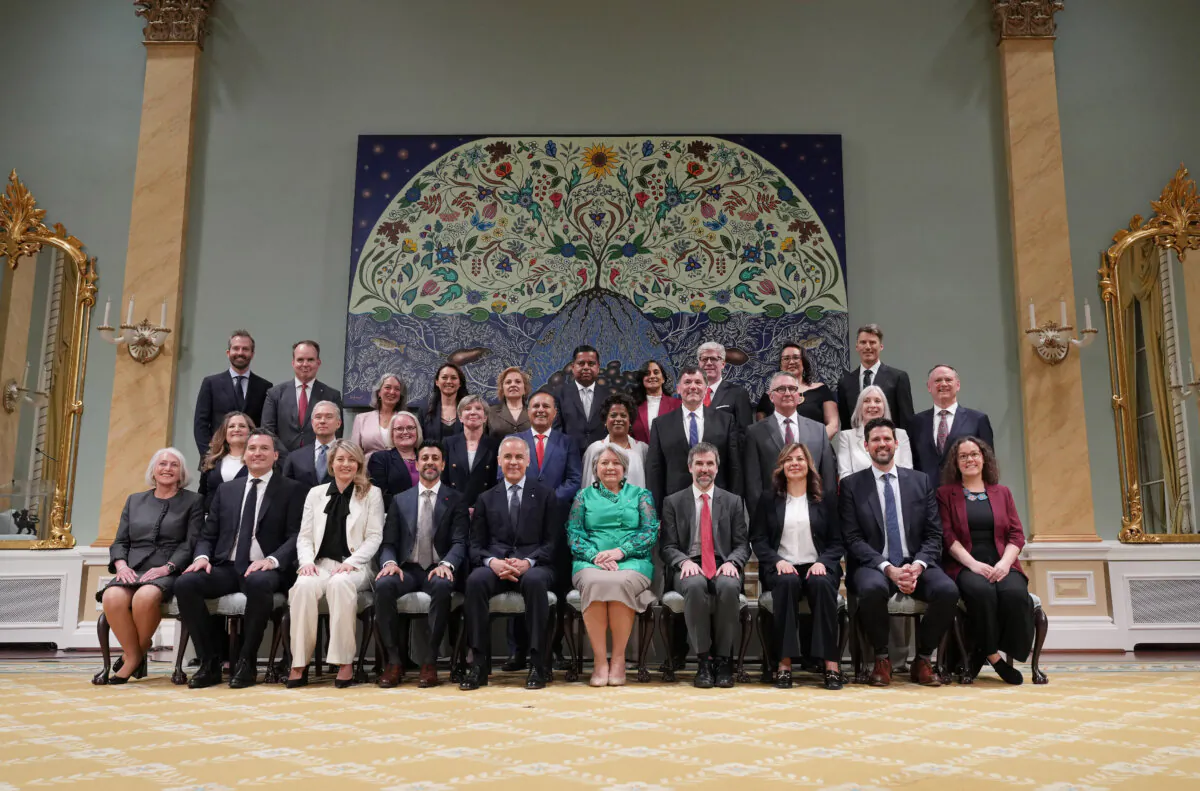
With the House of Commons set to return from holiday break on Jan. 26, Liberal cabinet ministers will meet in Quebec City this week to chart the course for the upcoming parliamentary sitting.
The meetings taking place on Jan. 22 and 23, and follow Prime Minister Mark Carney and other ministers’ recent trips to China, Qatar, and Davos, Switzerland.
The Prime Minister’s Office (PMO) says the cabinet retreat will “focus on the government’s core mission to build a stronger, more sustainable, and more independent Canadian economy that benefits everyone.”
The PMO says ministers and secretaries of State will review the objectives set out in Carney’s mandate letter of May 2025 and determine which priorities to pursue in 2026.
The seven priorities listed by Carney in the mandate letter include reaching a new trade and security deal with the United States, boosting Canada’s economy, returning overall immigration to “sustainable levels,” reducing the cost of living for Canadians, creating affordable housing, bolstering the Canadian Armed Forces, and cutting the cost of government.
The mandate letter was issued after Liberals won the late April 2025 election, and the political and economic context has since evolved.
Ottawa has not been able to reach a deal with Washington on trade and security and the focus has now shifted to preparing the renegotiations of the United States-Mexico-Canada Agreement (USMCA) on free trade set to take place later this year.
Carney has recently adopted a more critical tone towards the United States, similar to messaging from his spring 2025 political campaigns. Speaking at the World Economic Forum in Davos this week, he said the international order is undergoing a “rupture” due to U.S. measures such as increased protectionism.
Liberal ministers will meet following an eventful fall sitting marked by tensions over the passage of Prime Minister Mark Carney’s first budget and the party’s efforts to entice MPs from other parties to cross the floor in pursuit of a majority government. Conservative MPs Chris d’Entremont and Michael Ma announced late last year that they were leaving the party to join the Liberals, while several other Conservative and NDP MPs have publicly rejected similar overtures.
The holiday break was also eventful, with former cabinet minister Chrystia Freeland resigning her seat after she accepted a role as an economic adviser to Ukrainian President Volodymyr Zelenskyy.
The gain of two MPs and the loss of one now leave the Liberals with 170 seats in the House, two shy of a majority.
While in Davos to attend the annual meeting of the World Economic Forum, Carney delivered a speech on foreign policy which encouraged world countries to not comply with “great powers” that he said are employing “coercion” as they engage in increased rivalry. Carney appeared to address the current tensions in the Canada-U.S. relationship, saying “You cannot live within the lie of mutual benefit through integration, when integration becomes the source of your subordination.”
Trump reacted on Jan. 21, saying he had watched Carney’s speech and that it “wasn’t so grateful.”
“They should be grateful to us, Canada. Canada lives because of the United States. Remember that, Mark, the next time you make your statements,” he said.
Prior to landing in Switzerland, Carney was in Qatar where the PMO said Ottawa and Doha agreed to strengthen ties on trade, investment and defence, including on artificial intelligence (AI), aerospace, and agriculture.
Carney was also in China last week where he declared a “new strategic partnership” with Beijing.
The China visit resulted in Carney announcing a reduction of existing 100 percent tariffs on Chinese electric vehicles (EVs) to 6.1 percent for up to 49,000 vehicles per year. In return, Ottawa said Beijing will cut or remove some of its tariffs on Canadian agricultural and seafood products.
 Friends Read Free
Copy
Facebook
Tweet
Friends Read Free
Copy
Facebook
Tweet