
The Liberal government plans to table its first federal budget under Prime Minister Mark Carney on Nov. 4.
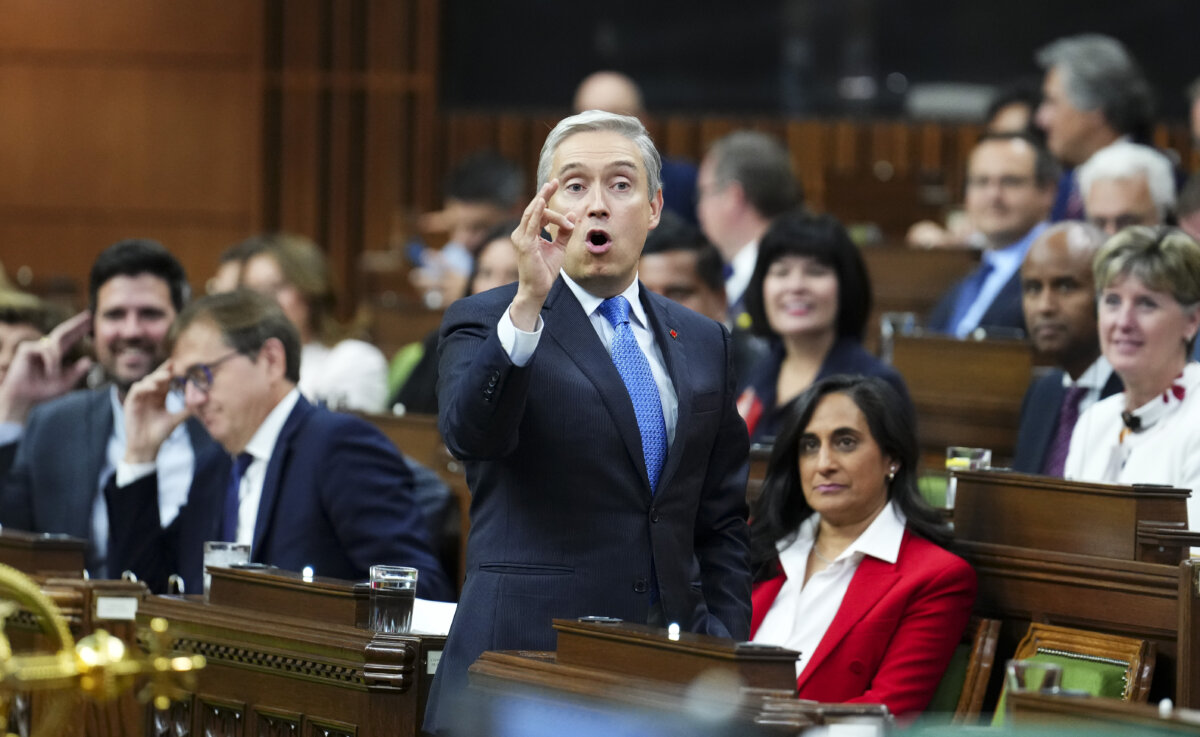
“We’re going to present a great budget in this House on the 4th of November,” Finance Minister François-Philippe Champagne said during Question Period on Sept. 16.
Champagne said that the budget would be a “generational investment” in Canada’s future, and would protect communities, empower Canadians, and make Canada the strongest country in the G7.
Champagne added that the government would be “rigorous in our expenses so we can be ambitious in our investments,” and would “spend less so you have more capital to invest.”
The Liberal government had previously said the federal budget would be introduced in October. On Sept. 15, government House Leader Steven MacKinnon said during a press conference that the budget would be brought forth next month.
MacKinnon had also said the budget would have a “substantial” deficit that “needs to be dealt with, and is being dealt with with incredible seriousness by the entire government.”
During the last federal election, Carney’s platform projected there would be a deficit of $62.3 billion in the 2025–2026 financial year, which was $20 billion more than the last official projection in the Fall Economic Statement of 2024.
However, the Liberal government announced in June that Canada would increase its military spending to meet the NATO target of 2 percent of GDP on defence, which could cost an additional $9.3 billion. On Sept. 14, the Liberals also announced $13 billion in funding to create the new agency Build Canada Homes, which would involve building affordable housing on government-owned land.
Former Parliamentary Budget Officer Yves Giroux recently projected this year’s federal deficit could fall between $60 billion and $70 billion. A report by the C.D. Howe Institute in July said that the deficit could soar to $92 billion this year.
Federal ministers have been told to find savings in their respective departments to help offset the increased spending. Champagne requested this summer “ambitious savings proposals” to reduce operational spending by 7.5 percent in fiscal 2026–27, which would be followed by 10 percent cuts in the following year and 15 percent in 2028–29.
Carney was criticized by opposition parties for not introducing a budget in the spring, which is customary for governments. The House of Commons had only sat for a few weeks following the April election, and Parliamentarians broke for the summer break in July.
Conservative Leader Pierre Poilevre said in a press conference that the Liberals are introducing a budget “two thirds after the fiscal year is already done,” and that they will have doubled the deficit during that time. Poilievre also said Carney was “more expensive than Justin Trudeau” when it came to government spending.
“Conservatives are demanding the government reverse this reckless Liberal spending to bring down the deficit, inflation, and the cost of living before his November budget comes forward,” Poilievre said.
When asked by a reporter whether the Tories would be voting in favour of the budget, Poilievre responded that they would make that decision after they see the budget.
 Friends Read Free
Copy
Facebook
Tweet
Friends Read Free
Copy
Facebook
Tweet