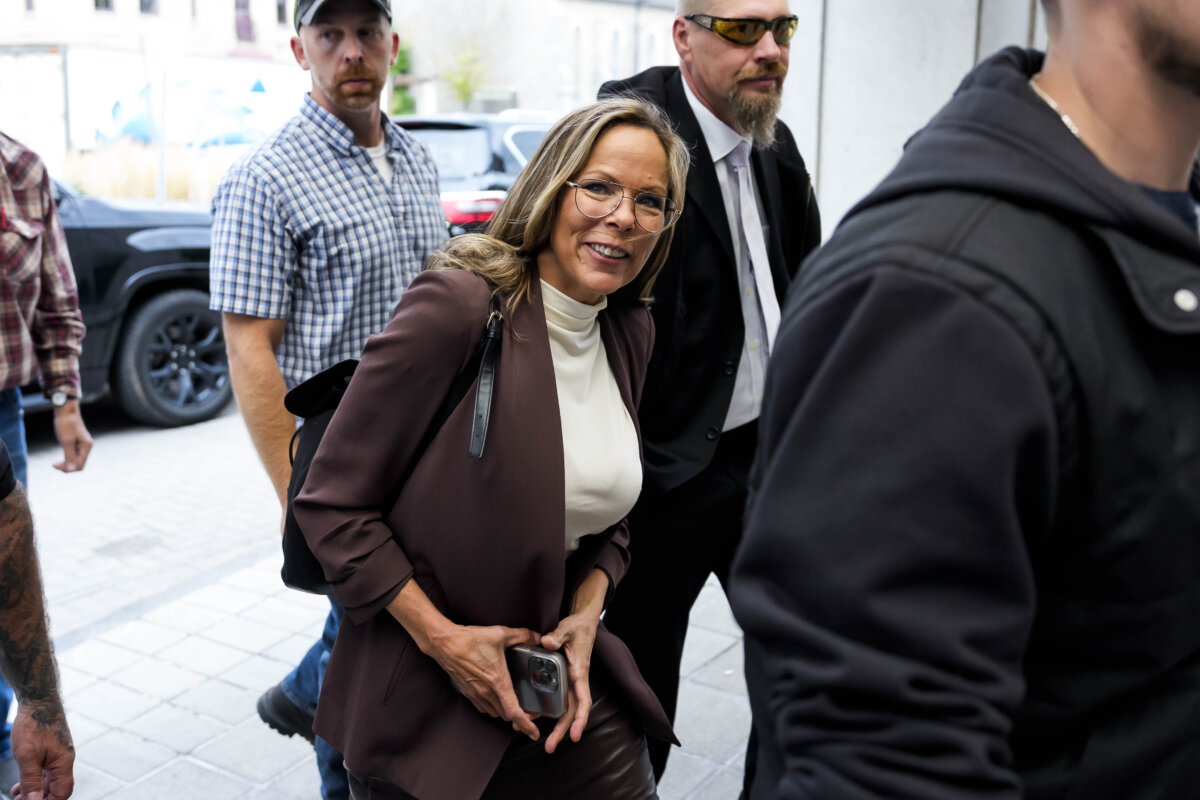

Freedom Convoy leader Tamara Lich said following her sentencing for mischief that she’s not going to apologize for the role she played in the convoy protest, saying it positively impacted thousands of Canadians.
Lich said on Oct. 8 that she had discussed with her lawyer Lawrence Greenspon whether she should express remorse prior to the sentencing hearing. “I told him I would not, and could not, express remorse as it would be dishonest and disingenuous,” she said in a post on social media.
“To whom shall I apologize? The thousands of Canadians who stopped planning to take their own lives when the convoy started? To the thousands of Canadians who were able to return to their jobs? Or should I apologize to all the Canadians who can kiss their dying loved ones or have their families over for Thanksgiving?” she wrote.
While Lich said there was “no doubt” that some Ottawa residents were afraid and felt threatened during the 2022 protest, she attributed this to politicians and city officials “labelling us as an angry mob coming to overthrow the government before we even left Alberta.” Lich said while she felt bad for those people and did not wish ill upon them, their “very own leaders” had misled them about the protesters.
Lich and convoy co-organizer Chris Barber were both found guilty of mischief for their role in the demonstrations, which started in protest of COVID-19 vaccine mandates and evolved into a larger movement calling for the end to all pandemic restrictions. Barber was also found guilty of counselling others to disobey a court order. The two were not found guilty on other charges of counselling mischief, intimidation, obstructing police, or counselling others to obstruct police.
Crown prosecutors argued throughout the trial that Lich and Barber “crossed the line” into illegal activity during the protest. They said that Ottawa residents faced harassment by protesters and were disturbed by honking and diesel fumes, while businesses and charities were unable to operate normally.
The Crown had argued their request for seven years in prison for Lich and eight years for Barber would deter a future “breakdown of public order,” noting the maximum sentence for mischief is 10 years.
Lich and Barber are also facing a proposed $290 million class-action lawsuit from Ottawa businesses and residents, who cited personal suffering and monetary losses from the protest. During the trial, Ottawa residents testified that they witnessed traffic disruptions, constant honking, public urination, and littering.
When finding Lich guilty of mischief in March, Justice Perkins-McVey said Lich had played a leadership role in the protest and could “not have failed to have been aware the actions of the Freedom Convoy was having and the continuing distress residents of downtown, interfering with their right of lawful access, and use of public property,” she said.
However, Perkins-McVey said Lich entered into a plan with the city of Ottawa to reduce the footprint of the protest towards the end, and that this would be a “mitigation factor down the line.”
Lich and Barber were handed 18-month conditional sentences on Oct. 7, but no jail time. Lich will be under house arrest for the first 12 months, with exceptions for court appearances, medical emergencies, employment, religious services, and a “period of up to five hours per week to attend to the necessities of life.”
For the remaining three and a half months, Lich will be under a curfew between 10 p.m. and 5 a.m. She will also have to perform 100 hours of community service.
Following the sentencing, Lich’s lawyer Greenspon told reporters that the Freedom Convoy had positively impacted “thousands, if not tens of thousands” of people. He said Lich is “very seriously considering an appeal” of the mischief charge.
 Friends Read Free
Copy
Facebook
Tweet
Friends Read Free
Copy
Facebook
Tweet