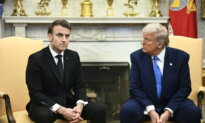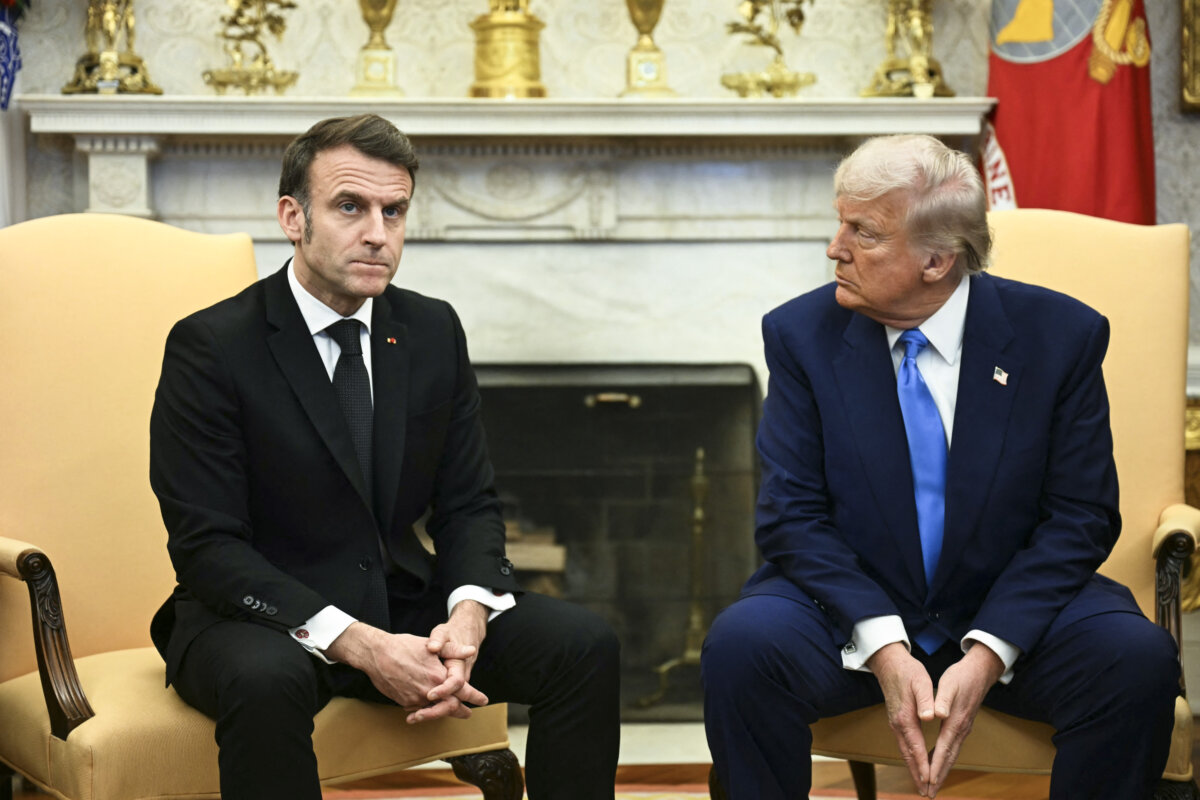

French President Emmanuel Macron said on April 2 that it would be unrealistic to launch a military operation to force open the Strait of Hormuz.
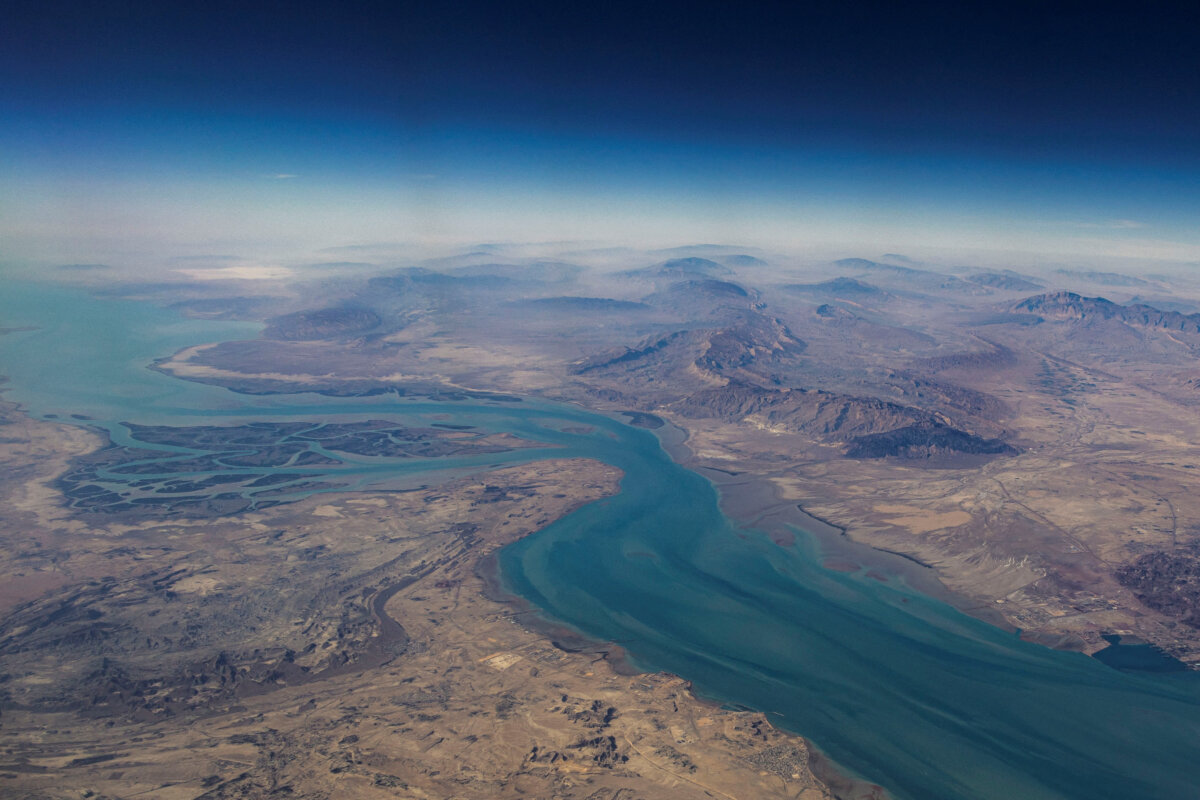
Since the United States and Israel launched their Feb. 28 strikes on Iran, shipping traffic in the waterway has slowed to a near standstill. U.S. President Donald Trump last week urged allies to secure their own energy access through the strait, one of the world’s most important energy corridors.
Macron told reporters during a trip to South Korea that opening the strait by military force was not an option supported by France.
“Some people defend the idea of freeing the Strait of Hormuz by force via a military operation, a position sometimes expressed by the United States, although it has varied. This was never the option we have supported because it is unrealistic,” Macron said. “It would take forever, and would expose all those who go through the Strait to risks from the Revolutionary Guards but also ballistic missiles.”
He added that securing the Strait of Hormuz could only be done “in consultation with Iran.”
“What we say from the beginning is that this strait must be reopened because it is strategic for energy flows, fertilizers, and international trade, but that it can only be done in consultation with Iran,” Macron said.
In a March 31 post on Truth Social, Trump said countries facing fuel shortages due to disruptions in Hormuz, singling out the United Kingdom, should “go to the Strait, and just TAKE IT,” adding that “the U.S.A. won’t be there to help you anymore.”
He also told allies to look to U.S. energy exports as an alternative, telling affected nations to buy “from the U.S., we have plenty.”
On April 2, British Foreign Minister Yvette Cooper chaired a virtual meeting with about 40 countries, including France, Germany, Canada, the United Arab Emirates, and India, to discuss joint action to reopen the strait.
“We have seen Iran hijack an international shipping route to hold the global economy hostage,” Cooper said in opening remarks broadcast to the media before the rest of the meeting took place behind closed doors.
International Energy Agency (IEA) Executive Director Fatih Birol said on April 1 that oil supply disruptions from the Middle East will increase in April.
“The loss of oil in April will be twice the oil loss in March, on top of the loss of LNG. … It will come through inflation and will cut economic growth in many countries,” Birol told a podcast with Nicolai Tangen, the head of Norway’s sovereign wealth fund.
He noted that a number of oil and LNG cargoes arriving in March were contracted before the war and continued toward their destinations.
Countries in Asia have been hit more by energy supply disruptions from the Middle East, as they are more heavily reliant on Gulf oil.
South Korean President Lee Jae Myung on April 2 urged citizens to save “even a drop of oil” amid the Iran conflict, which is driving a sharp energy shock.
“When we save even a drop of oil, avoid wasting even a single plastic bag, and overcome this together, we will be able to exit the tunnel of crisis safely and swiftly,” Lee said in remarks published by Korean broadcaster YTN.
In a parliamentary address outlining a 26.2 trillion won ($19.5 billion) supplementary budget, Lee said that disruption to oil supplies had pushed up fuel prices and threatened key industries, from plastics to fertilizer production.
Birol said that a shortage of jet fuel and diesel, which has already affected Asian countries, was set to hit Europe.
“We are seeing that in Asia, but soon, I think, in April or May, it would come to Europe,” he said. “We are heading to a major, major disruption and the biggest in history up to now.”
Tom Ozimek and Reuters contributed to this report.
 Friends Read Free
Copy
Facebook
Tweet
Friends Read Free
Copy
Facebook
Tweet