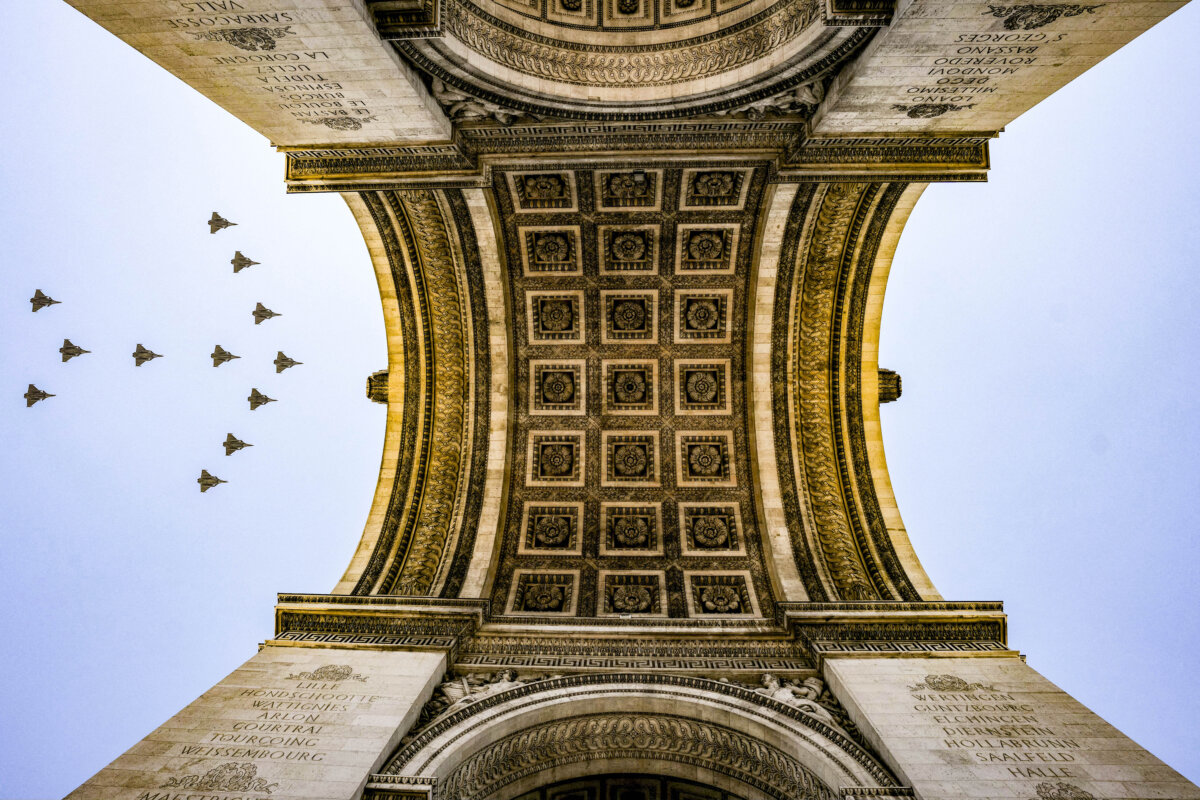

PARIS—At 10:21 a.m. on July 14, nine Alphajets from the Patrouille de France, returning from the United States after taking part in celebrations marking the 250th anniversary of the American Declaration of Independence, flew over the Champs-Élysées in a tight “Big Nine” formation at an altitude of around 1,000 feet, trailing blue, white, and red smoke.
Behind them came two Mirage 2000B two-seaters carrying Ukrainian co-pilots trained in France. The opening image set the tone for a national day unlike any other in recent French memory.
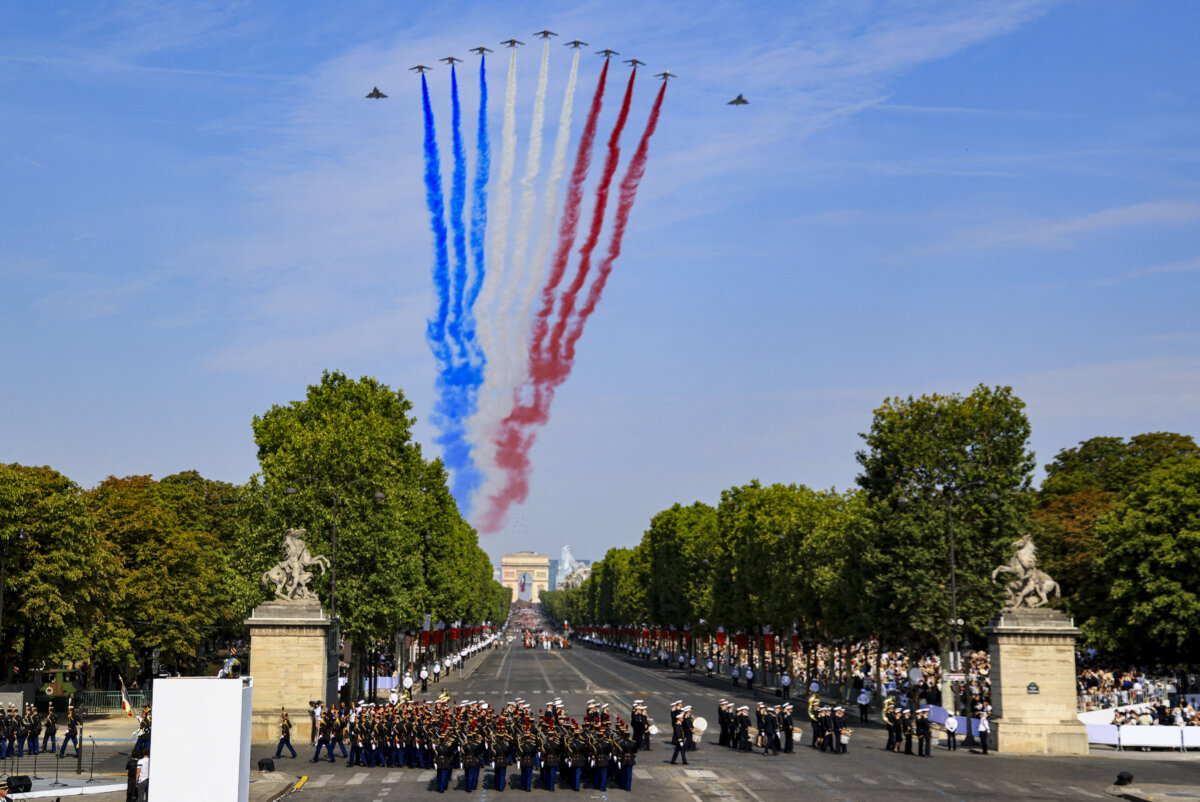
The ceremony had begun half an hour earlier on the Place de la Concorde, where French President Emmanuel Macron greeted Prime Minister Sébastien Lecornu before reviewing the troops from a command car with Gen. Fabien Mandon, the chief of the defense staff.
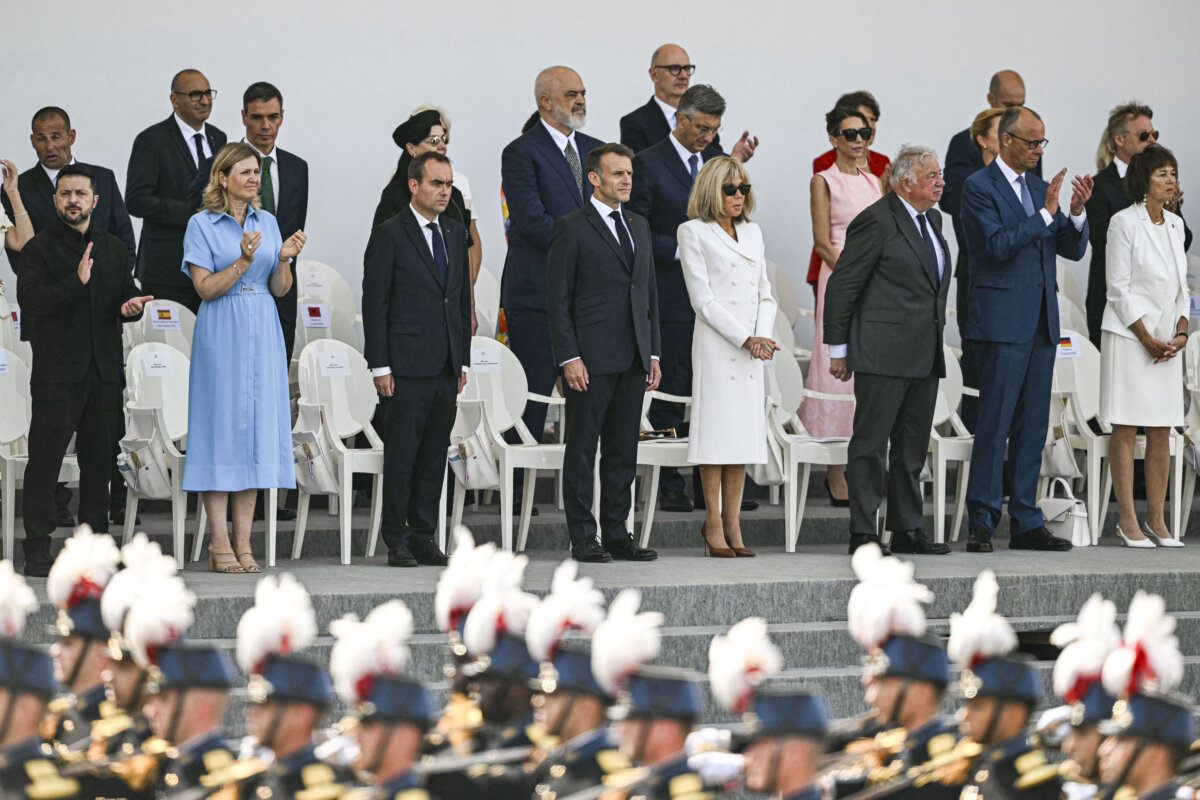
In the presidential stand sat Ukrainian President Volodymyr Zelenskyy, the guest of honor, and about 30 heads of state and government, among them German Chancellor Friedrich Merz, British Prime Minister Keir Starmer, and Polish Prime Minister Donald Tusk, alongside European Commission President Ursula von der Leyen and NATO’s supreme allied commander in Europe, Gen. Alexus Grynkewich.
“Today on the Champs-Élysées, we celebrate liberty, France’s cherished heritage,” von der Leyen wrote on X.
“I thank France for its commitment, for the French army is the strength of Europe and protects the liberty of our entire Union.”
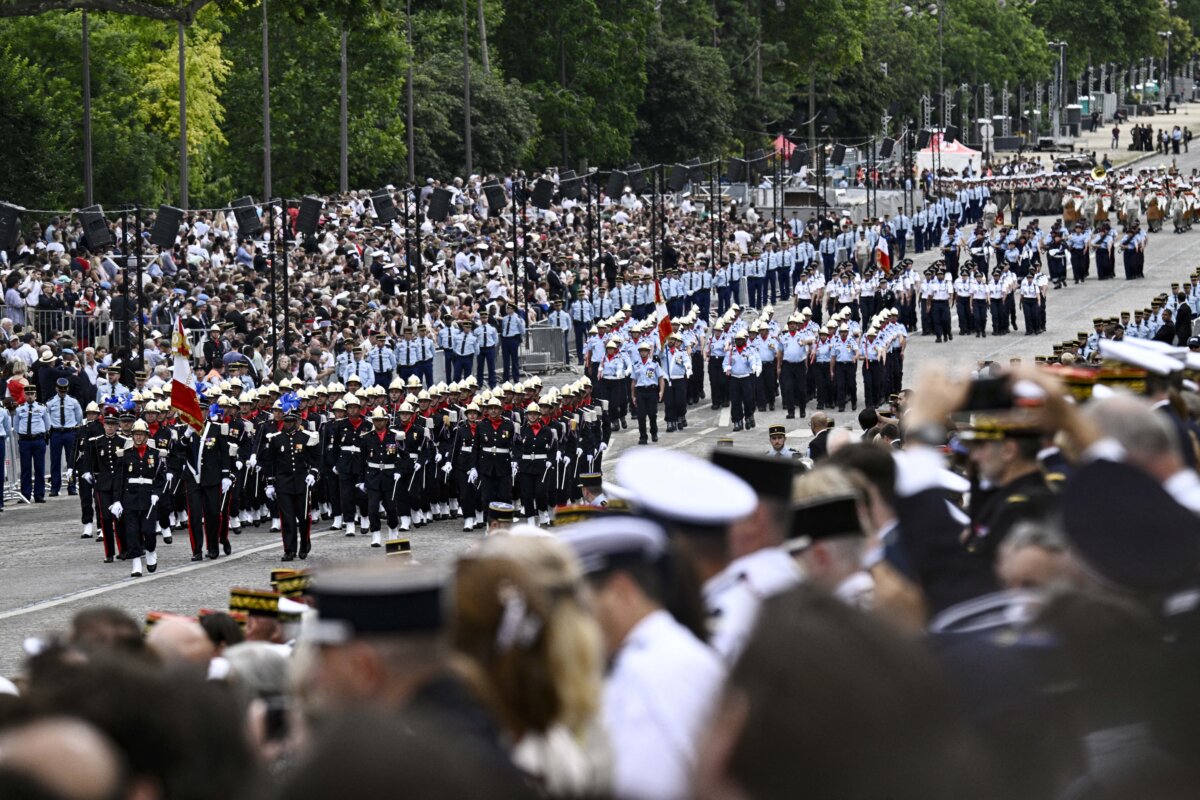
It was Macron’s 10th and last National Day parade as commander in chief before he leaves office in 2027, and he chose its theme himself: “The Strategic Awakening of Europe.” A record 6,686 troops marched on foot, with 98 aircraft, 33 helicopters, 315 vehicles, and 193 horses of the Republican Guard. More than 50,000 spectators watched from the avenue in scorching heat.
They were watching the largest army on the European continent. The parade was built to show it.
Gen. Loïc Mizon, the military governor of Paris, who designed it, had promised something “more massive, more powerful, more modern,” and said the point was to show the French what a decade of rising budgets had bought in soldiers, vehicles, aircraft, and technology.
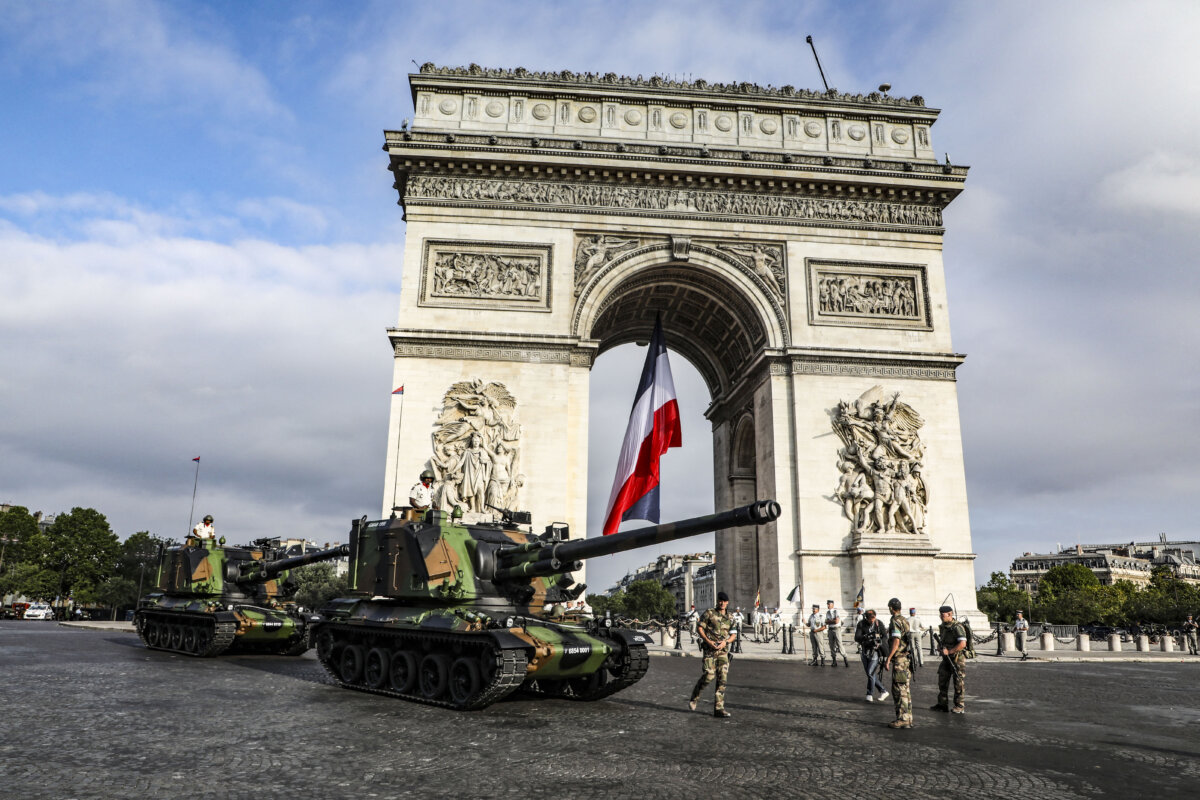
The Élysée Palace called the two-hour display “strategic signaling.” Aircraft flew with mock munitions under their wings and helicopters passed above tanks to mimic a modern battlefield, both parade firsts.
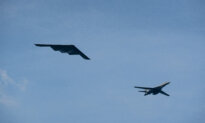
The flypast unfolded in seven sequences, 84 French aircraft and 11 foreign ones. The first was devoted to the ability to enter a conflict first and run a full air campaign: Rafales of the 30th fighter wing, Mirage 2000D and 2000-5 jets, and A330 MRTT tankers, joined by eight aircraft from European partners, among them F-35s, Gripens, Eurofighters, F-16s, and a Tornado, for 34 aircraft in all.
A later sequence was given to airborne nuclear deterrence, and another to the navy, an E-2C Hawkeye, and 12 carrier-borne Rafales flying in the shape of an anchor.
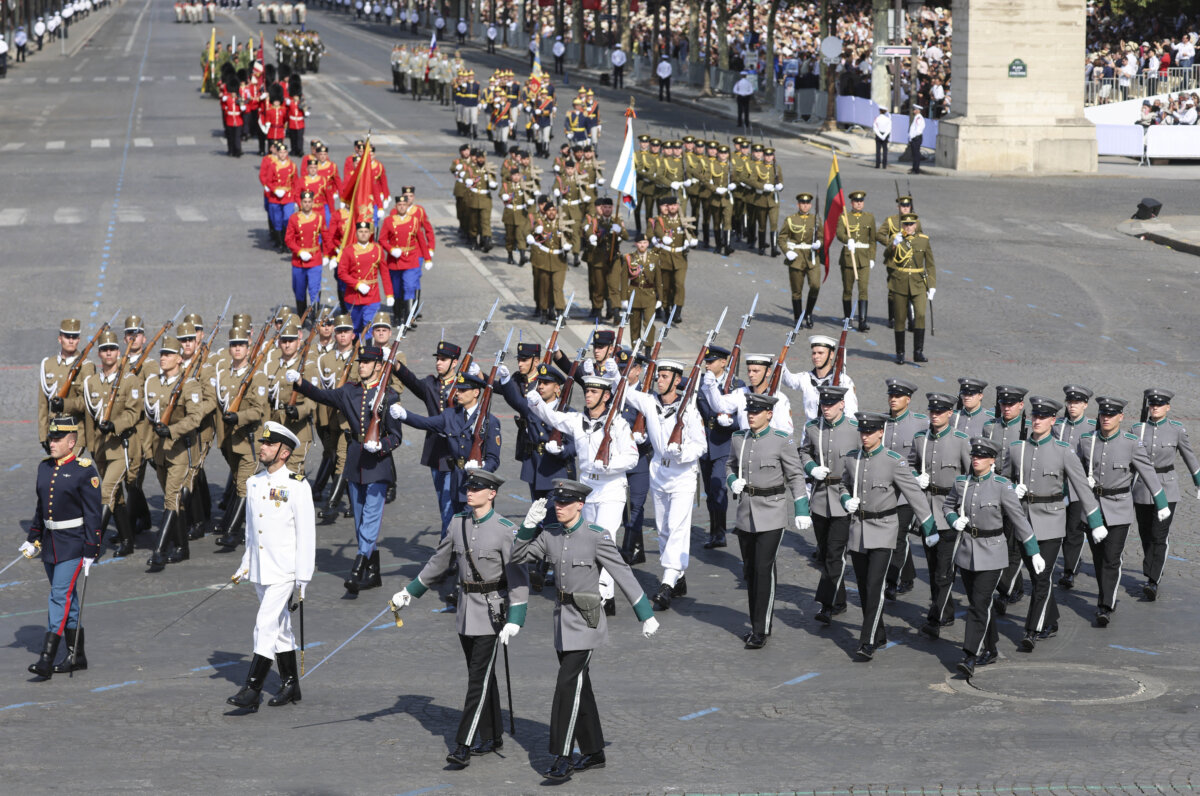
The foot column opened with the allies. Some 500 soldiers from 35 nations of the “coalition of the willing,” launched by Paris and London in February 2025 to guarantee Ukraine’s security once the fighting stops, marched behind their national flags, followed by 25 Ukrainian troops who have fought Russia for more than four years.
Their leaders had met the previous day at Les Invalides, where the coalition agreed to sustain its support for Kyiv, including, for some members, deploying troops on the ground after a ceasefire.
Behind them came the French units singled out this year: the 501st tank regiment, the framework unit of the NATO battlegroup in Romania; the 3rd marine artillery regiment, deployed in Estonia; the Mediterranean mine-clearance divers; and the special forces brigade.
The display doubled as a ledger. France’s defense budget has doubled over Macron’s two terms, and Parliament approved an update to the military programming law on July 1 that raises planned spending to 436 billion euros (about $499 billion) for 2024 through 2030.
“The commitment was kept, the facts are there, and history will judge,” Macron told the armed forces at the Hôtel de Brienne on July 13.
In that speech, his last to the armed forces as president, Macron said Europe was becoming a power in its own right. Peace remained the goal, he said, but France stood ready to fight “for liberty and the rule of law,” he added, saying it would do so “at the price of blood if necessary.”
“France’s strategic environment changed on February 24, 2022, when Russia launched its war of aggression against Ukraine. The conflict led the French government to reassess its strategic posture, defense spending, and military priorities,” Gérard Vespierre, a French geopolitical analyst, told The Epoch Times.
Washington marked the day from a distance. Secretary of State Marco Rubio congratulated France in a July 14 statement and recalled that, as the United States celebrates 250 years of independence, the French played “an indispensable role in the founding of our nation.” He cited continued cooperation on collective defense, on countering anti-Semitism, and on economic ties.
Charles Kushner, the U.S. ambassador to France, struck a similar note.
“Today we show our love for France both by celebrating your independence and by remembering the victims of the terrible attack in Nice 10 years ago. Vive la France!” he wrote on X.
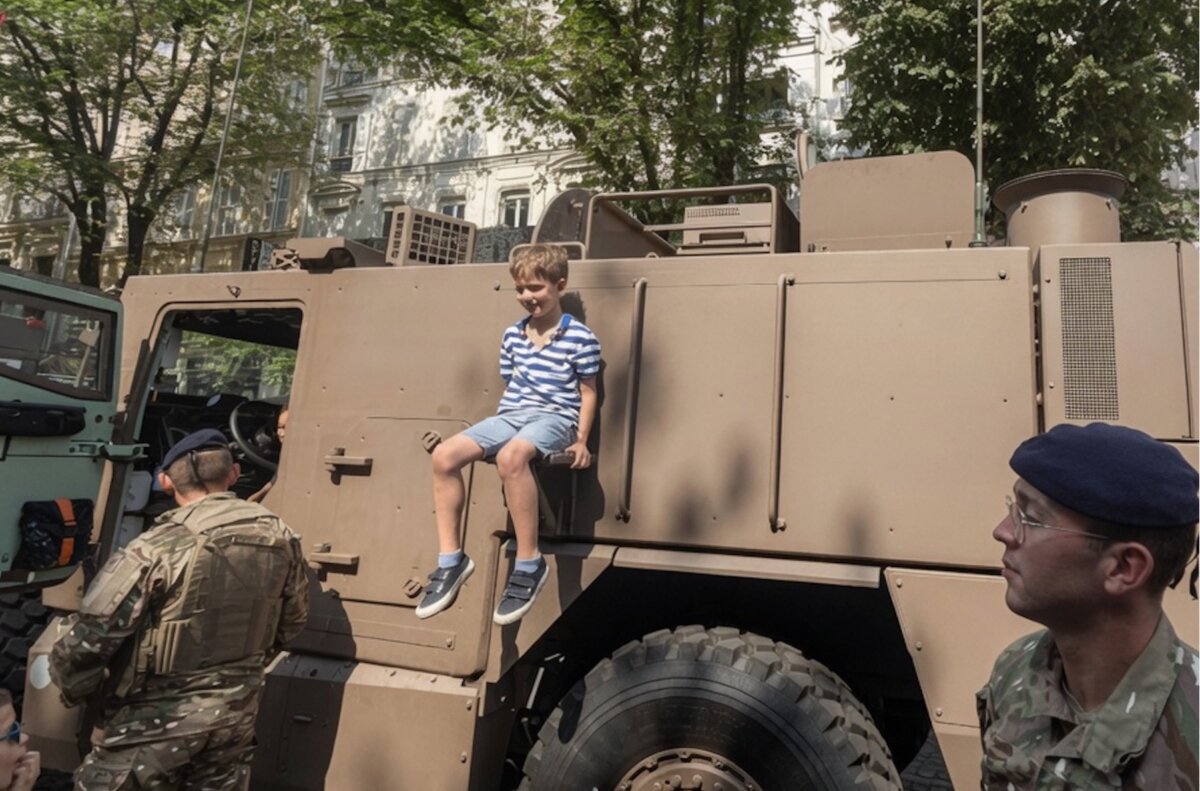
Near the Place de l’Étoile, passersby were lining up to climb aboard an army armored vehicle with their children on Avenue de Wagram.
“It was important for us to come with our children to honor those who fight and risk their lives for our nation,” Amandine, a French mother-of-three, told The Epoch Times.
French opinion, meanwhile, is more divided than the choreography suggested. An Ipsos BVA survey released for the holiday found that 90 percent of respondents with an opinion view the armed forces favorably and that 80 percent see the parade as an important symbol of national identity. However, only 58 percent approved of honoring Ukraine and European cooperation.
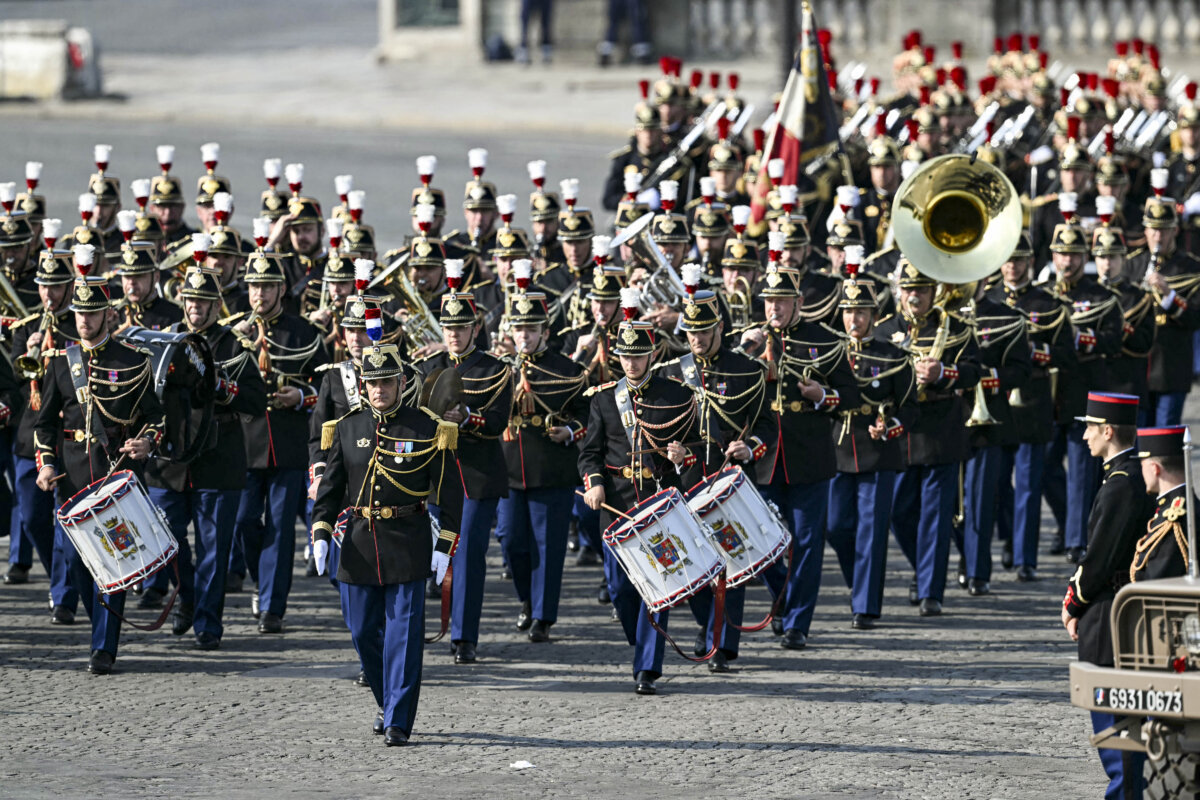
At 11:48 a.m., the 193 horses of the Republican Guard cavalry, France’s last mounted operational unit, founded in 1802, closed the march. Two minutes later came the final tableau, a tribute to the 400th anniversary of the French navy, created in 1626 at the urging of Cardinal Richelieu, with the navy band and the Bagad de Lann-Bihoué playing together. The ceremony ended with the “Ode to Joy,” the European anthem.
Later on July 14, Macron is to travel to Nice for the 10th anniversary of the Islamist attack on the Promenade des Anglais, which killed 86 people and injured more than 400 among the crowd leaving the National Day fireworks in 2016.
 Friends Read Free
Copy
Facebook
Tweet
Friends Read Free
Copy
Facebook
Tweet