
Budget 2025 has exempted eight additional government departments and agencies from the requirement to cut program expenditures by 15 percent over the next three years, requiring them instead to reduce spending by only 2 percent.
These new additions bring the total number of exempt departments and agencies to 11.
The newly exempt organizations include those focused on services and programs for Indigenous peoples, women and gender equity, and research funding.
Previous Announcement
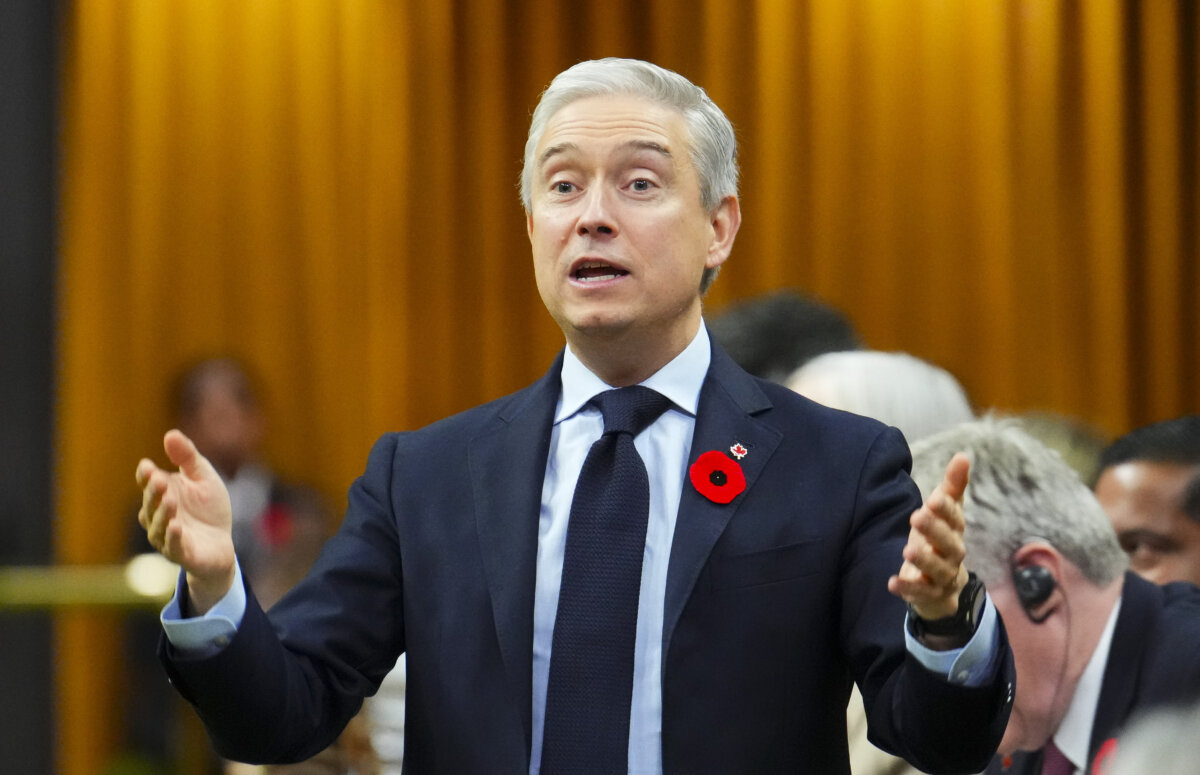
In July, Finance Minister François-Philippe Champagne sent letters to all cabinet ministers asking them to reduce spending by 7.5 percent in the upcoming fiscal year, which starts April 1, 10 percent by the following year, and 15 percent by the 2028–29 fiscal year.
However, the RCMP, Canadian Border Services Agency (CBSA), and the Department of National Defence (DND) were exempted, requiring them to cut lower amounts from their budgets.
Added Organizations
The 2025 budget released on Nov. 4 shows that eight other departments are required to find savings lower than 15 percent. This includes Crown-Indigenous Relations and Northern Affairs (CIRNAC), Indigenous Services Canada (ISC), and the Department for Women and Gender Equality (WAGE). Other new organizations that are being exempt include Natural Sciences and Engineering Research Council (NSERC), the Social Sciences and Humanities Research Council, the Canadian Institutes of Health Research, the Canadian Security Intelligence Service (CSIS), and the Communications Security Establishment (CSE).
The budget said WAGE had a savings target of just 2 percent to support its work that “empowers women and 2SLGBTQI+ people through programs to eliminate discrimination,” while CIRNAC and ISC are needed to “deliver important programs that are legally or constitutionally required” and help advance reconciliation.
The budget said that the RCMP, DND, and CBSA had their annual savings target set at 2 percent because of their “essential role in keeping our country safe.” As such, this same approach was taken with the CSIS and CSE.
NSERC, the Canadian Institutes of Health Research, and the Social Sciences and Humanities Research Council are also required to find 2 percent savings to “protect the councils’ important contributions in improving our global competitiveness and contributing to the economy of the future.”
The federal budget said that the government will find savings under its current expenditure review initiative, saying it will save $13 billion annually by 2028–29, which will total $60 billion over five years alongside other savings and revenues.
Budget 2025 also plans to slash the number of public servants by some 40,000 positions by the end of the 2028–29 fiscal year, to reach roughly 330,000, which is a 10 percent decrease from the peak of nearly 368,000 in 2023–24. The government said this will be achieved via “normal attrition through retirements, voluntary departures, and previous savings exercises,” as well as further measures the government is taking to slow spending and return the public service to a “sustainable” size.
Even with these savings, the budget said the current fiscal year’s federal deficit will be $78.3 billion.
Finance Minister Champagne told reporters on Nov. 12 he was “happy” the budget was able to “protect the progress that we made in terms of reconciliation,” and said Ottawa would continue funding allocations on programs for indigenous peoples.
Champagne also said Budget 2025 is an “investment budget to build a resilient country,” and the measures outlined in the document will allow for the infrastructure and housing Canadians need.
The Conservative Party has said the federal budget contains too much spending and will fuel inflation.
“Every dollar the prime minister spends comes out of the pockets of Canadians – the more they spend, the more things cost,” Conservative Leader Pierre Poilievre said on Nov. 4.
 Friends Read Free
Copy
Facebook
Tweet
Friends Read Free
Copy
Facebook
Tweet