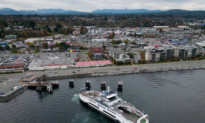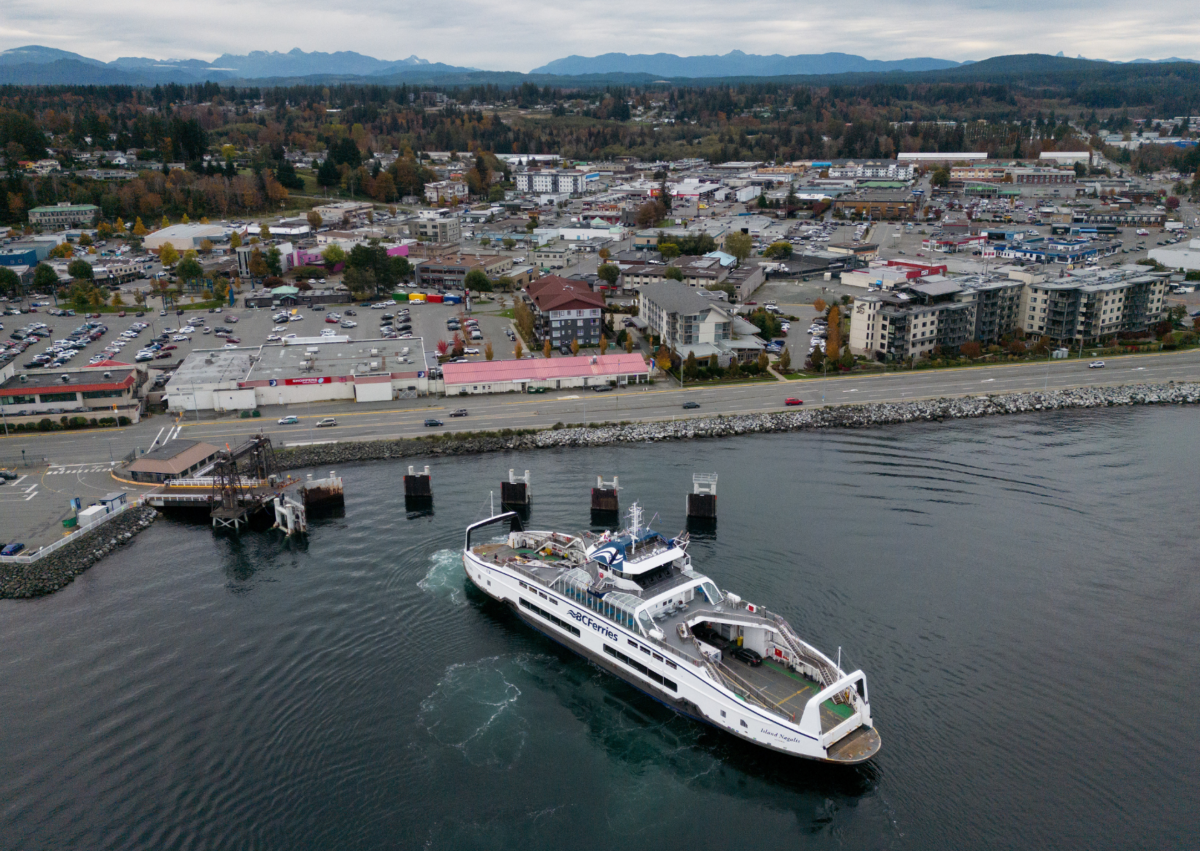

The federal Transport Committee has voted to study BC Ferries’ decision to hire a Chinese state-owned shipyard to build four new ferries for its passenger fleet, in a deal that was financed by a $1 billion contribution from the Canada Infrastructure Bank (CIB).
The committee voted on July 7 to hold four one-hour-long meetings to hear testimonies from Housing and Infrastructure Minister Gregor Robertson, Transport and Internal Trade Minister Chrystia Freeland, CIB CEO Ehren Cory, and BC Ferries CEO Nicolas Jimenez.
The meetings will be held within 30 days following the adoption of the motion.
“I find it outrageous that the Crown corporation known as the Canadian Infrastructure Bank is actively financing the outsourcing of Canadian jobs,” Conservative MP and transportation critic Dan Albas said. “This is wrong. We need to have some answers to the government’s true position on this, because we have conflicting reports that have played out over the media.”
On June 10, BC Ferries announced it had selected the Chinese state-owned China Merchants Industry Weihai Shipyards (CMI Weihai) to build four vessels following a “rigorous” procurement process. The four vessels, which will replace four aging ships facing mechanical issues, are set to arrive in 2026 and enter service in 2029.
BC Ferries CEO Jimenez said CMI Weihai was the “clear choice” for the project because of its technical capabilities and cost, while Interferry CEO Mike Corrigan said few shipyards outside of China still have the capabilities to build large ferries and support them with repairs throughout their life cycle.
Following the announcement, Transport Minister Freeland sent a letter to her provincial counterpart on June 20 raising concerns over the deal. Freeland said in a letter to Mike Farnworth that she expected BC Ferries to inform the government of its plans to mitigate “any security risk” that may arise.
On June 26, it came to light that the CIB was providing $1 billion in loans to BC Ferries to purchase the vessels, with the Crown corporation announcing the below-market-rate financing would help reduce future fare increases and support the modernizing of the ferry operator’s fleet.
Canada and China have been locked in a trade dispute for several months. Ottawa imposed 100 percent tariffs on Chinese electric vehicles last fall, which led to Beijing imposing a 100 percent levy on Canadian imports of canola oil, oil cakes, and peas, as well as a 25 percent tax on pork and seafood products in March 2025. Prior to that, China had taken two Canadian citizens prisoner in retaliation for the arrest of Huawei executive Meng Wanzhou on a U.S. extradition request in late 2018. The two were released once U.S. authorities dropped their charges against Meng in 2022.
B.C. Conservative Leader John Rustad has urged BC Ferries to cancel the contract.
“China’s money laundering, China’s fentanyl, & China’s election interference have all hurt BC & Canada,” he said in a social media post on June 11. “This is a national security issue—moreover, BC cannot give China billions of BC tax [dollars] that should be going to OUR BC workers.”
B.C. Premier David Eby has criticized giving the contract to a Chinese company, but said he wouldn’t step in to intervene with the publicly owned B.C. Ferries’ procurement process.
“I agree it is not ideal that the ferry award went to China, but reopening would mean a delay in delivering ferries for British Columbians who are desperate for them,” he said on June 17.
MPs Debate Motion
During the committee meeting on July 7, Albas said it appeared that Minister Robertson had been unaware that the CIB was providing $1 billion in financing to BC Ferries, despite Freeland’s letter to B.C.
“I think that it’s completely on us, as a committee, to demand answers from both the minister of transport and internal trade and the minister of housing and communities, because they do not appear to be on the same page,” he said.
Conservative MP Leslyn Lewis said the CIB was using taxpayers’ money to “ship jobs essentially overseas and selling out the Canadian shipbuilding industry all at the expense of Canadian workers.” She said the move was “especially outrageous” given that the United States has imposed 50 percent tariffs on Canadian steel and aluminum.
“The CIB is complicit in undermining Canadian competitiveness, and they must be held to account for how they have allowed this to happen,” she added. Lewis said the government needed to determine if other investments are being “touted as Canadian investments” when they are actually being outsourced to other countries.
Liberal MP Will Greaves said he supported the committee studying the decision, but that he thought it was “disappointing” to see the opposition parties make a “whipping post” out of BC Ferries.
“Let’s let the witnesses speak, and then let’s pass our conclusions about how to proceed and what the federal government can or should perhaps do in future situations of this kind,” he said.
 Friends Read Free
Copy
Facebook
Tweet
Friends Read Free
Copy
Facebook
Tweet