
The House of Commons directed one of its committees to begin a review of the Conflict of Interest Act to determine whether conflict-of-interest screens and blind trust rules should be amended.
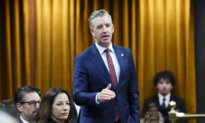
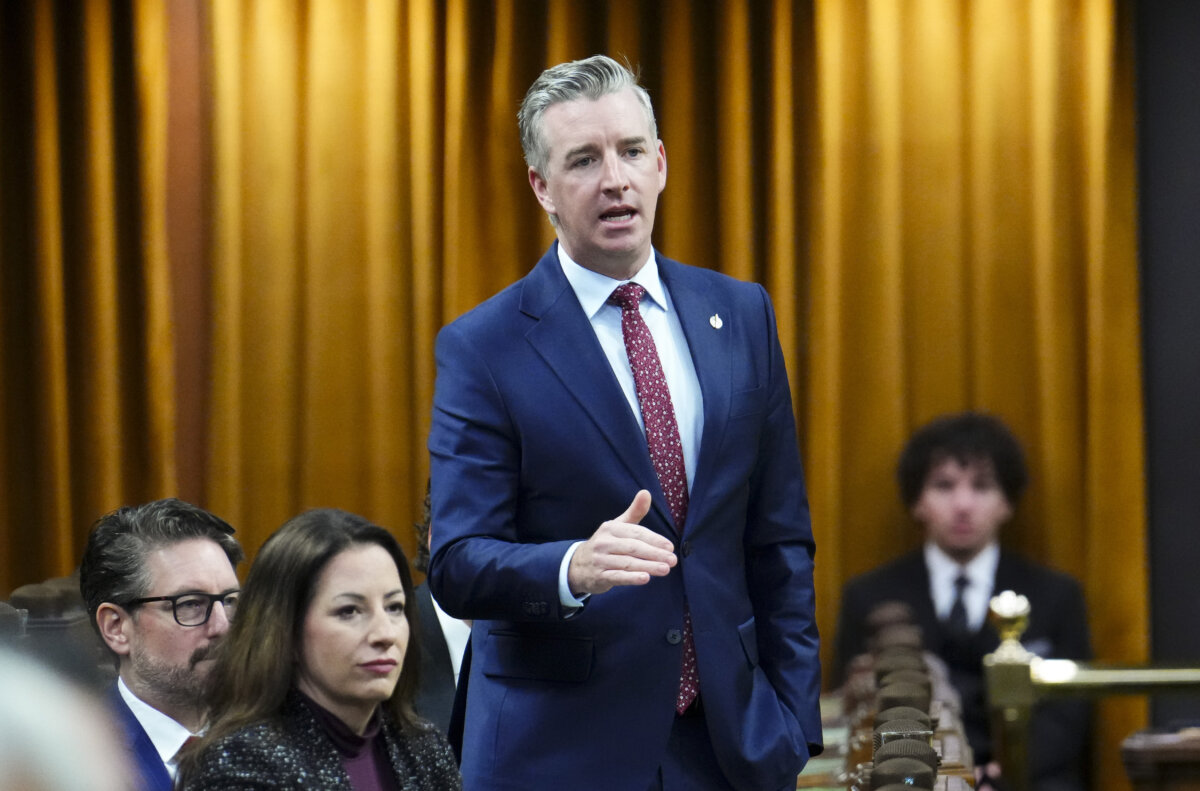
Opposition MPs voted in the House of Commons on Oct. 28 to pass a motion, sponsored by Tory MP Michael Barrett, to begin the review. The motion received support from the Conservatives, Bloc Québécois, NDP, and Greens, totalling 170 votes, while the Liberals opposed it with 164 votes.
Opposition parties have voiced concern about potential conflicts of interest since Prime Minister Mark Carney’s entry into politics, noting his extensive past experience on corporate boards and his sizeable assets. Carney has always maintained he is in full compliance with ethics requirements, including by placing his assets in a blind trust.
The House of Commons conducted the Oct. 28 vote to decide whether to support the ethics committee’s September report, which proposes that the House be charged with the review of the Conflict of Interest Act.
“Should a Prime Minister have investments in tax havens?” Barrett asked during debates on the committee report on Oct. 27. “I would say no. They should be paying taxes as everyone else does, not using the accounting tricks the wealthy rely on to avoid paying their fair share.”
Conservative MP John Brassard, who is the chair of the ethics committee, said the current law was insufficient in dealing with “a prime minister as conflicted as the current one is,” noting Carney’s 103 declared conflicts of interest and stockholdings in the United States representing nearly 93 percent of his portfolio.
“The Conflict of Interest Act, quite frankly, has never contemplated a situation such as the one we are in right now, where we find a designated public office-holder with so many potential conflicts of interest because of extensive private sector holdings,” Brassard said, adding there are “holes” in the act that allow public office holders to “skirt around the law.”
Liberal MP Kevin Lamoureux, parliamentary secretary for the Government House Leader, said the Opposition’s proposed ethics investigation was an attempt to “embarrass the government.”
“Each and every one of them should be ashamed of the way in which they continually try to attack the character of individuals over protecting the interests of Canadians,” Lamoureux said, noting “we have a Prime Minister who has followed the rules.”
Carney served on the board of several companies and organizations, including Brookfield Asset Management, before entering politics in January. Carney pledged before becoming prime minister to put his assets in a blind trust, but refused to disclose the nature of those assets after being sworn in to office.
The prime minister said at the time he was working with Commissioner Konrad von Finckenstein to set up the appropriate conflict-of-interest screens. Details of the screens were released by the ethics commissioner in July.
Carney’s declaration said he and von Finckenstein had agreed the screens would be aimed at “preventing any opportunity” to further his interests or to “improperly further those of Brookfield Asset Management, Brookfield Corporation, and Stripe Inc.”
The content of the blind trust disclosed included a number of shares and stock options in payment processor Stripe, Brookfield, and others. It also lists shares in more than 500 companies held in an investment account managed by a third party.
Ethics Committee
MPs on the ethics committee had passed a motion on Sept. 17 to send a report to the House asking to be tasked with a review of the Conflict of Interest Act.
Von Finckenstein attended the committee meeting to provide a briefing and take questions from MPs. Opposition MPs voiced concern about Carney’s conflict-of-interest screen being managed by his top two political appointees—chief of staff Marc-André Blanchard and Clerk of the Privy Council Michael Sabia.
The commissioner said the screen relies “on the integrity of the senior people in government acting in accordance with the law.”
Barrett proposed the House of Commons direct the ethics committee to review Carney’s blind trust and conflict screen, saying this would allow members of opposition parties to examine, challenge, and test the rules and legislation surrounding conflict of interest.
He suggested the committee review the Conflict of Interest Act, including the conflict of interest rules, disclosure mechanisms, and compliance measures set out in the act. He said the committee should also consider whether the act should be amended or expanded and report its findings and recommendations to the House of Commons.
The review would aim to improve transparency, prevent conflicts of interest, regulate public office holders’ ownership of assets in tax havens, limit the availability of blind trusts as a compliance measure, extend the act’s provisions to political party leaders and leadership candidates, and increase penalties for non-compliance, Barrett said.
He said the witnesses that would be called for questioning by Nov. 21 regarding Carney’s corporate and shareholding interests would include Blanchard, Sabia, Brookfield Corporation CEO Bruce Flatt, and Brookfield Asset Management President Connor Teskey.
Bloc Québécois MP Luc Thériault also expressed concern about companies like Brookfield potentially benefiting from federal decisions regarding major projects deemed to be in the national interest. Von Finckenstein said the potential projects Thériault mentioned didn’t “show who will be doing the work, who will be receiving government support, who will be choosing companies, what the impact will be for companies.”
Noé Chartier contributed to this report.
 Friends Read Free
Copy
Facebook
Tweet
Friends Read Free
Copy
Facebook
Tweet