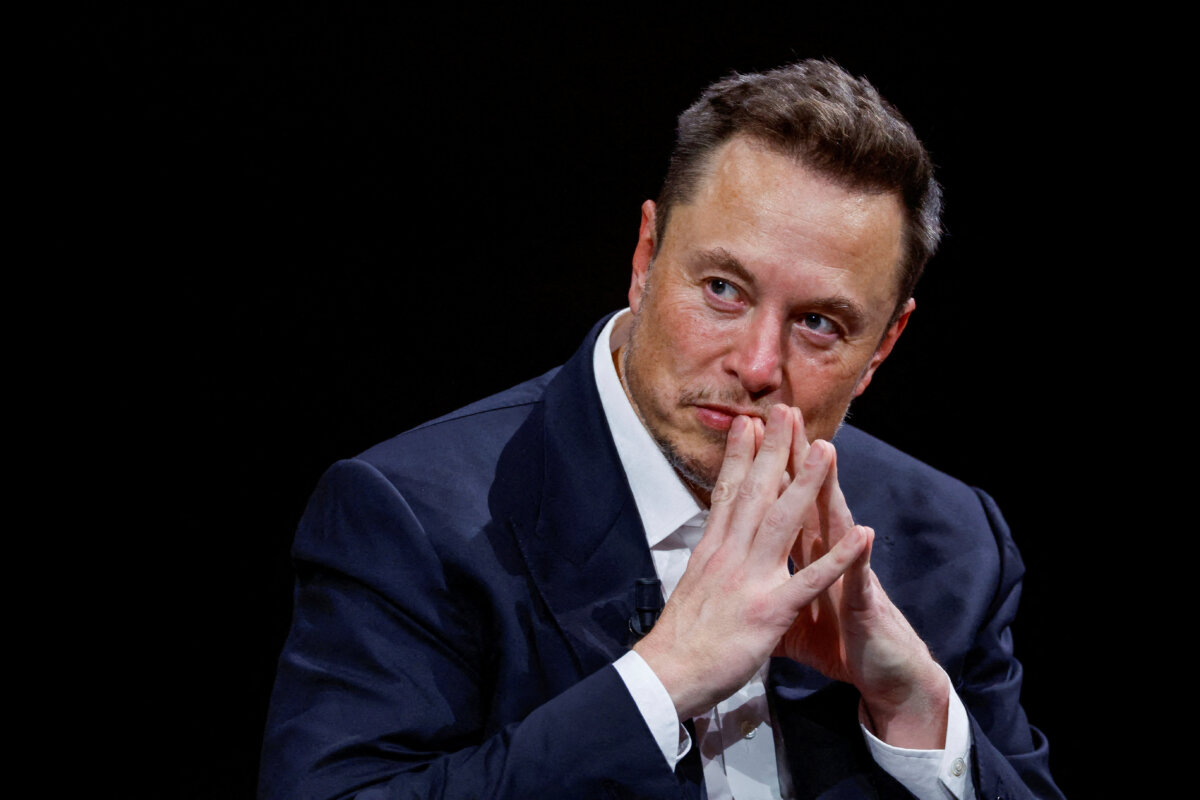
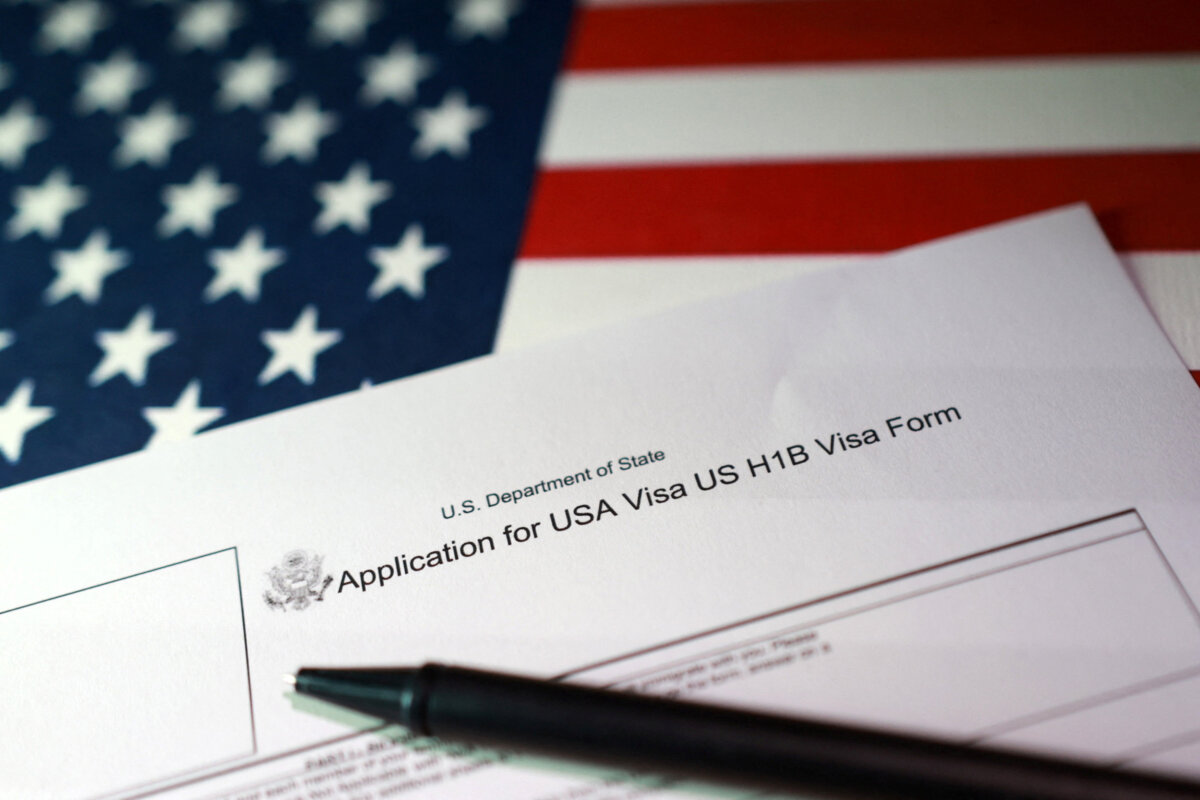
Elon Musk has said the H-1B visa system is being “gamed” by “some outsourcing companies,” but defended the system overall, saying the abuse should be clamped down on rather than scrapping the entire program.
Around 70 percent of these visas, intended to allow companies in the United States to hire skilled foreign workers, are issued to Indian citizens working in sectors including technology and medicine, with Chinese nationals the second largest group to enter the country this way.
In October, President Donald Trump added a $100,000 fee for applicants to the H-1B program, saying he wanted to protect jobs for Americans. The number of such visas approved each year during the Biden administration fluctuated between around 386,000 and 442,000.
Musk made his comments on a Sunday evening podcast with Indian entrepreneur Nikhil Kamath.
‘Misuse’ of Program
In a wide-ranging conversation, the X owner maintained that the United States has “long benefitted” from skilled Indian migrant workers, but acknowledged concerns about the misuse of the H-1B visa program.
New H-1B visas are given out through a lottery, and outsourcing and staffing firms have faced claims for years that they have manipulated the system to hire low-cost contract workers rather than for high-skilled specialty occupations.
“We need to stop the gaming of the system,” Musk said.
“But I’m certainly not in the school of thought that we should shut down the H-1B program … which some on the right are. I think they don’t realize that that would actually be very bad.”
H-1B visa approvals for Indian outsourcing companies have fallen to the lowest level in a decade, according to data released this month by the National Foundation for American Policy (NFAP).
In the current financial year, the top seven Indian outsourcing companies had 4,573 H-1B petitions approved for initial employment—a 37 percent drop since 2024.
‘Brain Drain’
Kamath referred to the negative impact of emigration, saying, “We back home in India called it the brain drain. All our Indian origin CEOs in Western companies.”
Musk talked about the need to clamp down on illegal as well as legal migration. “Under the Biden administration, it was basically a total free-for-all with no border controls, which, you know, unless you’ve got border controls, you’re not a country,” he said.
Speaking about his acquisition of Twitter in 2022, Musk said his intention was to try and steer conversations back towards the center ground, because he believed the platform was not serving humanity well.
“The fundamental thing was that Twitter was amplifying, I would say a fairly pretty far left, by most people’s standards … ideology because [of] where it was based in San Francisco, and they actually suspended a lot of people on the right. So from their perspective, even someone in the center would be far right.”
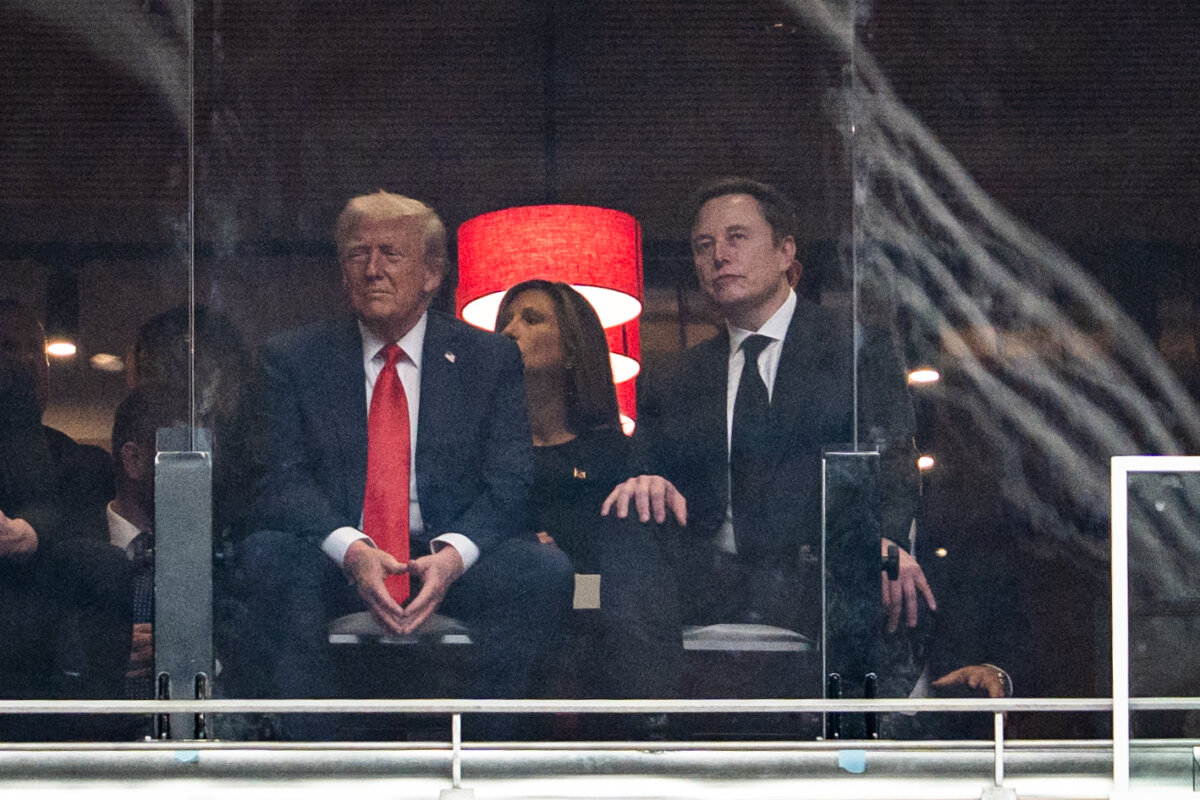
Musk, who left his role as head of the Department of Government Efficiency (DOGE) in May when his term as a special adviser ended, also spoke about Trump’s use of tariffs during his second term in office.
Tariffs Versus Free Trade
The South African-born billionaire, who had a public spat with the president over a spending bill earlier this year, said he had tried unsuccessfully to dissuade Trump from raising tariffs.
“I think generally free trade is better. Is more efficient. You know, tariffs tend to create distortions in markets,” Musk said.
But, he said “the president made it clear he loves tariffs.”
Negotiations for a trade deal between India and the United States are ongoing, in the hope of reaching an agreement by the end of this year.
While a number of other countries have already signed trade deals with the Trump administration, Indian exports to the United States continue to attract some of the steepest tariffs in the world, at 50 percent on Indian goods. This includes a 25 percent penalty for importing Russian oil.
The conversation touched upon the use of AI and how this could make working “optional” in the future, with Musk predicting this might happen “within 20 years.”
He suggested that the use of AI could lead to a “post‑scarcity world” and a “universal high income” that would mean that work might become “like a hobby,” with the increased use of AI and robotics.

Work Will Be ‘Optional’
“I think it’ll actually be that people don’t have to work at all. It may not be that far in the future. Maybe only, I don’t know, 10—I’d say less than 20 years. My prediction is in less than 20 years, working will be optional. Working at all will be optional, like a hobby, pretty much.”
In a conversation that touched on religion, philosophy, existentialism, and ethics as well as parenthood and his concerns over population decline, Musk warned of some of his concerns on the possible dangers of AI, as well as its potential benefits.
He said, “I think you can make an AI go insane if you force it to believe things that aren’t true because it will lead to conclusions that are, that are also bad. So, and I like Voltaire’s statement that, and I’m somewhat paraphrasing, but ‘those who believe in absurdities can commit atrocities.’
“Because if you believe in something that’s just absurd, then … that can lead you to sort of doing things that don’t seem like atrocities to you … and that can happen in a very bad way with AI, potentially.”
He cautioned that in his view, “At a certain point AI will actually saturate on anything humans can think of. And then at that point it becomes a situation where AI is doing things for AI and robotics are doing things for AI and robotics because they run out of things to do to make the humans happy.”
Musk, who is the word’s richest man with an estimated net worth of more than $480 billion, according to Forbes, also predicted that money will become obsolete in the future.
“I think long term, I think money disappears as a concept,” he said.
“Honestly, it’s kind of strange. But in a future where anyone can have anything, I think you no longer need money as a database for labor allocation.”
 Friends Read Free
Copy
Facebook
Tweet
Friends Read Free
Copy
Facebook
Tweet