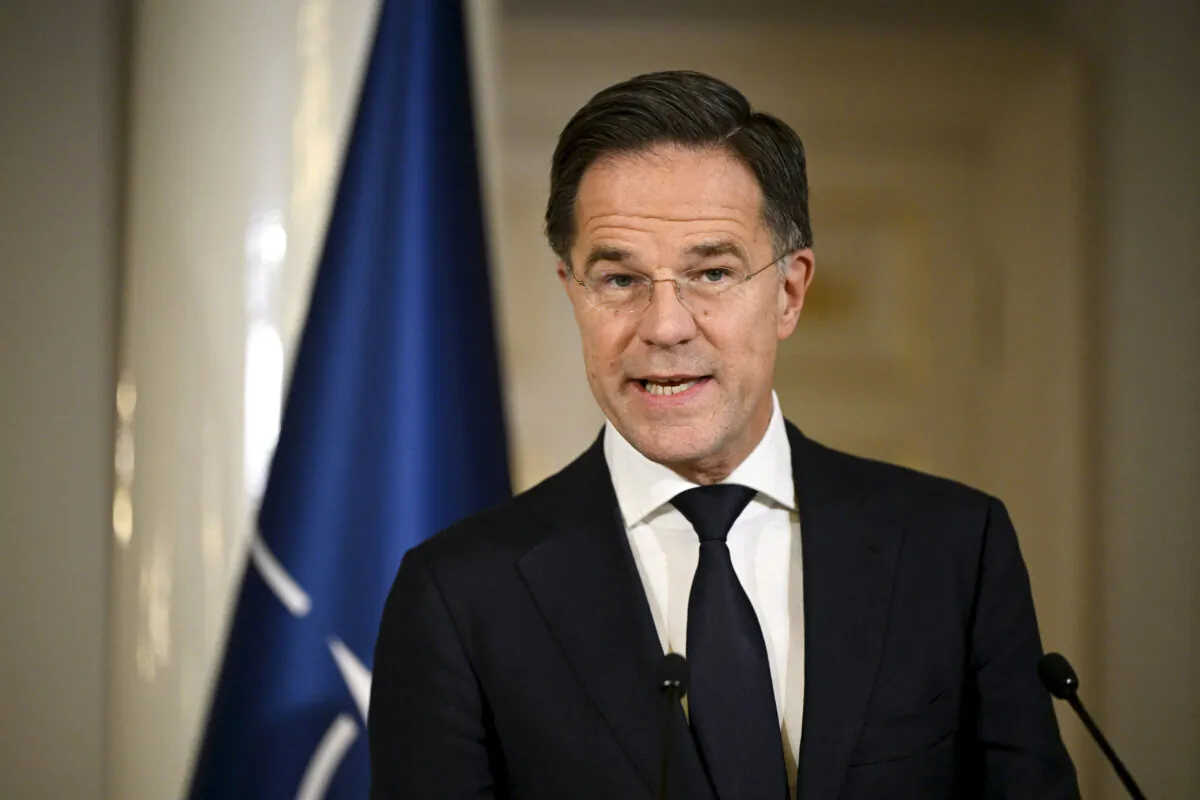
THE HAGUE, Netherlands—NATO Secretary-General Mark Rutte praised U.S. President Donald Trump for his efforts to bring peace to Ukraine and urged European countries to stop worrying about the White House reducing its commitment to the alliance.
Speaking on the first day of the NATO summit in The Hague, Netherlands, Rutte on June 24 described the low levels of defense spending by European countries as a “pebble in the shoe” that had irritated Trump and other U.S. politicians.
Trump is due to make a brief appearance at the summit, which will conclude on June 25 with new defense spending targets being set.
A target of 5 percent of gross domestic product (GDP) for each member country is expected to be agreed upon, more than doubling the 2 percent benchmark set during a summit in Wales in 2014.
The target includes 3.5 percent of GDP for core military spending and 1.5 percent for security-related infrastructure.
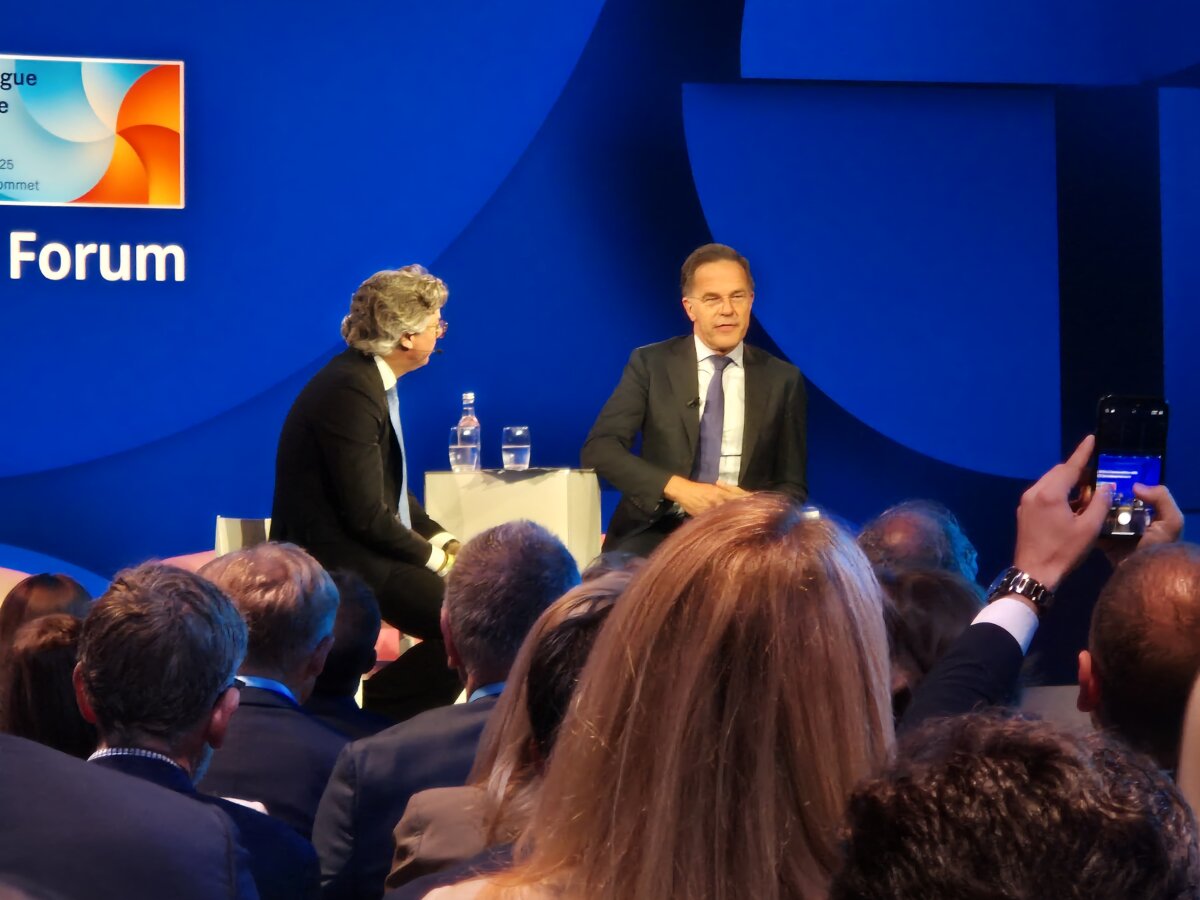
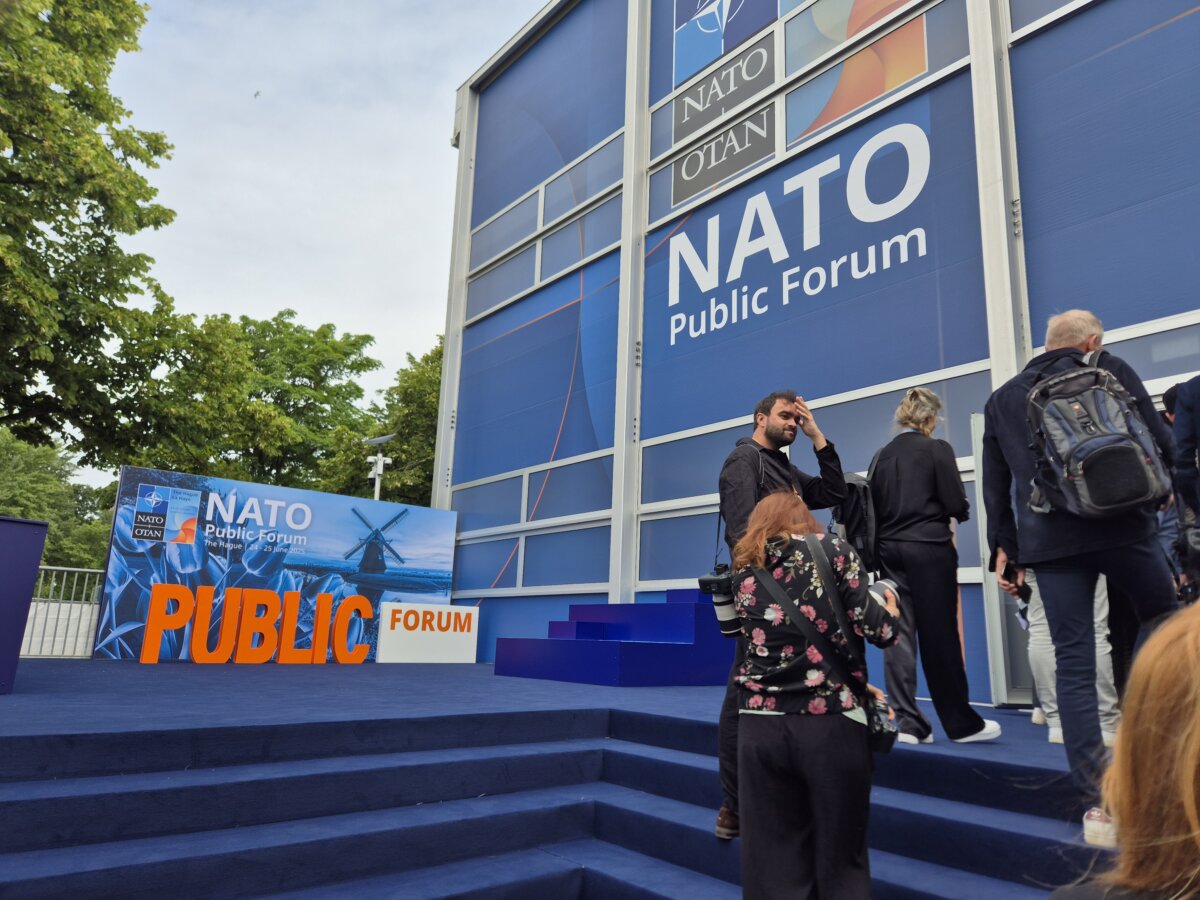
Rutte began his remarks at the NATO Public Forum on June 24 by welcoming Germany’s commitment to defense spending.
He said, “Germany said yesterday it would reach 3.5 percent, not in 2035, but in 2029.”
Last week, Swedish Prime Minister Ulf Kristersson said, “I’d like to confirm that Sweden will reach a new NATO spending target of 5 percent of GDP, where at least 3.5 percent of GDP will be allocated towards core defence requirements to fulfill NATO’s new capability target.”
Rutte mentioned Sweden’s commitment on June 24 and also praised Poland, Estonia, Latvia, and Finland, which he said had each nearly reached the 5 percent threshold.
‘Staggering’ Pace of Russian Production
He said NATO needed to increase its spending on defense because “Russia is reconstituting itself at a pace that is really staggering.”
Rutte said Russia is currently producing more military hardware and ammunition in three months than all of Europe produces in a year. He pointed out that the Russian economy is a fraction of the size of the rest of Europe.
The secretary-general was then asked by the session’s moderator, Munich Security Conference CEO Benedikt Franke, about the U.S. commitment to NATO and the defense of Europe.
“I want to commend President Trump for starting a dialogue with [Russia’s President Vladimir] Putin. He was the only leader who could break the impasse,” Rutte said. “But it will take time to reach a deal. In the meantime, we have to make sure Ukraine has what it needs to stay in the fight.”
Rutte got a round of applause from an audience of about 500 when he said a lasting, durable peace was needed in Ukraine and an agreement that ensured Putin could not take another “square mile” of Ukrainian territory.
Franke asked Rutte about his assessment of the United States as an ally.
Rutte said, “There is total commitment from the U.S. president and the senior leadership to NATO.”
The secretary-general said he was often asked whether the United States would reduce troop numbers in Europe and whether the next supreme allied commander would be a European.
Earlier in June, Lt. Gen. Alexus G. Grynkewich was nominated to the post of supreme allied commander for Europe by the North Atlantic Council.
In a lighthearted moment, Rutte said, “When I checked his passport, he was American.”
Rutte added, “I keep telling Europeans to stop worrying so much, start getting your investment plans going, and don’t worry about the United States.”
On June 22, Spanish Prime Minister Pedro Sánchez said he had reached a deal for his country to be given an exemption from the 5 percent spending target.
“Spain will, therefore, not spend 5 percent of its GDP on defense, but its participation, weight, and legitimacy in NATO remain intact,” Sánchez said on June 22 in a televised address.
At a pre-summit press conference on June 23, a Greek journalist asked Rutte how, given the exemption for Spain, he was going to make sure the 5 percent pledge did not become an empty promise.
Rutte replied, “Alluding to Spain, NATO has no opt-out, and NATO doesn’t do side deals.”
He said countries within the alliance “have the sovereign right, and also the flexibility, to determine their paths for delivering on the NATO commitments.”
“The big difference from the Welsh pledge of 2014 is … there will be annual reports on what nations are spending,” Rutte said. “There will be regular reviews on … what’s happening.”
He said that in 2029, NATO would take stock and assess the international security situation and might need to increase the amount of spending from 5 percent.
 Friends Read Free
Copy
Facebook
Tweet
Friends Read Free
Copy
Facebook
Tweet