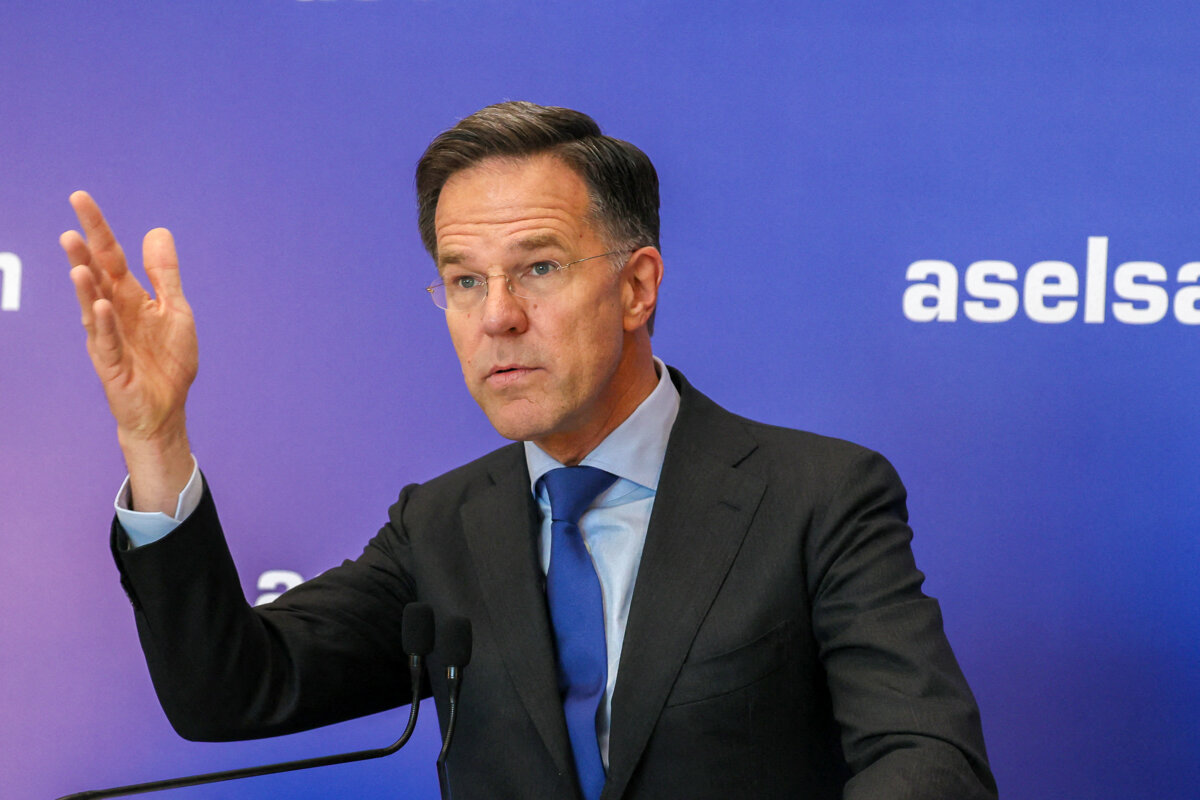

NATO members have “gotten the message” from U.S. President Donald Trump about agreements allowing the United States to access European bases, the defense alliance’s secretary-general, Mark Rutte, said on May 4.
“Yes, there has been some disappointment from the U.S. side, but Europeans have listened,” Rutte told reporters at a European Political Community summit in Armenia.
“They are now making sure that all the bilateral basing agreements are being implemented.”
Rutte said NATO members, including Croatia, France, Germany, Greece, Italy, Montenegro, Portugal, Romania, and the UK, were supporting the United States, allowing it to use their bases, as well as providing other logistical support.
“More and more” European allies were pre-positioning assets such as minehunters and minesweepers close to the Persian Gulf to be ready for a “next phase,” the secretary-general said.
U.S. officials have accused some European NATO allies of failing to do enough to support the United States during the Iran war, prompting the Trump administration to reconsider its relationship with the defense alliance.
This includes Spain, which denied the U.S. military the use of its bases for Operation Epic Fury missions.
Spanish Military Bases, Airspace
On March 30, Spanish Defense Minister Margarita Robles said that, in addition to denying the United States access to its Morón and Rota bases, Spain would close its airspace to any mission related to the Iran conflict.
Spain stated that the war does not comply with international law, with Spanish Prime Minister Pedro Sánchez calling it an “illegal war.”
U.S. Secretary of State Marco Rubio said on March 30 that the United States must reexamine its relationship with NATO because members were not helping in the Iran conflict.
Rubio said one of the benefits of U.S. membership in NATO is that it enables Washington to station troops, aircraft, and arms in other parts of the world, including much of Europe.
However, during Operation Epic Fury, “we have countries like Spain, a NATO member that we are pledged to defend, denying us the use of their airspace and bragging about it, denying us the use of our—of their bases,” he said. “There are other countries that have done that as well.”
Trump Considering Troop Withdrawals
On April 29, Trump said the United States was reviewing a possible troop reduction in Germany. This is not the first time Trump has considered such a move. In 2020, the president said he would reduce the U.S. troop presence in Germany, calling it expensive and unfair to U.S. taxpayers.
On April 30, Trump suggested that he was also considering troop withdrawals from Italy and Spain, citing their lack of support during the Iran conflict.
“Why shouldn’t I?” Trump told a reporter. “Italy has not been of any help, and Spain has been horrible, absolutely horrible.”
Trump’s recent comments related to U.S. troops in Germany were made after remarks by German Chancellor Friedrich Merz criticizing the Iran war.
On April 27, Merz suggested that Iran had humiliated the United States, prompting Trump to strongly dispute the German chancellor’s statement, saying in a Truth Social post that Merz “doesn’t know what he’s talking about.”
On April 29, the German chancellor insisted that his personal relationship with Trump remained strong, despite the public comments.
The following day, Trump said in a Truth Social post that Merz should “spend more time on ending the war with Russia/Ukraine” and on “fixing his broken Country, especially Immigration and Energy, and less time on interfering with those that are getting rid of the Iran Nuclear threat, thereby making the World, including Germany, a safer place!”
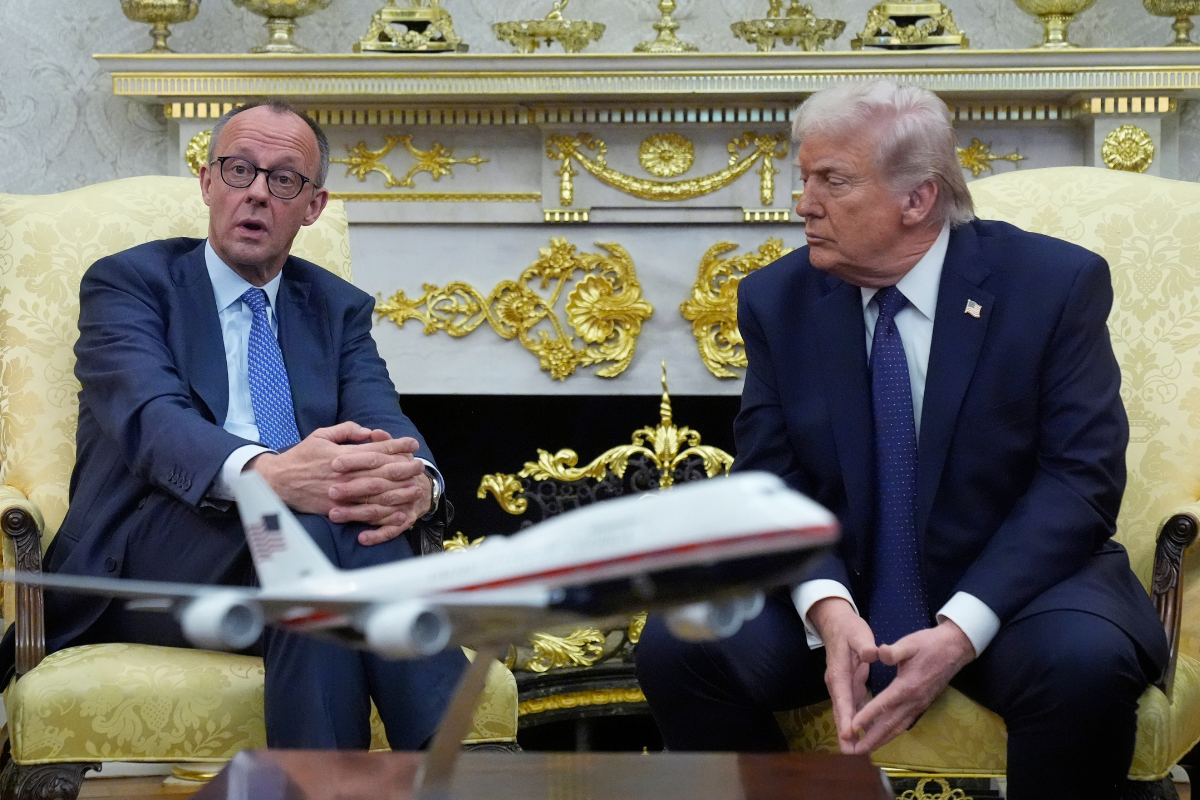
On May 3—following the War Department’s announcement of a withdrawal of 5,000 troops from Germany—Merz downplayed the rift.
“I have to accept that the American president has a different view on these issues than we do,” Merz told German public broadcaster ARD.
“But that does not change the fact that I remain convinced that the Americans are important partners for us.”
When asked whether the troop drawdown was linked to the row over Iran, Merz said that “there is no connection.”
“I am not giving up on working on the transatlantic relationship,” he told ARD. “Nor am I giving up on working with Donald Trump.”
Reuters and Chris Summers contributed to this report.
 Friends Read Free
Copy
Facebook
Tweet
Friends Read Free
Copy
Facebook
Tweet