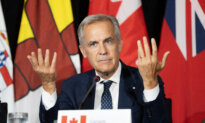

Fifty-nine percent of First Nations in fiscal 2024-2025 failed to comply with financial transparency legislation, despite Ottawa spending more than $32 billion on indigenous issues across the country that year, a new Fraser Institute report has found.
First Nations are required under the First Nations Financial Transparency Act (FNFTA), passed by Stephen Harper’s Conservative government in 2013, to publicly disclose their audited consolidated financial statements and a schedule of the remuneration and expenses paid to their chiefs and councillors.
The legislation was enacted to help ensure federal taxpayer money is used for its intended purposes by First Nations. It gave Ottawa the legal right to withhold or terminate payments to non-compliant bands.
A new report, however, has found that compliance with the law has dropped dramatically since the Justin Trudeau Liberals stopped enforcing it after winning the 2015 federal election. Compliance went from nearly 100 percent in 2014-2015 to roughly 40 percent a decade later.
“Financial transparency and accountability are paramount in any government to ensure honesty, which is exactly what the act was meant to achieve within First Nation communities,” Fraser Institute senior fellow Tom Flanagan said in a press release.
He said the Trudeau government’s decision to stop enforcing reporting requirements “kickstarted a rapid decline of compliance” among First Nations because there are “no financial consequences” if First Nations governments do not complete the financial audits.
Charges of corruption and maladministration in First Nations governments remain in the public eye, Flanagan said in his report. And that problem is growing as First Nations create an increasing number of large trust funds to manage revenue obtained from the resolution of specific claims, class action lawsuits regarding historical injustices, business investments, and impact benefit agreements associated with pipelines, mines, and various natural resource initiatives.
“Virtually no public information is available about investment decisions made in these settlement trusts, even though they now total tens of billions of dollars,” he said.
The author added that, while the First Nations Financial Transparency Act did demand accountability, it may no longer be the best way to achieve it. Aboriginal communities argued in federal court that the act is an unconstitutional example of government overreach.
They said the law violated aboriginal and treaty rights, infringed on privacy, and put indigenous band-owned businesses at an unfair market disadvantage. Because of the political shift and policy changes, however, the core constitutional questions regarding the act were never fully resolved or ruled upon by the Supreme Court.
The federal government now collaborates with First Nations to jointly develop accountability strategies. First Nations are encouraged but are not forced to implement their own financial administration laws, which would be overseen by organizations such as the First Nations Financial Management Board.
Due to unresolved legal challenges regarding the act, Flanagan said that the most effective solution would be to amend the legislation through a process spearheaded by First Nations individuals, ensuring that it aligns more closely with the heightened levels of investment and funding that First Nations in Canada have been receiving from the government.
“By meaningfully updating and enforcing this legislation, Ottawa could encourage greater compliance in First Nations fiscal reporting and restore trust in how taxpayer money is being used,” he said. “Publication of audited financial statements must be universally required, whereas matters such as scheduling and deadlines, as well as the scope and depth of the new legislation, can be negotiated between First Nations and the federal government.”
 Friends Read Free
Copy
Facebook
Tweet
Friends Read Free
Copy
Facebook
Tweet