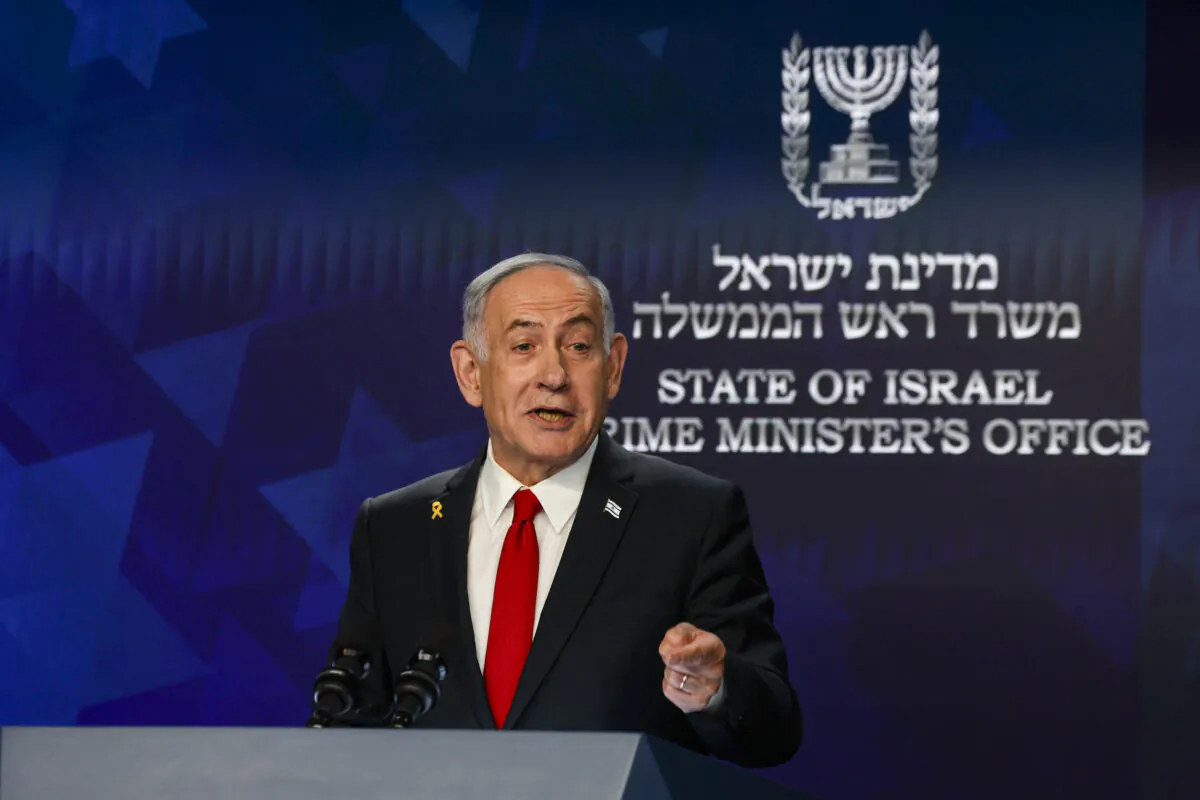
Israel’s parliament rejected a preliminary vote to dissolve itself in the early hours of June 12, giving Prime Minister Benjamin Netanyahu’s ruling coalition more time to tackle a political deadlock over the government’s controversial military conscription bill.
The Knesset said in a statement that 61 members of parliament opposed the Bill for the Dissolution of the Twenty-Fifth Knesset, while 53 supported it.
The rejection of the vote to dissolve the government came after an agreement was reached on how to move forward with the hotly disputed conscription bill, which had sparked the crisis.
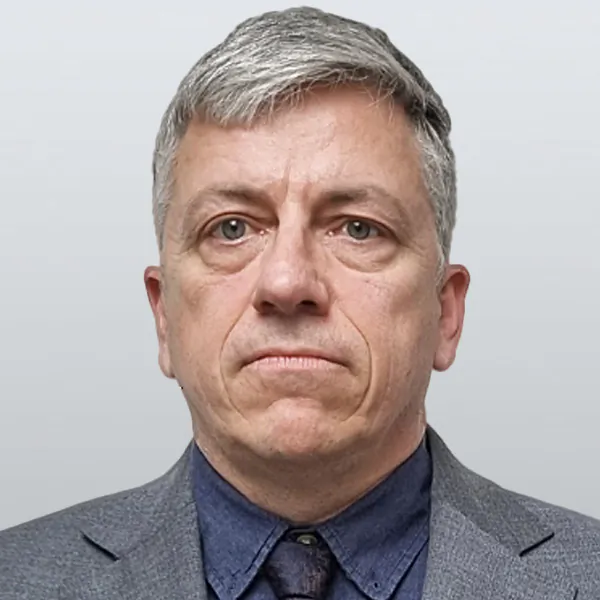
“I am pleased to announce that after long discussions we have reached agreements on the principles on which the draft law will be based,” the Knesset’s Foreign Affairs and Defence Committee chairman, Yuli Edelstein, said in a statement.
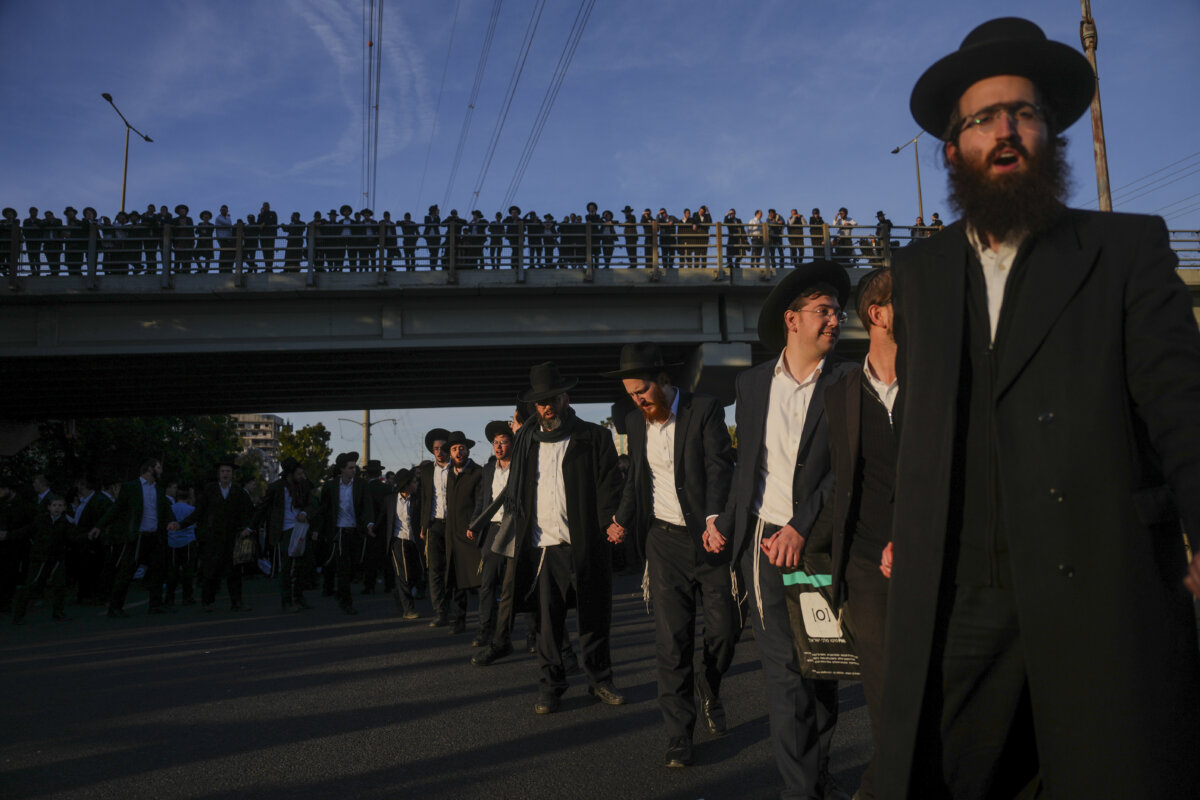
The ruling coalition contains several parties that draw their support from ultra-Orthodox Jews, who are keen for the conscription legislation to be reworded so they can maintain their exemption from military service.
Most Jewish men are required to serve nearly three years in the Israel Defense Forces (IDF), followed by several years of reserve duty.
But ultra-Orthodox Jews, who make up approximately 13 percent of Israel’s population, have been exempted from military service while studying full-time in yeshivas, or religious seminaries, since the founding of Israel in 1948.
On Oct. 7, 2023, Hamas terrorists crossed the border from Gaza and murdered 1,200 Israelis, taking 250 hostages with them as they withdrew.
Since then, 870 Israeli soldiers have been killed in the fighting related to the Israel–Gaza conflict, and reserve soldiers have been repeatedly called up, leaving their jobs and families for weeks at a time.
In 2024, Israel’s Supreme Court ruled unanimously that the IDF must begin drafting ultra-Orthodox men for compulsory service. The court sided with the petitioners, known as the Movement for Quality Government in Israel, who brought the legal action.
Shuki Friedman, vice president of the Jewish People Policy Institute, a Jerusalem think tank, said the IDF had sent out 12,000 draft orders since the High Court ruling, but only a small number of ultra-Orthodox Jews have enlisted.
Several religious parties in the coalition have sought to persuade Netanyahu that the exemptions for ultra-Orthodox Jewish seminary students from military service should be retained.
Many ultra-Orthodox Jews, known as Haredim, argue they carry their share of the burden to society through prayer and study of sacred texts, and fear that contact with secular society through military service will distance adherents from strict observance of the faith.
During the Knesset debate, Merav Michaeli, a lawmaker with the opposition Labour Party, said: “It’s more than ever urgent to replace Netanyahu’s government and specifically this toxic and harmful government.
“It’s urgent to end the war in Gaza and to bring back all the hostages. It’s urgent to start rebuilding and healing the state of Israel.”
An opinion poll published on June 6 by Ma’ariv, the sister paper of the Jerusalem Post, suggested Netanyahu’s coalition, which came to power in November 2022, would lose an election if it were held today.
‘Draft-Dodging Law’
The Knesset said on its website that the leader of the opposition, Yair Lapid, had said during the debate: “Once again you spat in the face of the IDF fighters.
“Once again you have sold out our fighters, for what? Another two weeks? Three weeks?
“The Haredim had two options tonight—they could have either lost the draft-dodging law, or lost the government.”
Responding on behalf of the government, Communications Minister Shlomo Karhi described the attempt to dissolve parliament as a “media stunt.”
“The coalition is stronger than ever, resilient, with a wall of unity, and we are moving forward,” Karhi said. “We are at the helm of a historic draft law, the heritage of the nation of Israel, and its security.”
The Associated Press and Reuters contributed to this report.
 Friends Read Free
Copy
Facebook
Tweet
Friends Read Free
Copy
Facebook
Tweet