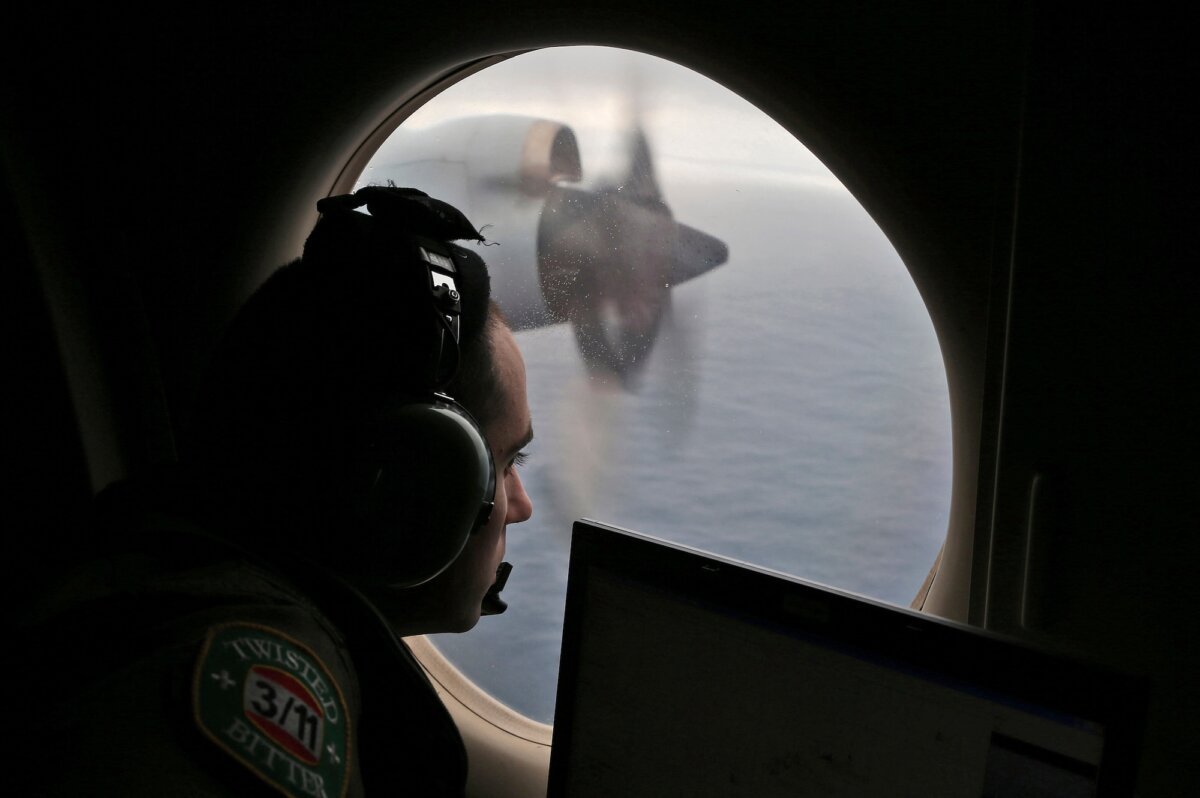

A renewed deep-sea search for Malaysia Airlines Flight 370 began this week in the southern Indian Ocean, reviving hopes of solving aviation’s most enduring mystery more than a decade after the aircraft vanished with 239 people on board.
Malaysia’s Transport Ministry said on Dec. 31 that a search vessel, identified as the Armada 86 05, had arrived at a designated search area carrying two autonomous underwater vehicles capable of scanning vast stretches of seabed at extreme depths. The precise coordinates of the search zone were not disclosed.
The vessel prepared for deployment at Fremantle Port in Western Australia before heading into the Indian Ocean. While the Malaysian government did not formally name the contractor in its statement, the craft number cited by Malaysia’s Transport Ministry—Armada 86 05—identifies the ship as belonging to Ocean Infinity, a Texas-based marine robotics company that previously led an unsuccessful search for the missing plane in 2018.
Earlier this month, Malaysian officials confirmed that the hunt would resume under a renewed “no find, no fee” agreement, under which Ocean Infinity will be paid only if it locates substantive wreckage of the missing Boeing 777. The current mission is expected to run intermittently for up to 55 days, subject to weather and sea conditions.
Ocean Infinity has confirmed that it has restarted search operations but declined to provide further details, citing what it described as the “important and sensitive nature” of the mission.

Advanced Drone Technology, Narrowed Search Area
The new effort relies on autonomous underwater vehicles—often described as deep-sea drones—equipped with advanced sonar and imaging systems designed to map the ocean floor in high resolution. The company said it has upgraded its technology since its last attempt and refined its analysis of data.
The ship taking part in the operation, the Armada 86 05, is part of a newly deployed 14-vessel fleet that Ocean Infinity says has been equipped with advanced deep-sea drone systems and other specialized gear that pushes “the boundaries of robotics and technology at sea.”
Ocean Infinity’s chief executive, Oliver Plunkett, said last year that the firm had worked with multiple independent experts to narrow the search zone to what it believes is the most probable crash site. Earlier this year, the company briefly resumed seabed operations in a newly approved section of the southern Indian Ocean, but that effort was suspended in April due to poor weather.
The current search area covers roughly 5,800 to 6,000 square miles of seabed—far smaller than earlier efforts.
A two-year underwater search jointly conducted by Malaysia, Australia, and China between 2014 and 2017 covered a 46,000-square-mile area of the southern Indian Ocean. That effort was suspended after they failed to locate the plane.
A subsequent three-month search by Ocean Infinity in 2018 covered an additional 43,000 square miles north of the original zone but also ended without success.
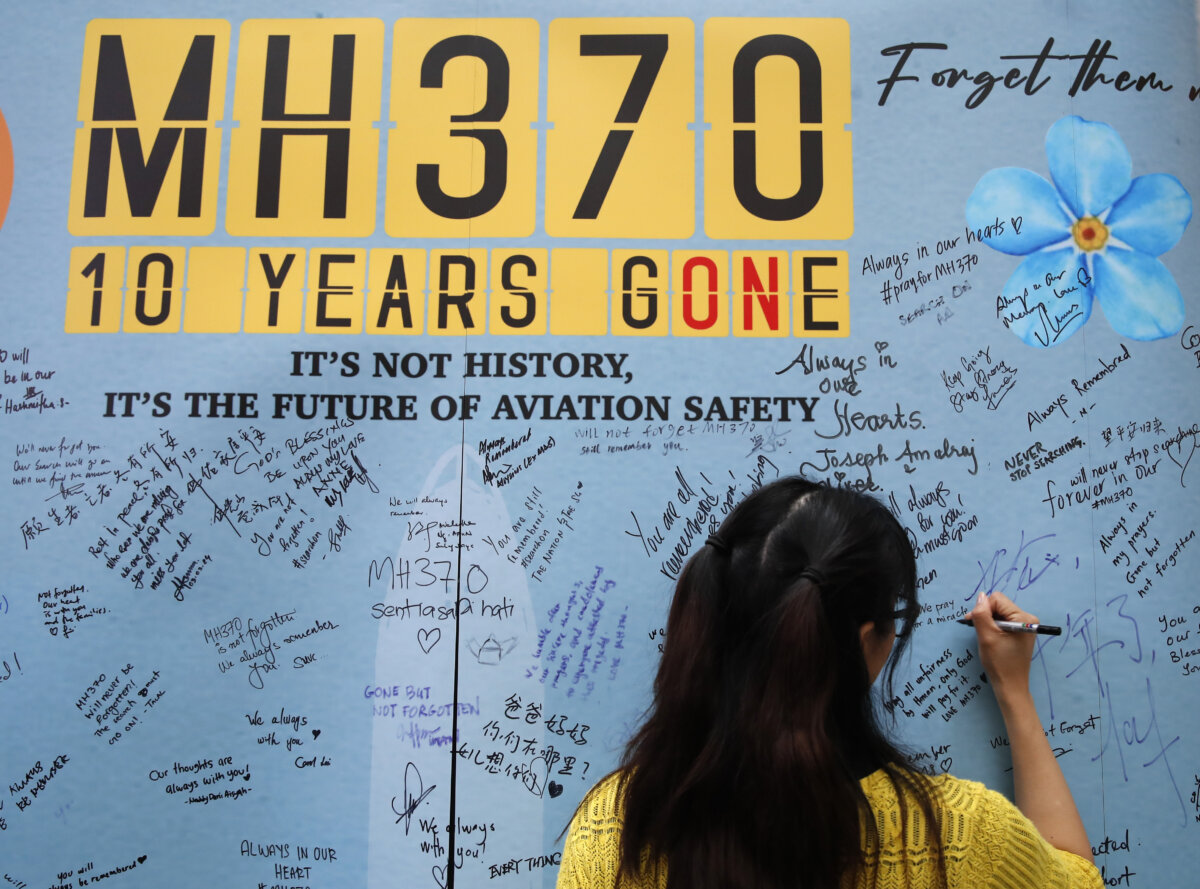
Explanation-Defying Disappearance
Flight MH370 vanished from radar on March 8, 2014, about 38 minutes after taking off from Kuala Lumpur en route to Beijing. Satellite data later showed the aircraft veered sharply from its planned route and flew south for hours toward the remote southern Indian Ocean, where investigators believe it crashed.
Despite one of the most extensive and expensive search operations in aviation history, no main wreckage or flight recorders have ever been recovered. Pieces of debris believed or confirmed to be from the aircraft later washed up along the coasts of East Africa and on islands in the Indian Ocean.
A 495-page investigative report released by Malaysia in 2018 concluded that the aircraft’s controls were likely deliberately manipulated to turn the plane off course, though investigators stopped short of assigning responsibility. The report said a mechanical failure could not be definitively ruled out and that conclusions could not be reached without locating the main wreckage.
“The change in flight path likely resulted from manual inputs,” the report reads, adding that “intervention by a third party cannot be excluded either,” but that a “significant lack of evidence” prevented any conclusive determinations.
The failure to locate MH370’s crash site has fueled much speculation about its disappearance—which the report calls “unprecedented in commercial aviation history.”
The Associated Press contributed to this report.
 Friends Read Free
Copy
Facebook
Tweet
Friends Read Free
Copy
Facebook
Tweet