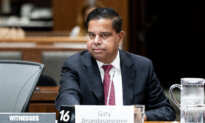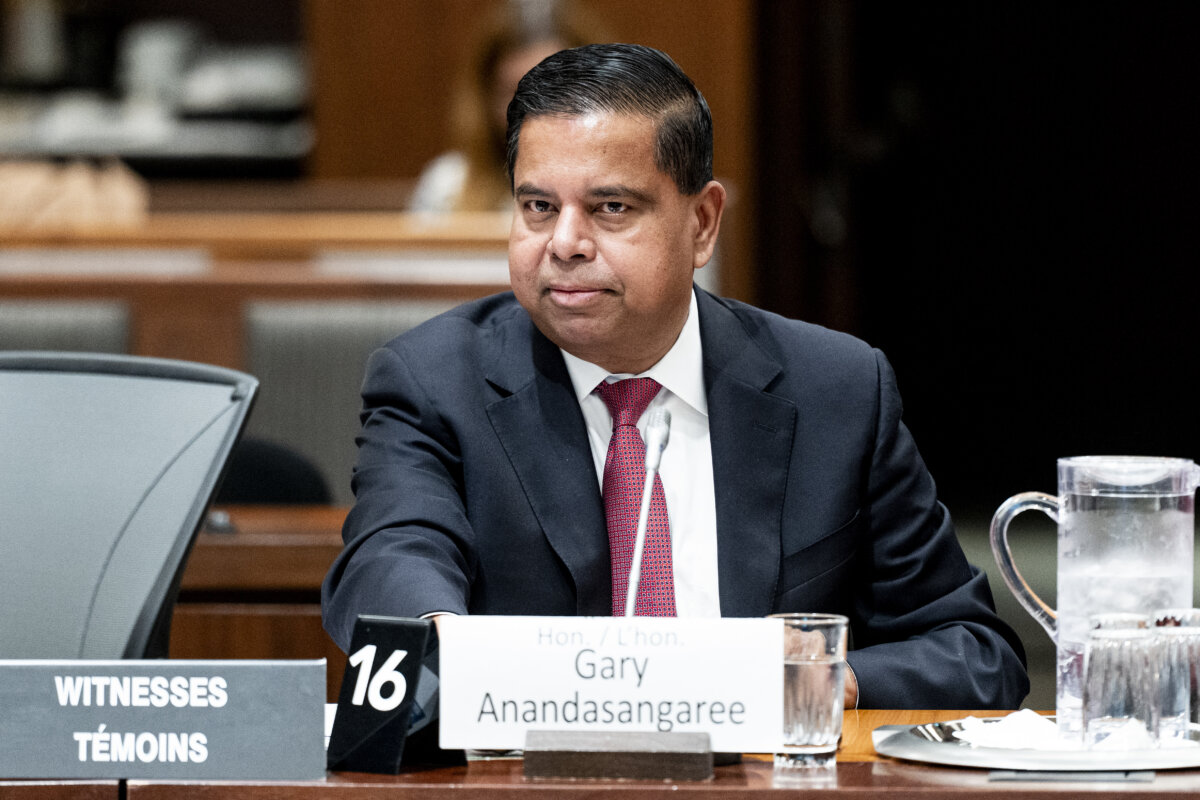

Public Safety Minister Gary Anandasangaree says it’s still not known when a foreign interference watchdog will be appointed.
“They will be appointed in short order. We are finalizing, and we will bring forward a name to colleagues opposite for feedback,” Anandasangaree told the House of Commons Public Safety Committee on Nov. 6.
Under repeated questioning from Conservative MP Frank Caputo, Anandasangaree said the agency is currently “working towards the appointment” of someone for the position. Caputo said Canadians expected Anandasangaree to take action on foreign interference, and “you’re the one appearing here, and you won’t even give us a date.”
Anandasangaree had said in August that he hoped the Conservatives and Bloc Québécois would have a chance to review the candidates for the foreign interference watchdog before the government named the position ahead of Parliament returning on Sept. 15.
Public Safety Canada said in a statement to The Epoch Times on Oct. 28 that Anandasangaree said the department had “a name” in mind for the role, and looked forward to “presenting that name to the opposition” and conducting the appropriate consultations.
The department also said a foreign influence registry would be launched “in the shortest possible timeframe.” Anandasangaree said in August that once the commissioner is named, the government will move forward with the order-in-council needed to create the foreign influence registry, and that this would happen before Christmas.
In June 2024, Parliament passed Bill C-70 providing for a new foreign interference transparency commissioner to be appointed following consultation with the opposition parties, as well as creating a foreign influence registry listing those who are working in Canada as agents on behalf of foreign governments.
Bill C-70 also created new criminal offences related to foreign interference and amended the Canadian Security Intelligence Act, allowing the Canadian Security Intelligence Service to disclose information to any person or entity, under certain conditions, “for the purpose of building resiliency against threats to the security of Canada.”
During question period on Oct. 23, Conservative MP Michael Chong asked why no foreign interference registry had been created or foreign interference watchdog appointed 16 months after Bill C-70 was passed.
“I look forward to bringing forth the name to the leaders of the opposition so that we can have consensus on the commissioner,” Anandasangaree responded, adding that the commission would be “up and running by the end of the year.”
On Nov. 1, Prime Minister Mark Carney said he had discussed the issue of foreign interference during his meeting with Chinese leader Xi Jinping a day earlier at the Asia-Pacific Economic Cooperation forum in South Korea. Carney had been asked by a reporter if he mentioned the issue with Xi, since neither Ottawa’s nor Beijing’s readout of the Oct. 31 meeting mentioned human rights abuses, Canada’s national security concerns about China’s transnational repression, or the country meddling in Canada’s elections.
Carney said Xi did not appear to “recognize the level of concerns we have about these issues,” in reference to Canada’s concerns with foreign interference. “But we manage these issues in Canada. We have a structure to manage them,” he added.
The final report of the Foreign Interference Commission, released in January, said China is “the most active perpetrator of foreign interference targeting Canada’s democratic institutions.” The report also identified India as the second most active country engaging in electoral foreign interference in Canada.
 Friends Read Free
Copy
Facebook
Tweet
Friends Read Free
Copy
Facebook
Tweet