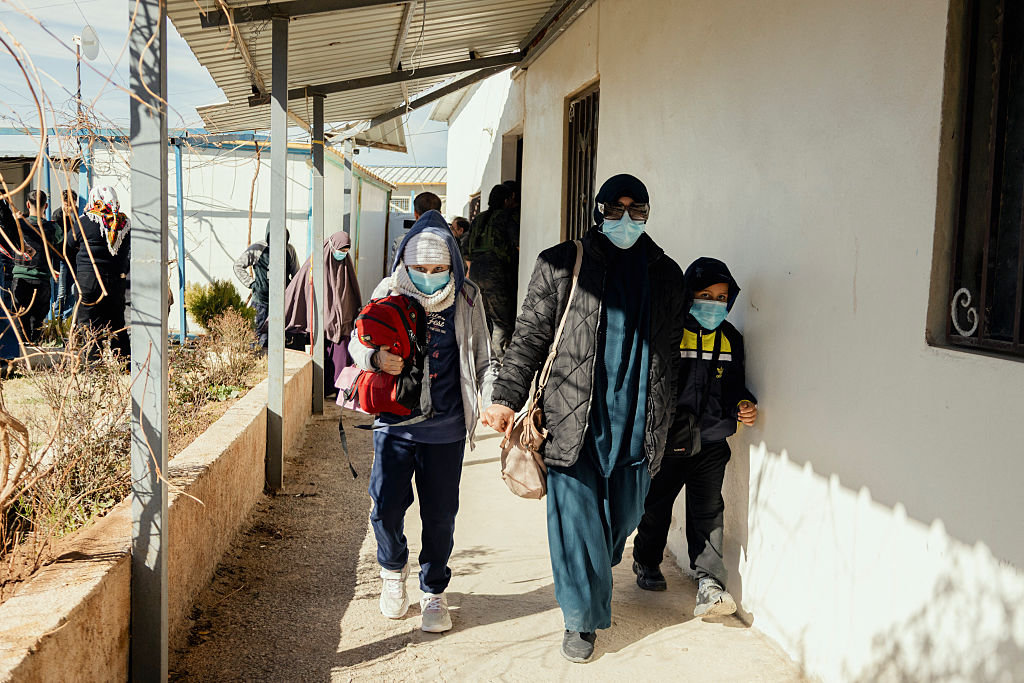

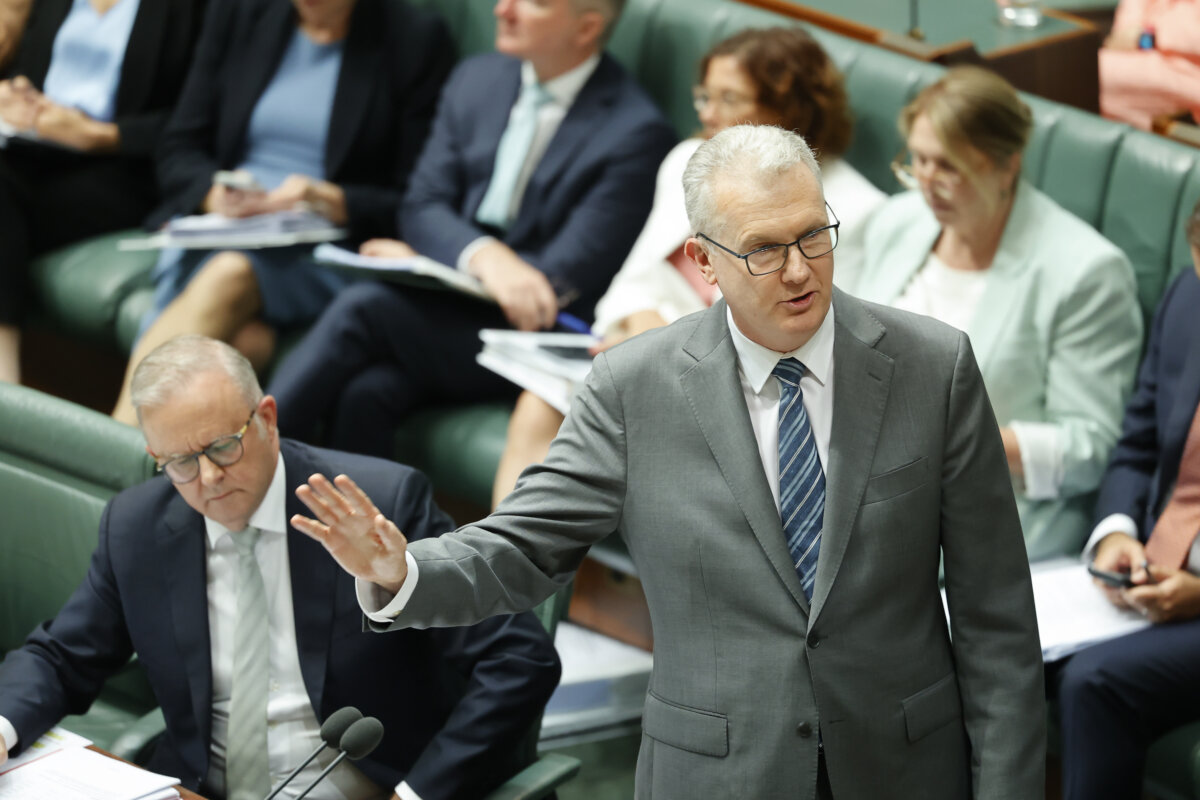
Home Affairs Minister Tony Burke has confirmed that the Labor government will not conduct in-person interviews with the 34 ISIS “brides” and children held in a Syrian detention camp.
During an interview with ABC Insiders on Feb. 22, Burke rejected claims about an information gap, saying authorities were on the ground in 2022 during earlier repatriations and that federal agencies have continued monitoring the remaining individuals.
“I think your presumption there is that you’re saying there’s a gap in our information, and what I’m telling you is our information is very strong. That’s how you can single one person out from the others,” he said, referring to a Temporary Exclusion Order issued against one member of the group last week.
When pressed if further interviews were needed, Burke insisted authorities had detailed knowledge of each person.
“We know the state of mind and the effective ideology of different individuals. They are not a coherent cohort, and that is why the person, where a temporary exclusion order has been issued, is in a different category to other members of that group,” he said.
The cohort comprises around 23 children and 11 women linked to ISIS fighters who have been attempting to leave Syria’s Al Roj camp and return to Australia.
The issue resurfaced after they tried to fly back on Feb. 16, but the trip was cancelled due to administrative issues.
Opposition Demands Face-to-Face Checks
Shadow Foreign Affairs Minister Ted O’Brien has raised concerns about the apparent absence of security agency involvement in the attempted return of ISIS brides and their children to Australia.
“The problem is they [security agencies] haven’t been deeply involved in this case, so the likes of ASIO [Australian Security Intelligence Organisation], [and] the likes of the AFP [Australian Federal Police], should be given sufficient time to interview these people face to face, so that they can assess the risk from a national security perspective,” he told ABC Radio on Feb. 23.
“Our point is that the government should be pulling every possible lever to slow down a return, to allow time for these individuals to be eyeballed and to be interviewed.”
The opposition has also called for the criminalisation of the act of aiding people linked to terrorism come back to Australia, saying it would close a loophole allowing third parties to facilitate the so-called “self-managed returns.”
However, the proposal has been rejected by the Labor government.
Passports and Legal Limits
Burke has also faced criticisms for allowing passports to be issued to the group before their attempted departure on Feb. 16.
However, he defended the decision, saying Australian citizenship carries an automatic right to a passport, without ministerial discretion.
“There’s been no advice from ASIO that the Passports Act provisions have been activated. There has been advice for one of the people that has come to me that the threshold for a temporary exclusion order has been activated, and I have acted on that and issued the temporary exclusion order,” Burke said.
When asked whether the rest of the group could still pose a threat to Australia, he said no: “You need to make sure you’ve got the best way of protecting Australians; that’s what our agencies do.”
Despite the ASIO not issuing adverse findings against the remaining members, the minister said the government would not assist their return.
“We don’t want them to come back. We’re actively making sure we do nothing to help them, nothing to help them at all,” he said.
However, Burke acknowledged that the government’s legal options are limited in preventing the group from going back to Australia.
“Other than a temporary exclusion order, there isn’t a legislative power to be able to stop an Australian citizen from entering Australia. So effectively that question goes to are we breaking the law, and the answer’s no,” he added.
 Friends Read Free
Copy
Facebook
Tweet
Friends Read Free
Copy
Facebook
Tweet