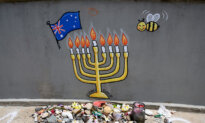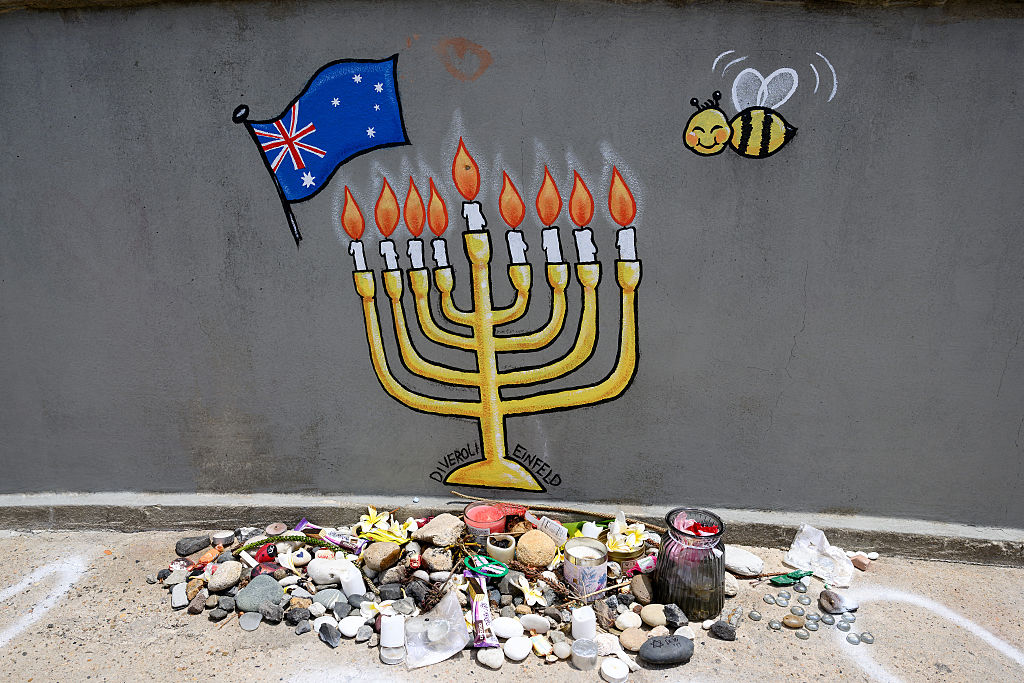

Five months after the Bondi terror attack, Australian authorities say nothing “impeded the ability” of immigration or counter-terrorism agencies to take action in the lead-up or after the mass shooting.
The interim report, led by former Justice Virginia Bell, says government agencies reported no gaps in law enforcement, border control, or immigration frameworks in dealing with the Bondi terror incident, which targeted a Jewish Hannukah celebration and killed 15 people.
“No conclusion in these respects can be reached on a review of the agencies’ documents alone and in the absence of according procedural fairness to any person or agency at risk of an adverse finding,” the report released on April 30 states.
“Nonetheless, the review of this considerable body of material by officers with relevant experience and expertise and by Counsel Assisting and me has revealed aspects in which counter-terrorism capability at Commonwealth and state levels could be improved,” Bell wrote.
Another major recommendation was for all states and territories to support Labor’s proposed gun buyback scheme, a move the Queensland LNP government has resisted.
“The establishment of a gun buyback scheme could reasonably be expected to reduce the number of firearms available in the community,” the report said.
The Bondi Royal Commission was established by the Albanese Labor government a month after the terror incident amid sustained public pressure.
Recommendation for Agency Change, More Security at Jewish Events
The interim report includes 14 recommendations with several redacted due to confidentiality reasons.
The report’s top recommendation calls for increased security at all Jewish events, particularly those considered high-risk or publicly accessible.
It has asked New South Wales (NSW) Police to build on existing “substantial engagement” with the Jewish community-focused Community Security Group (CSG), noting there “may be scope” to explore stronger and more varied forms of collaboration.
The report also urged the government to consider making the Commonwealth Counter-Terrorism Coordinator role full-time and to formally include the Australia-New Zealand Counter-Terrorism Committee (ANZCTC) in the national crisis management framework.
It called for the Counter-Terrorism Handbook to be updated promptly and at least every three years.
The ANZCTC should also commission a review of Joint Counter-Terrorism Teams, with findings to be reported to police commissioners and the Director-General of Security.
The recommendations further state that the National Security Committee, the prime minister, and National Cabinet members should take part in counter-terrorism exercises.
Prime Minister Anthony Albanese said the government had accepted all recommendations.
“The Interim Report contains a small number of classified recommendations which cannot be publicly released because they could compromise sensitive national security information,” he told reporters.
Opposition Leader Angus Taylor said he had not fully reviewed the report but was “deeply concerned” by the sections he had seen, particularly those raising questions about resourcing for national security agencies.
“That’s something every Australian should be deeply concerned about,” he said.
One Nation Leader Pauline Hanson was also critical of the finding that no “gaps” existed in Australia’s current legal and regulatory framework.
“The interim report states agencies have identified no gap in existing legal and regulatory frameworks that impeded their ability to prevent an attack like Bondi. If the system had no gaps—if law enforcement had all the necessary powers—then how did it fail to stop this?” she said in a statement.
“Until this question is answered, community safety and social cohesion remain at risk from immigration and the focus on firearm restrictions—which was the initial response of Anthony Albanese—remains the political deflection it always was.”
Future Hearings to Probe Key Questions
Bell said critical questions—such as whether intelligence was missed or police resources were adequate—would be examined in upcoming hearings.
Questions have been raised over the actions of investigating agencies after shooter Naveed Akram was released in 2019 without ongoing monitoring.
Akram first came to the attention of Australian Security Intelligence Organisation (ASIO) in October 2019 and was investigated for six months, before authorities assessed he posed no continuing threat.
“Important issues arising from the Bondi attack, including whether there was any failure to identify and act upon intelligence in the lead up to it, or in the allocation of police resources to the Chanukah event, will be addressed in hearings,” reads the report.
Some sessions may be held in private.
“In light of the nature of the evidence that I anticipate will be led, some hearings will need to be closed to the public (closed hearings).”
Limits on the Royal Commission
The accused attacker will not be called to testify, and likely witnesses may also be excluded to avoid affecting ongoing criminal proceedings. The motives of the shooters will not be probed either.
Further, the report suggested ongoing conflict between the United States, Israel and Iran may have increased safety risks to Australia’s Jewish community.
Public hearings will begin on May 4 and run until May 15, initially focusing on defining and examining anti-Semitism and its impact on Jewish Australians.
The final report will be submitted by the first anniversary of the attack.
 Friends Read Free
Copy
Facebook
Tweet
Friends Read Free
Copy
Facebook
Tweet