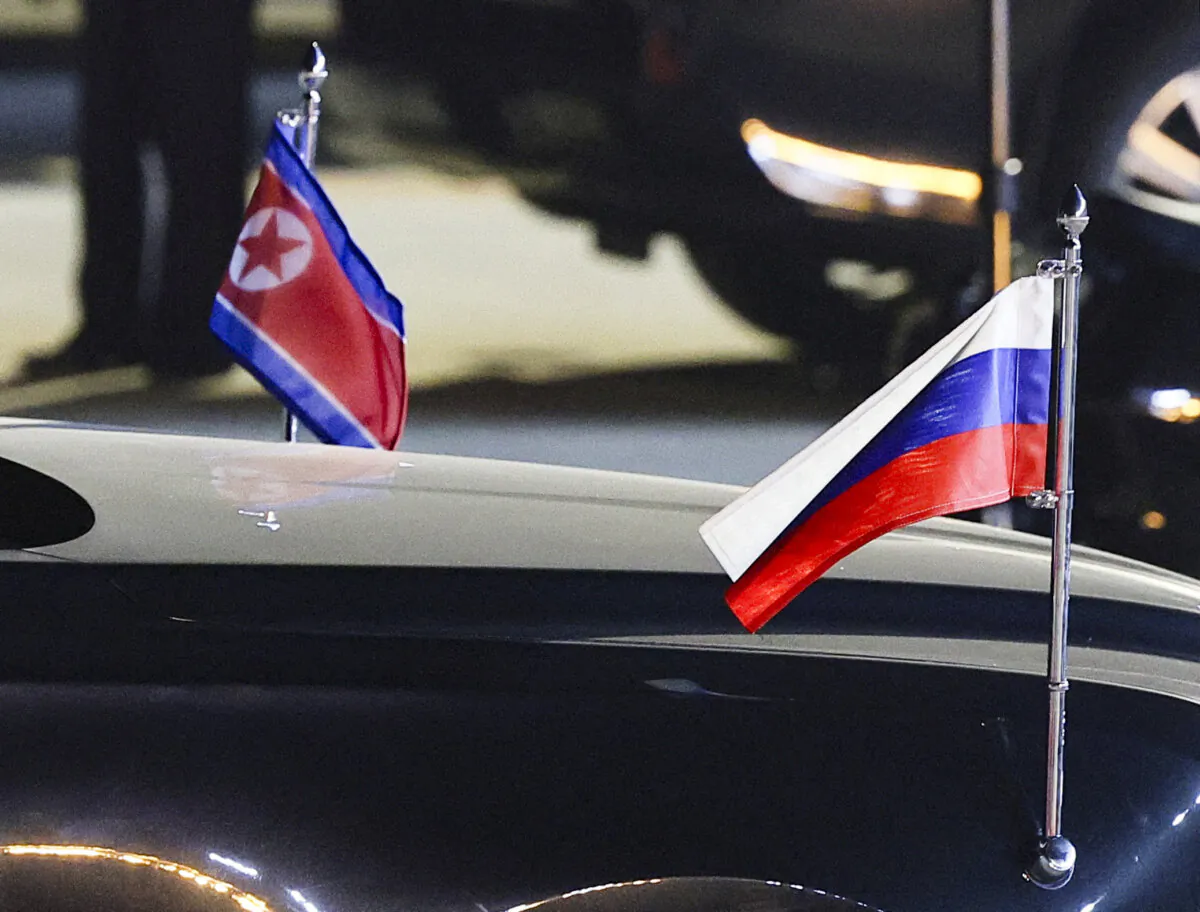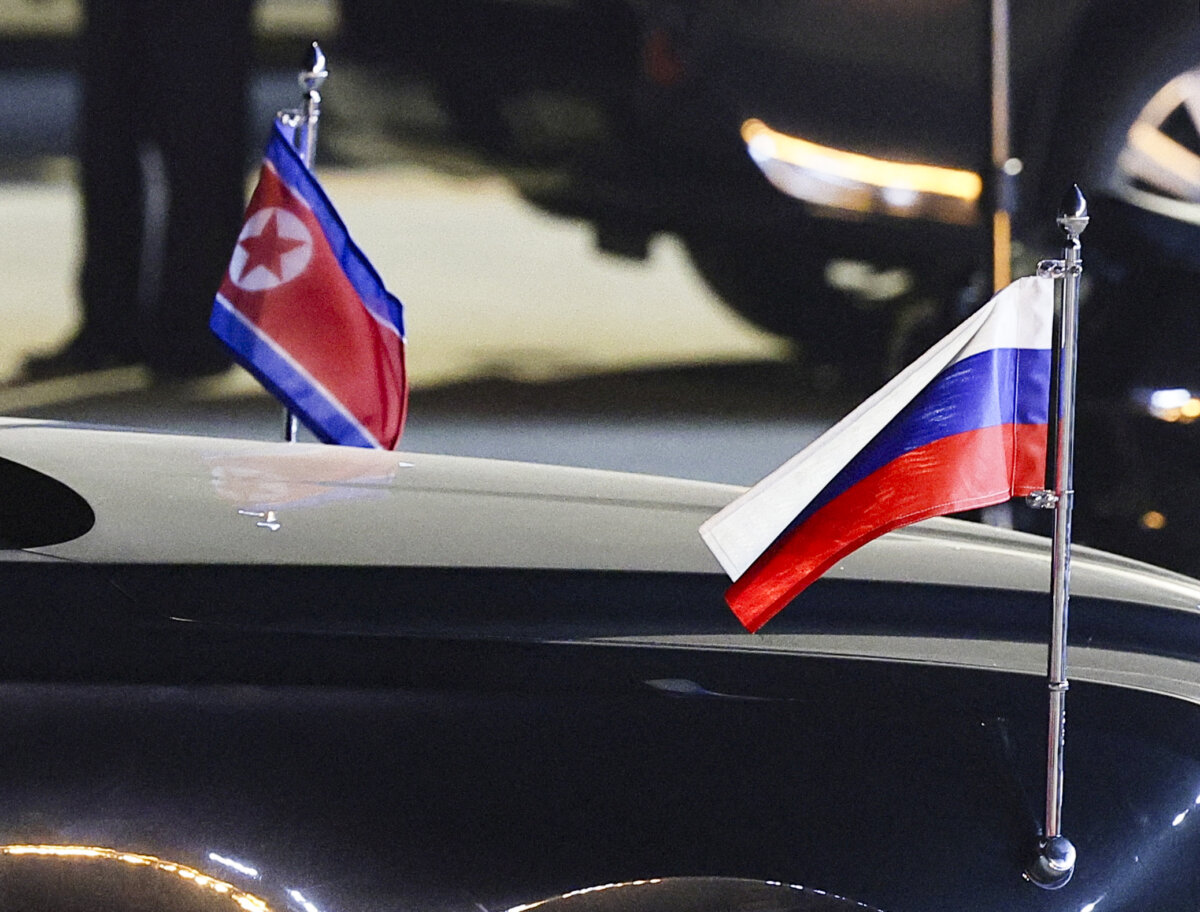

Members of the North Korean and Russian governments met in Pyongyang this week to discuss deepening their military cooperation, state-run Korean Central News Agency (KCNA) reported on Nov. 7.
The official media outlet of the communist state reported that North Korean officials, led by Pak Yong Il, vice director of the Korean People’s Army’s General Political Bureau, held talks on Nov. 5 with a delegation from the Kremlin headed by Vice Defense Minister Viktor Goremykin.
The meeting discussed issues related to strengthening cooperation, exchanges, and coordination between the military-political organizations in line with the deepening bilateral relations under the strategic guidance of the heads of state of the two countries, according to KNCA.
North Korean leader Kim Jong-un and Russian President Vladimir Putin signed a mutual defense pact in 2024, which stated that “in the event that either party is in a state of war as a result of armed aggression by individual or multiple states, the other side shall provide military and other assistance without delay by all means at its disposal in accordance with Article 51 of the U.N. Charter.”
This agreement has seen Pyongyang send soldiers, ammunition, and missiles to aid Russia in its war against Ukraine.
Specific agreements made in the most recent meeting were absent from the report by KCNA, which also reported in another article that Goremykin’s delegation held a separate discussion with Pyongyang’s defense minister, No Kwang Chol, on Nov. 6.
While on the trip, the Russian delegation laid a wreath in front of the Liberation Tower in the capital on Nov. 5, which honors the memory of the Red Army soldiers who fought Japanese Imperial forces on the Korean peninsula in the dying days of World War 2.
A spokesperson for South Korea’s Unification Ministry said that Seoul was closely monitoring the meeting and wasn’t making assumptions about what may have been discussed.
Kim said on Oct. 24 that North Korea’s military relationship with Russia would “advance non-stop.” His comments were made during a groundbreaking ceremony for a memorial to North Korean soldiers who fought alongside Russian forces in the Kursk region during the ongoing war in Ukraine
The Pentagon estimates that North Korea has deployed between 11,000 and 12,000 troops to fight in the war in return for economic and military technology assistance from Russia.
Seoul’s intelligence agency estimated in September that about 2,000 North Korean soldiers had been killed in the fighting.
The news of the meeting came the same day South Korea announced that its neighbor to the north fired a suspected short-range ballistic missile toward their eastern waters.
South Korea’s Joint Chiefs of Staff said the weapon flew about 700 kilometers (434 miles) cross-country after being fired from an inland area around the western county of Taekwan.
The meeting followed Secretary of War Pete Hegseth’s comments on Nov. 4 that the U.S.–South Korean alliance would stay focused on deterring North Korea, but would also keep other regional threats in view.
After the annual security talks with his South Korean counterpart, Ahn Gyu-back, in Seoul, Hegseth told reporters, “There’s no doubt flexibility for regional contingencies is something we would take a look at, but we are focused on standing by our allies here and ensuring the threat of the DPRK is not a threat to the Republic of Korea and certainly continue to extend nuclear deterrence as we have before.”
DPRK stands for the Democratic People’s Republic of Korea, the official name for North Korea. The Republic of Korea (ROK) is the official name of South Korea.
The Associated Press and Victoria Friedman contributed to this report.
 Friends Read Free
Copy
Facebook
Tweet
Friends Read Free
Copy
Facebook
Tweet