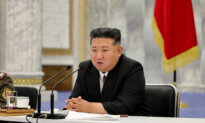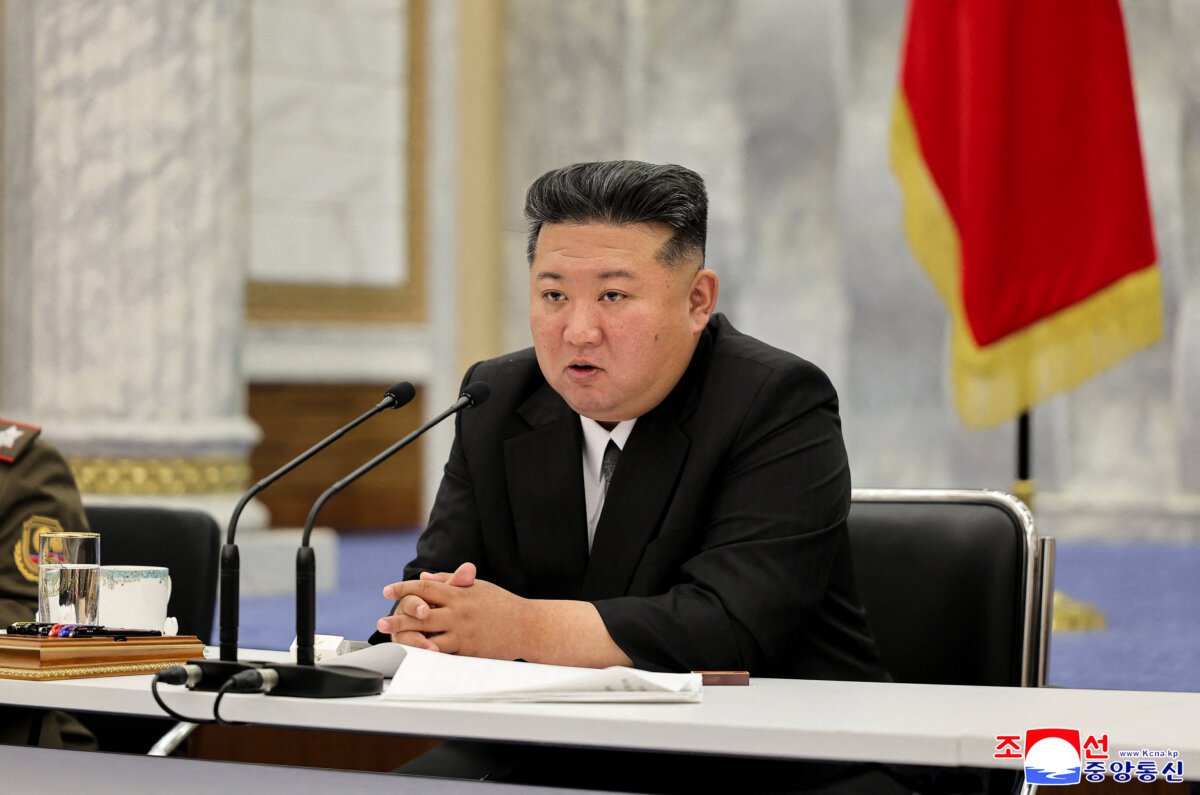

North Korean leader Kim Jong Un said relations between his country and the United States could improve if Washington drops what he described as a hostile policy, but warned that Pyongyang would continue expanding its nuclear arsenal and prepare for confrontation if necessary.
Speaking at the closing of North Korea’s Ninth Congress of the ruling Workers’ Party, Kim said the prospect of ties with Washington “depends entirely on the attitude of the U.S. side,” according to a Feb. 26 report by state media KCNA.
Kim said improved ties with Washington were possible under certain conditions.
“If the U.S. respects the present position of our state specified in the Constitution of the DPRK [North Korea] and withdraws its hostile policy toward the DPRK, there is no reason why we cannot get on well with the U.S.,” Kim said
At the same time, he said that North Korea would “fully prepare for the confrontation with the U.S. in the future,” warning that if Washington continues what he called its “customary practices” and “opts for confrontation to the end,” Pyongyang would respond proportionally and has “sufficient means and methods” to do so.
Kim met President Donald Trump in 2018 and 2019 during Trump’s first term, before negotiations over Pyongyang’s nuclear arsenal collapsed.
In September 2025, Kim suggested that he could meet the president again if Washington abandoned demands for denuclearization. However, he rejected talks with Seoul.
North Korea has about 50 nuclear warheads and sufficient fissile material to produce up to 40 more and is accelerating further production, according to a 2025 report by the Stockholm International Peace Research Institute.
Much of Kim’s speech focused on what he described as North Korea’s consolidated status as a nuclear weapons state.
“What is of most important and strategic significance is that the DPRK’s position as a nuclear weapons state has been consolidated to be irreversible and permanent,” he said, according to KCNA.
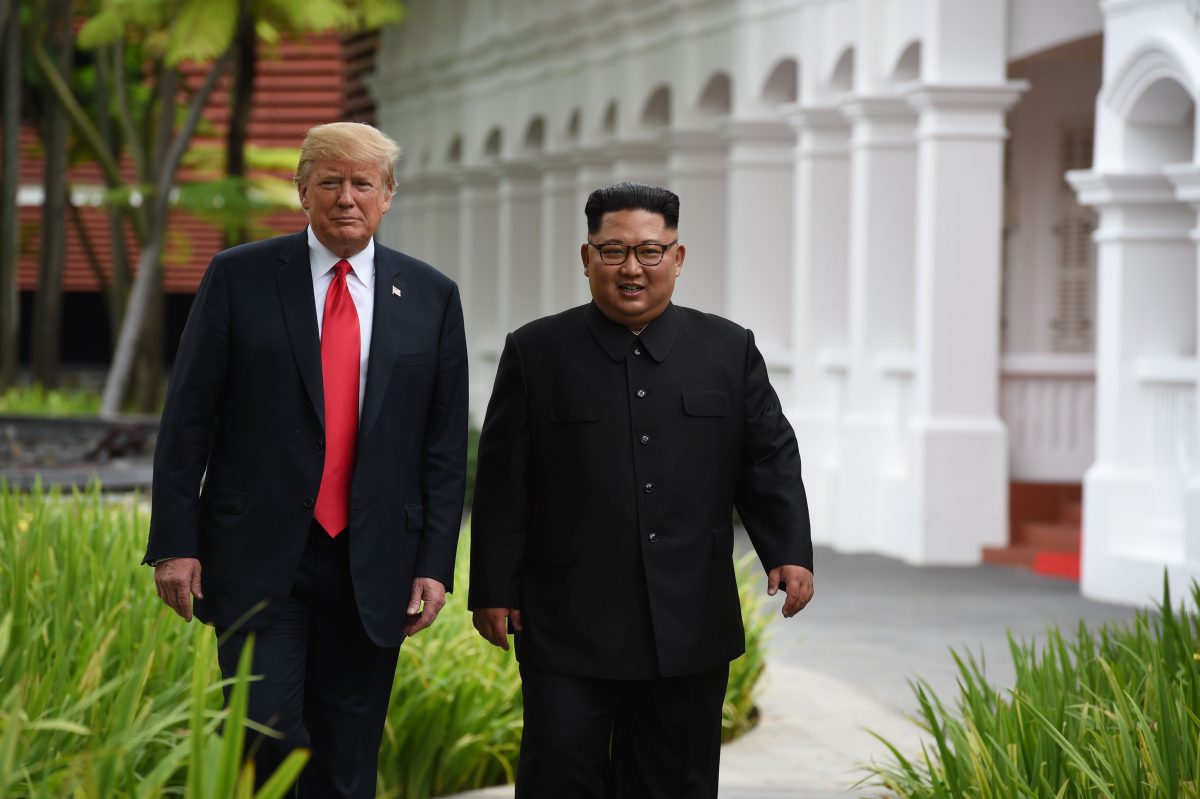
Kim said North Korea would continue strengthening its nuclear forces, noting that this “draws a red line” prohibiting any attempt to negotiate away the Pyongyang’s nuclear weapons under any circumstances.
No Change on South Korea
Kim used the party congress to sharpen his rhetoric toward South Korea, formally known as the Republic of Korea (ROK).
“Our position on the ROK is clear,” Kim said, according to KCNA.
He said that North Korea has “nothing to discuss with the ROK, the most hostile entity, and will exclude the ROK from the category of compatriots forever.”
Kim said Pyongyang would not return to past talks and warned that North Korea would fully develop its legal right to carry out preemptive strikes and use all available military force against what it calls hostile states.
“If the ROK’s mischievous acts conducted on the doorstep of a nuclear weapons state are recognized as an act of doing harm to our security environment, we can launch any action,” he said, warning that such a response could even lead to South Korea’s collapse.
South Korean President Lee Jae Myung, who took office in June 2025 after months of domestic instability, has sought to improve relations with North Korea.
In October 2025, North Korea stated that it tested a new cruise missile in waters to its west, hours before Trump arrived in South Korea on Oct. 29, 2025, for the Asia-Pacific Economic Cooperation summit.
The test violated U.N. Security Council resolutions banning Pyongyang from using ballistic missile technology and marked the first such launch since Lee took office in June 2025, vowing dialogue.
U.S. War Secretary Pete Hegseth, who visited South Korea in November 2025 to meet with his counterpart, Ahn Gyu-back, said Washington remained focused on deterring North Korea and ensuring that it does not threaten South Korea.
Hegseth said the U.S.–South Korea alliance was “stronger than ever” amid a dangerous security environment.
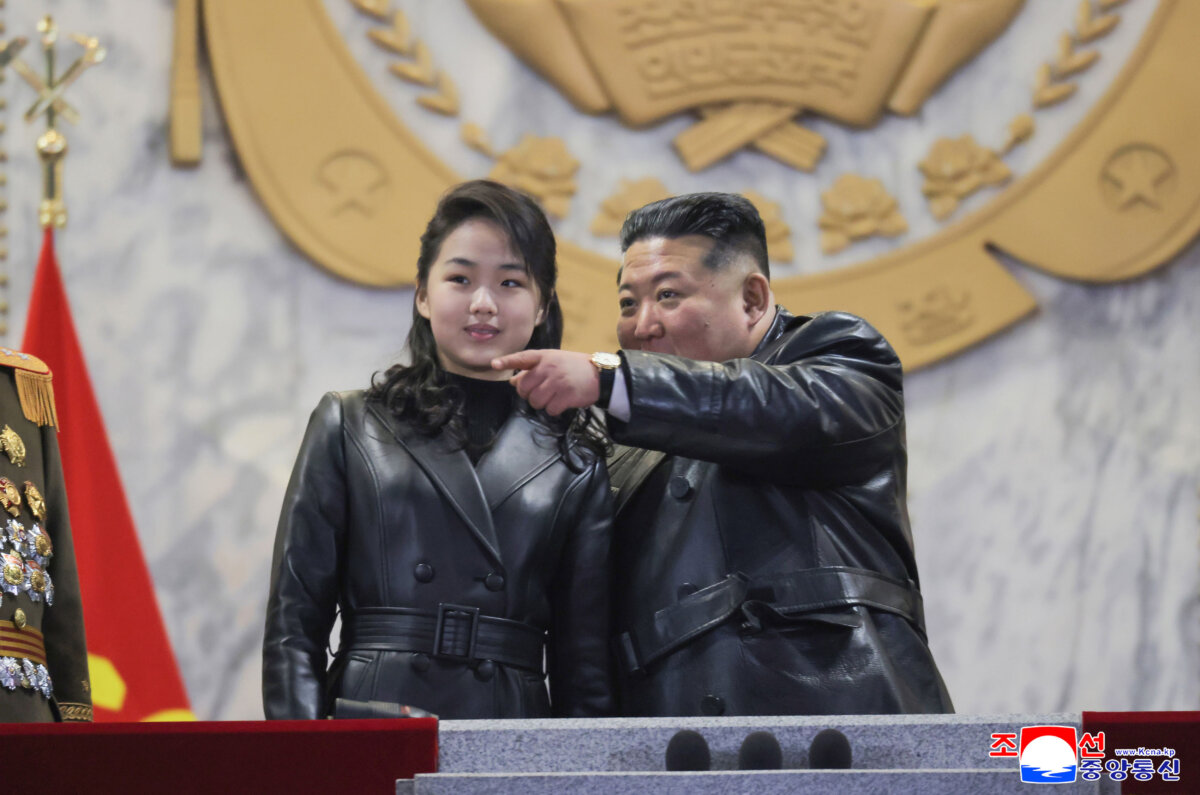
The week-long congress concluded on Feb. 25 with a military parade in Pyongyang.
Images from the party congress showed Kim’s teenage daughter, Ju Ae, standing beside him during the parade. South Korean lawmaker Lee Seong-kweun said on Feb. 12, citing the National Intelligence Service, that Kim is believed to be grooming her as his successor.
 Friends Read Free
Copy
Facebook
Tweet
Friends Read Free
Copy
Facebook
Tweet