
JOHANNESBURG—North Korean diplomats in Africa continue to run syndicates that are perpetrating crimes, including smuggling critical minerals and trafficking wildlife and narcotics, experts have told The Epoch Times. That money in turn helps to keep North Korean leader Kim Jong Un’s regime in power and enable it to develop weapons of mass destruction.
Despite reports and court cases that have exposed the involvement of North Korean officials in crime across Africa, most governments are doing little to stop it, with some even encouraging it, according to investigators.
In recent years, North Korean officials have been convicted of crimes including rhino poaching, and there is strong evidence of Pyongyang’s involvement in drug and weapons smuggling in Africa, but many governments on the continent “just look the other way,” said South African private investigator Chad Thomas, who has worked several cases involving North Korean officials.
He told The Epoch Times that “gangsters run the show” at the offices of most of North Korea’s representatives in Africa.
“North Korea’s criminal networks on the continent actually stretch back to the 1960s, when the communists supported all the anticolonial revolutions,” Thomas said. “What’s relatively new now is that organized crime groups have established bases in North Korea’s embassies. The diplomatic officers are, in effect, crime lords. It’s that brazen. Many African leaders know what’s happening, but some are obviously in on the action.”
The offices of several North Korean diplomatic representatives in Africa, including those in Botswana, Mozambique, South Africa, Tanzania, and Zimbabwe, didn’t respond to requests for comment.
Of 13 spokespeople of African states contacted to respond to claims that their governments are linked to North Korea’s crimes, only Zimbabwe’s and South Africa’s replied.
Zimbabwean government spokesperson Nick Mangwana told The Epoch Times that President Emmerson Mnangagwa “would never allow criminal activity to be orchestrated from diplomatic missions” in Zimbabwe.
South African presidential spokesperson Vincent Magwenya told The Epoch Times: “Our problems with North Korean officials in South Africa are in the past. We have told them if they commit crime, they will face the law like anyone else.”
Tycho van der Hoog, assistant professor of international security studies at the Netherlands Defence Academy, specializes in studying North Korea’s presence in Africa.
“Many [former] African revolutionaries, like those in South Africa’s ANC [African National Congress], Namibia’s SWAPO, and Zimbabwe’s ZANU-PF, have strong ties to Pyongyang and enjoy good relations with North Korean officials—sometimes very close friendships,” he told The Epoch Times.
Van der Hoog’s research into North Korea’s history began in 2017 in Windhoek, the capital of Namibia in southern Africa.
“The city was full of monuments and museums that are replicas of those in Pyongyang, almost Stalinist in design. This is the case across Africa, and especially in southern Africa in countries like Angola, Zimbabwe, Botswana, and Mozambique,” he said.
“In Windhoek, for example, the Heroes Acre matches a memorial in Pyongyang. The monuments commemorate the struggle for independence from colonialism and white minority rule. They also legitimize the authority of the current regime. Countries where people live in poverty are spending millions of dollars on importing monuments and statues from North Korea, in violation of international sanctions, providing hard currency to Kim’s regime.”
Van der Hoog, in his book “Comrades Beyond the Cold War: North Korea and the Liberation of Southern Africa,” details how Pyongyang’s construction projects in Africa offer cover for black market exports of weapons to Africa.
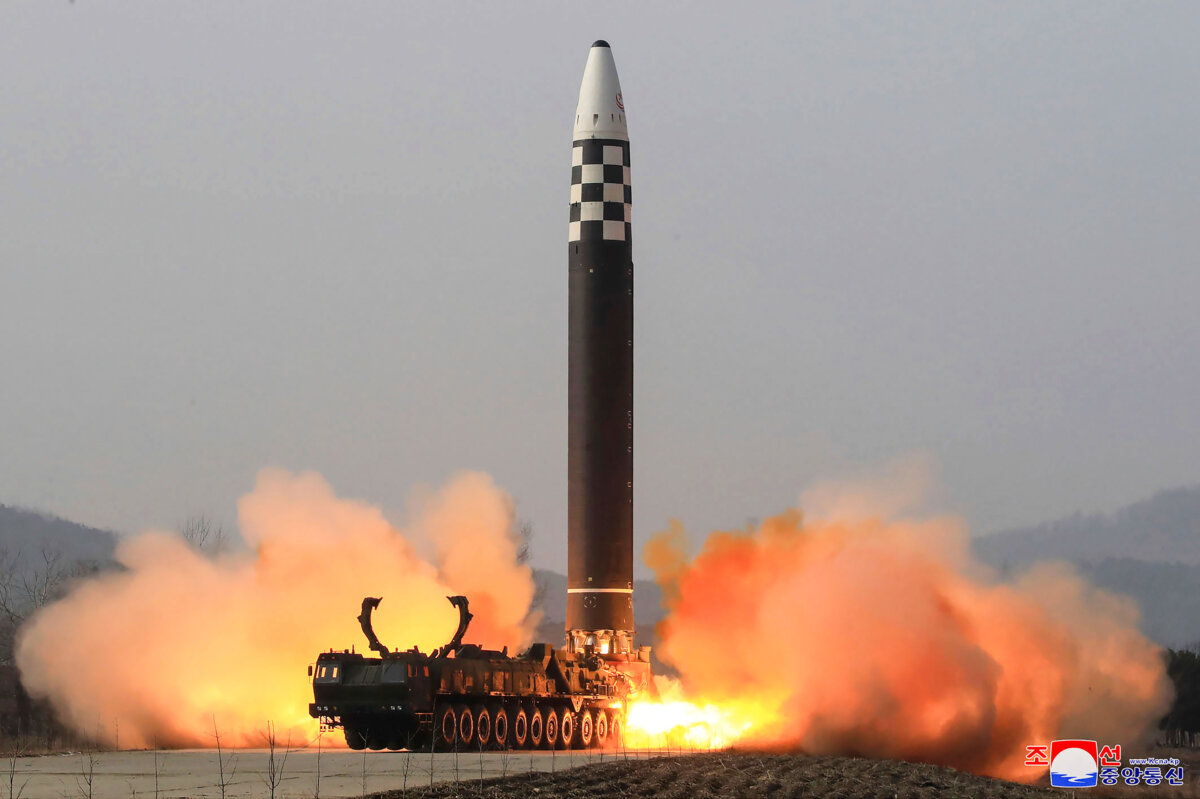
“The extensive criminal networks that North Korea has established over the decades are anchored in diplomatic missions and the trading offices of the businesses selling the monuments and weapons,” he said. “These networks smuggle a wide range of illicit goods and products, including narcotics and gold. The money flowing from Africa enables Kim to stay in power, to fund nuclear projects, and also to develop ballistic missiles.”
Thomas said some North Korean officials running criminal syndicates in Africa have been arrested. However, “I don’t know of one that’s been imprisoned; they’re deported,” he said. “And when these operators disappear, they’re simply replaced by others and the whole cycle begins again.”
In 2017, the Global Initiative Against Transnational Organized Crime released an extensive report documenting North Korea’s criminal activities in Africa. Chief investigator Julian Rademeyer presented evidence of North Korean officials perpetrating crimes, including the trafficking of rhino horn, ivory, gold, and the smuggling of illegal weapons and ammunition.
During the investigation, Rademeyer interviewed African government officials, diplomats, and North Korean defectors now based in southern Africa and South Korea. They confirmed that Pyongyang’s embassies in several African states “are intimately connected to a complex web of illicit activity aimed at bolstering the Kim Jong-un regime and enriching cash-strapped diplomats,” according to the report.
Rademeyer quoted a North Korean defector who ran a front company for Pyongyang in Beijing as saying: “Diplomats … would come from Africa carrying rhino horn, ivory and gold nuggets. Every embassy [in Africa] was coming two or three times every year.”
He referred to a case in May 2015 when Pak Chol Jun, then North Korea’s “political counselor” at its embassy in Pretoria, was detained in Mozambique’s capital city of Maputo. Police found rhino horns and almost $100,000 in cash inside Pak’s vehicle.
Rademeyer wrote that Mozambican police detained Pak and a suspected accomplice, but they were later released and continued on their journey back to Pretoria.
At the time, a spokesman for the Maputo police said the pair were released on bail set at $30,000. It’s unclear whether they paid $30,000 each or in total.
The South African government later informed the embassy that Pak was no longer welcome, and he left the country in December, according to Rademeyer’s report.
Rademeyer told The Epoch Times that North Korean criminal syndicates remain active in Africa.
Thomas said Pyongyang now “changes officials regularly, maybe trying to shield them from prosecution and to throw law enforcement off the trail.”
Van der Hoog said relations between North Korea and African countries are often based on mutual survival.
“Kim’s government needs cash, and because of sanctions, the best way it can get that is by crime,” he said. “At the same time, former liberation movements in Africa, some who rig elections because they are so unpopular, want to stay in power at all costs, and North Korea’s money funds their political parties.”
 Friends Read Free
Copy
Facebook
Tweet
Friends Read Free
Copy
Facebook
Tweet