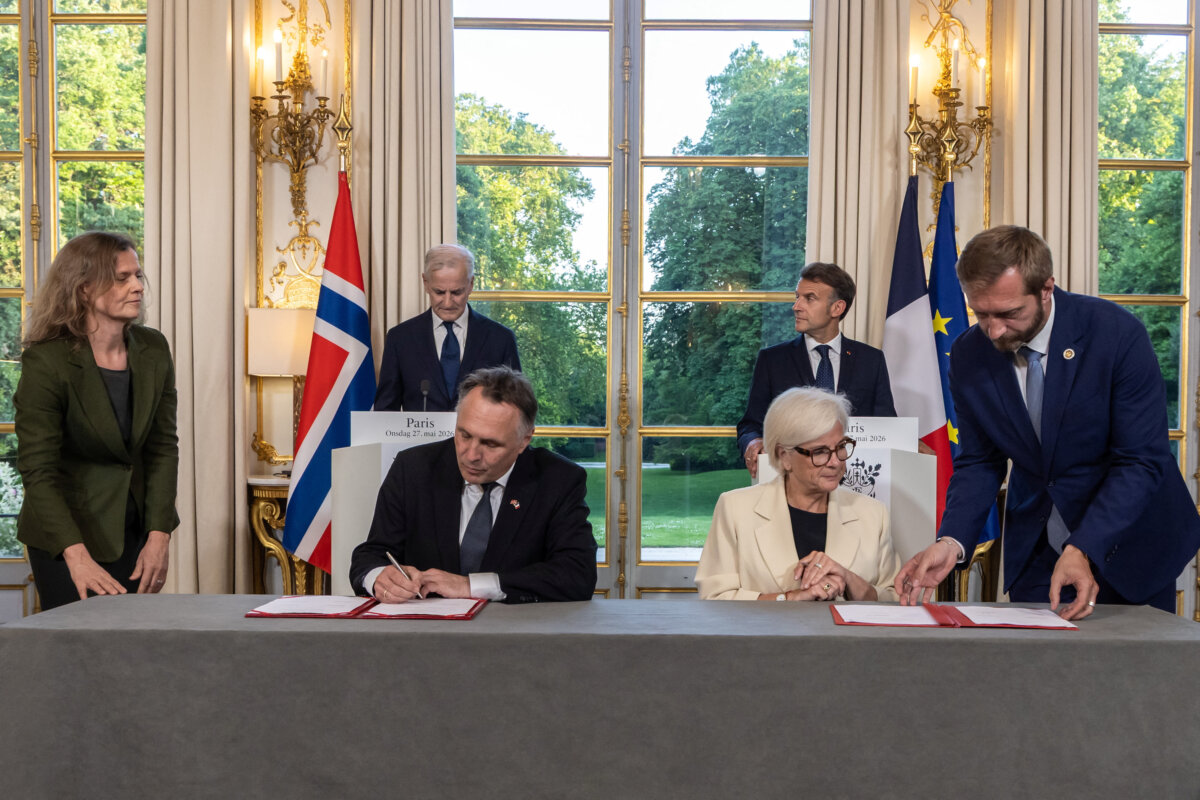

Norway will open talks with France on joining its nuclear umbrella, Norwegian Prime Minister Jonas Gahr Stoere and French President Emmanuel Macron said on May 27, amid growing concerns over Russia and regional security.
Stoere traveled to Paris on May 27 to meet Macron and sign a broader defense agreement with France that involves Norway joining a French-led nuclear weapons initiative.
The agreement, known as the Narvik Agreement, commits the two NATO allies to supporting each other, including militarily, if necessary.
It expands cooperation in areas including cybersecurity, maritime security, military planning, and defense industry coordination.
Stoere said Europe faces its most serious security environment since World War II as Russia’s war in Ukraine and wider geopolitical tensions reshape defense policy across the continent.
He said in a May 27 statement that Oslo wants to diversify its “sources of security,” noting that NATO would remain the foundation of its deterrence policy.
Stoere said that the United States had assured allies that its nuclear guarantees to Europe remain unchanged.
He also said France had coordinated the initiative with both NATO and Washington.
Norway has been a NATO member since 1949, but is not part of the European Union. The country shares a roughly 120-mile-long land border with Russia in the Arctic, making northern security a key issue for Norwegian defense policy.
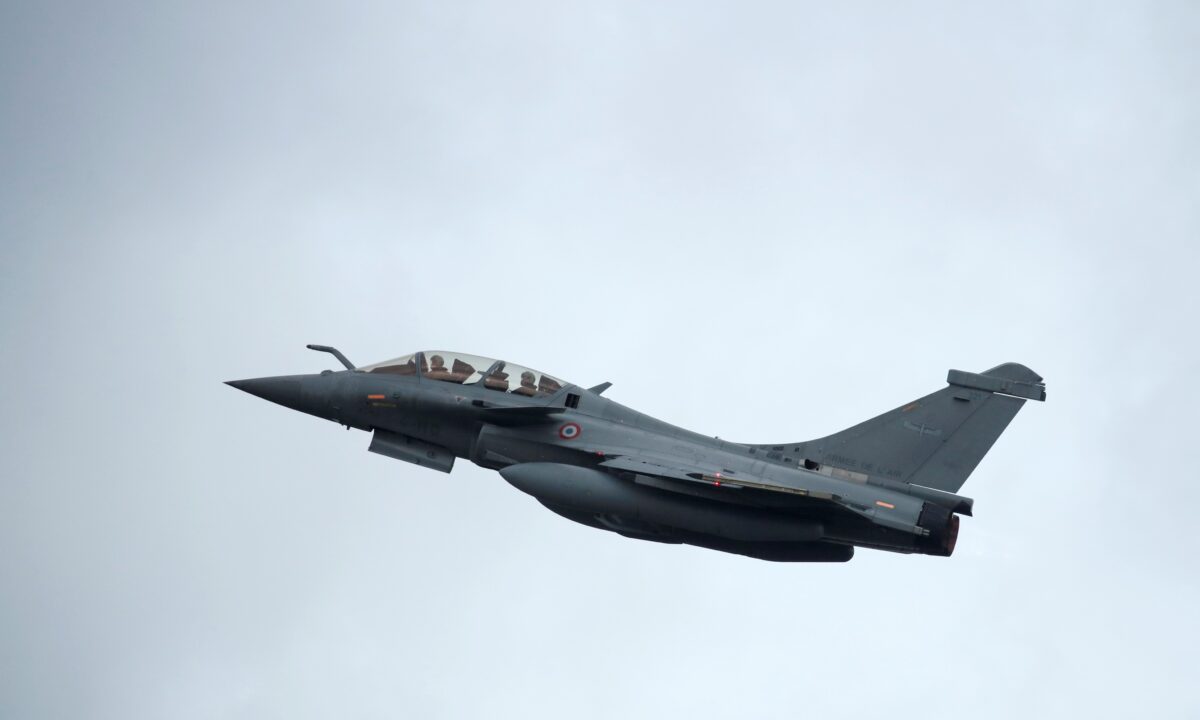
Norway will become the latest European country to move closer to France’s nuclear deterrence framework, following Poland’s expansion of defense cooperation with Paris last year.
Speaking at a joint news conference in Paris on May 27, Macron said the agreement would boost cooperation in areas including air defense, the Arctic, and space.
Expanded Military Cooperation
The pact is named after Narvik, the northern Norwegian town recaptured by Allied forces in 1940 during one of the first Allied victories of World War II.
Stoere said the agreement includes a mutual defense clause under which both countries commit to supporting each other in the event of a crisis. France, he said, alongside the UK, is among the European allies most active in northern waters and the Arctic regions.
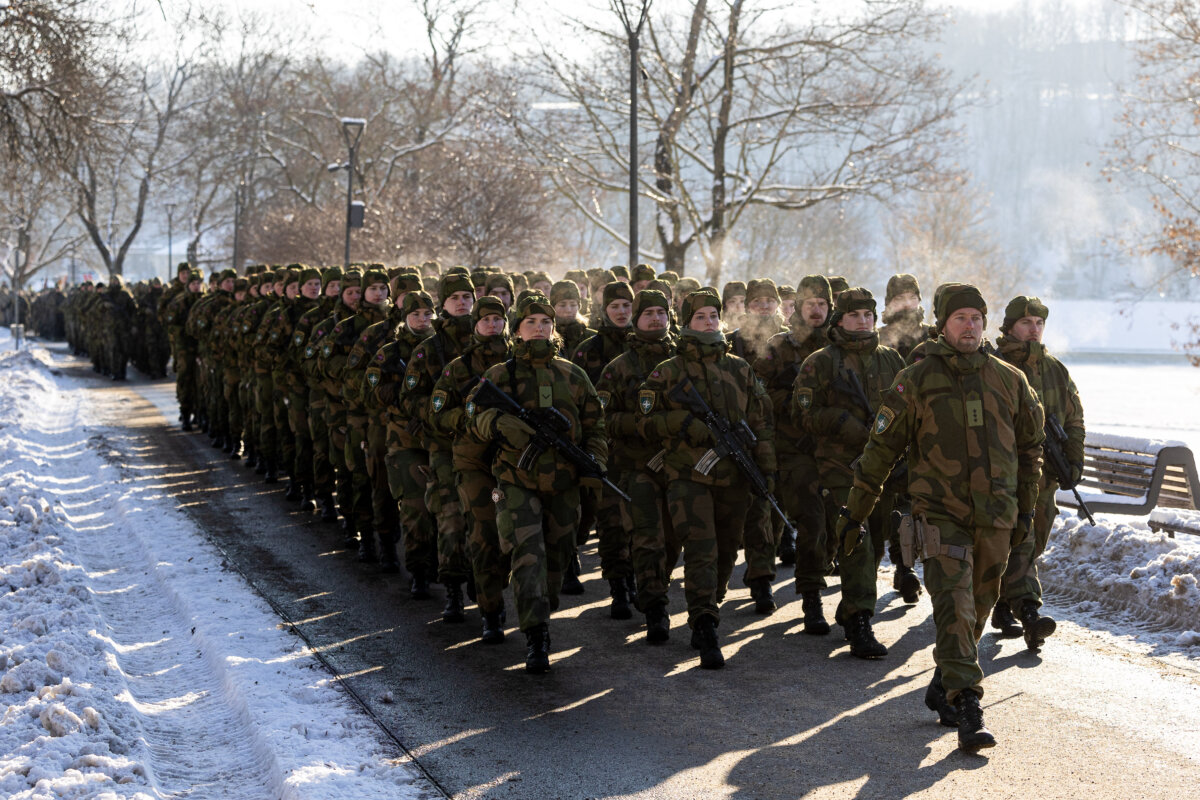
The agreement formalizes cooperation on military planning, exercises, and the pre-positioning of military equipment to improve rapid response capabilities during emergencies.
The deal also expands cooperation on hybrid warfare, maritime security, cybersecurity, space cooperation, support for Ukraine, and defense manufacturing.
French Nuclear Deterrence Initiative
Norway agreed to join nine European allies participating in discussions linked to Macron’s nuclear deterrence initiative.
In March, Macron announced changes to French nuclear doctrine, which included, in coordination with willing allies, a progressive move toward what he called “forward deterrence.”
The plan could allow France to temporarily deploy nuclear-capable aircraft to allied countries during a crisis, but France would keep full control over its nuclear weapons and any decisions on their use.
It includes the UK, Germany, Poland, the Netherlands, Sweden, Denmark, Belgium, Greece, and Norway.
Russia has criticized France’s nuclear deterrence initiative.
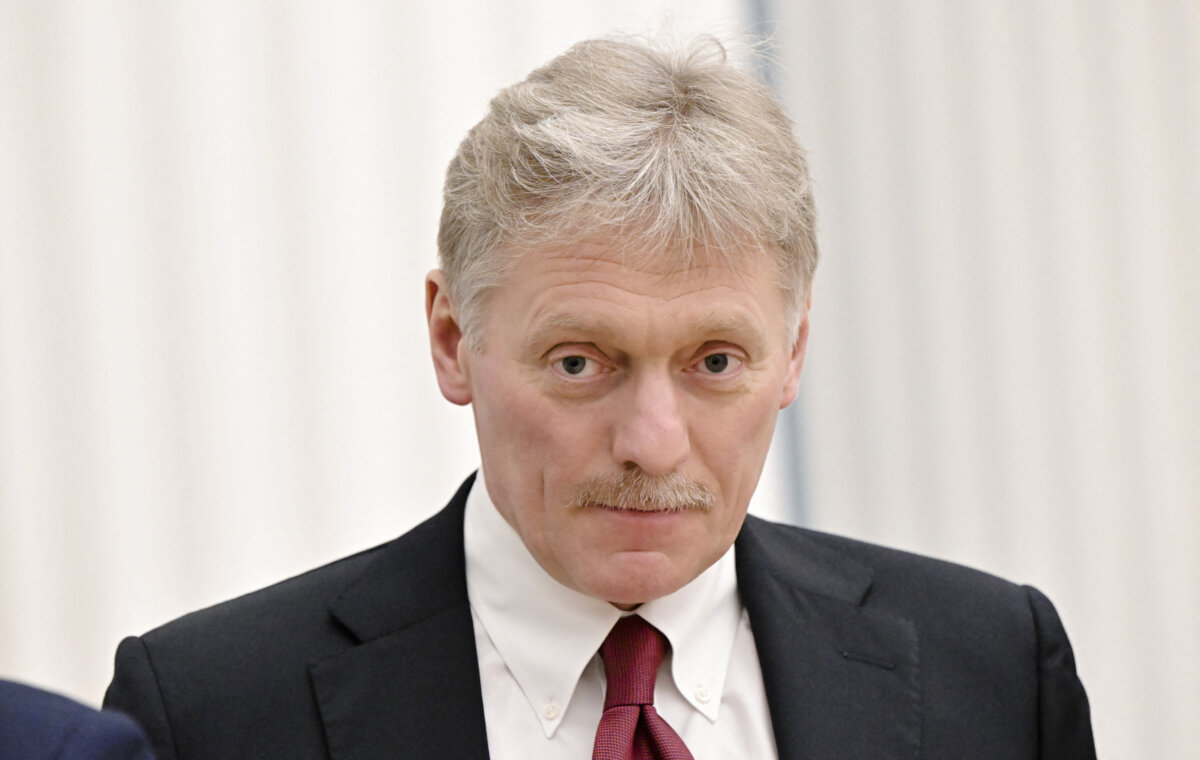
Kremlin spokesman Dmitry Peskov said in March that Macron’s proposal was “extremely confrontational” and suggested that France was thinking “more about war” than peace.
Peskov noted that Macron ignored what Moscow describes as Russia’s security concerns over NATO’s eastward expansion toward Russian borders.
Responding to the announcement of the initiative, the Russian Embassy in France said on March 6 that it risked fueling a nuclear arms race and undermining nuclear nonproliferation efforts in Europe.
Stoere said Norway’s participation in the initiative would not alter its long-standing nuclear policy prohibiting nuclear weapons on Norwegian territory during peacetime.
He said Norway would continue supporting arms control and nuclear nonproliferation efforts, while arguing that closer coordination among European allies could reduce incentives for additional countries to develop nuclear weapons.
Stoere said Norway’s strategy aims to deepen ties with several European military powers so that the country’s security does not depend on a single guarantee.
The agreement with France follows the bilateral defense agreements Norway signed with the UK in December 2025 and with Germany in February 2026.
Norwegian Defense Minister Tore O. Sandvik said the three agreements together formalize Norway’s defense relationships with Western Europe’s largest military powers.
During his visit to Paris, Stoere also held meetings with Macron and French officials focused on defense, energy, industrial cooperation, and European security.
Reuters contributed to this report.
 Friends Read Free
Copy
Facebook
Tweet
Friends Read Free
Copy
Facebook
Tweet