
Stricter gun laws will immediately take effect in New South Wales (NSW) after the state parliament rushed through firearm reforms overnight.
Following an intense two-day sitting, the Labor state government passed the Terrorism and Other Legislation Amendment Bill 2025 by an 18–8 vote.
The votes were cast around 3 a.m. on Dec. 24, with Labor receiving the support of the Liberal Party.
The National and Shooters, Fishers and Farmers Parties voted against the bill, while the Green Party abstained.
The new laws include a last-minute amendment by the Greens, which proposed to ban gun ownership for people investigated for terrorism-related offences, and members of their households.
What Changes Under New Laws?
According to the bill (pdf), recreational gun licence holders can have a maximum of four firearms, while primary producers, commercial users and sports or target shooters can possess up to 10.
Previously, there was no restriction on the number of guns a person with a firearm licence could own.
Gun owners who currently have more than the above numbers will have a grace period to comply with the new requirement as the state and federal governments work to implement the buyback scheme.
In addition, Magazine capacity will be limited to 5–10 rounds, depending on the type of gun.
However, there are no limits on the number of magazines an individual can possess.
The laws also ban link and belt ammunition sources and similar types of magazines.
Regarding firearm access, the laws prevent non-Australians from obtaining guns. Only Australian citizens and a limited group of New Zealand citizens residing in Australia are eligible to apply for a gun licence.
Meanwhile, existing licences held by non-Australians will be rendered invalid, with no compensation from the authorities.
Another major change is the duration of gun licences, which has been reduced from five to two years, allowing for more reviews and scrutiny by law enforcement.
The new laws also remove most rights for gun owners to appeal licence decisions through the NSW Civil and Administrative Tribunal.
As a result, they must pursue a judicial path via the court system, which is more costly and complex.
Other changes include strengthened oversight, storage and compliance requirements for gun ownership.
‘Toughest’ Gun Restriction in Australia: NSW Premier
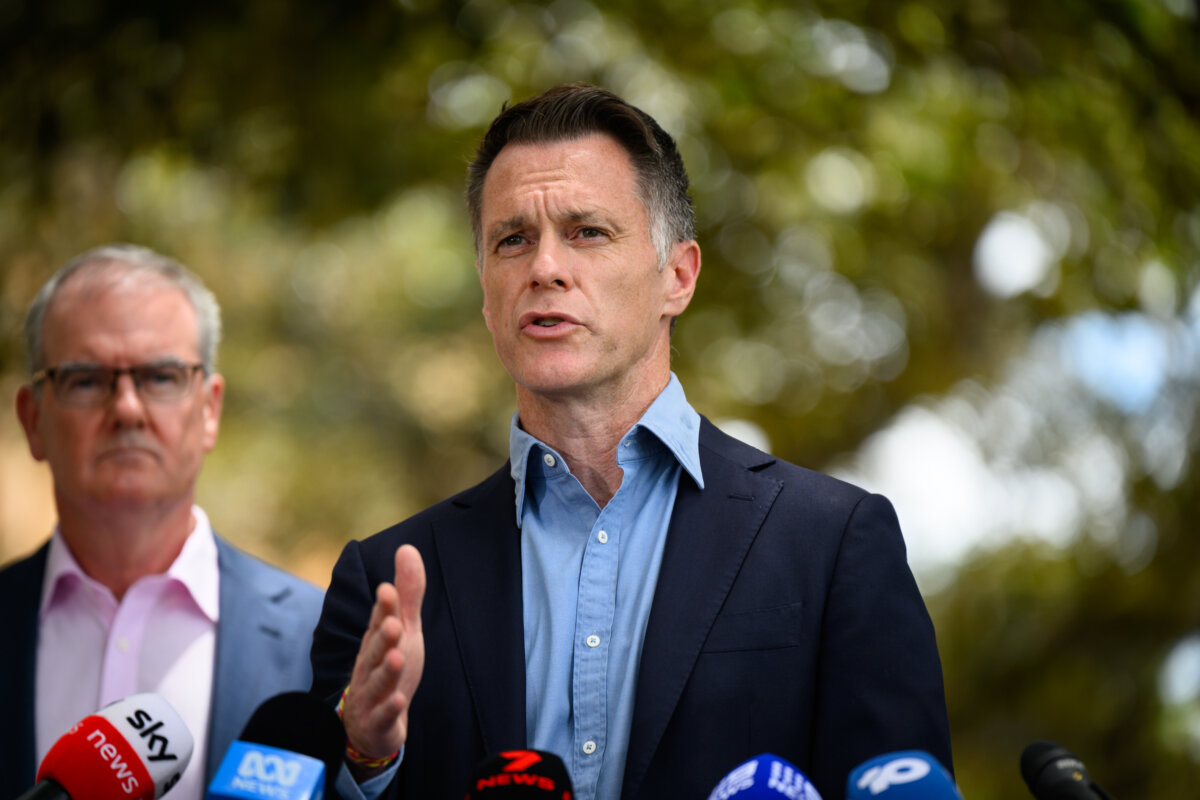
Following the passing of the bill, NSW Premier Chris Minns said the new measures had made NSW’s gun laws the “toughest” among the jurisdictions.
While acknowledging opposition to the legislation, Minns said it was necessary to ensure the safety of the community.
“I know that not all Australians that live in NSW support these changes, but we have decided it’s the best way of ensuring we do everything possible to keep the people of NSW safe,” he said.

The premier also thanked state Opposition Leader Kellie Sloane for her party’s support.
“In the end, I think the Greens abstained. So the passage of this bill required cooperation from the Coalition, and we got that,” he said.
“And I know that that happened in a short space of time … but we appreciate the goodwill in which we were able to get much-needed reform in NSW through the parliament.”
Regarding the implementation of the new laws, Minns said most of the changes would take effect immediately on Dec. 24.
“So the number of firearms that provision will be in place as of this afternoon, as will the extinguishment of the appeals through the administrative decisions tribunal,” he said.
“There are other elements of the gun bill that will take a bit of time, but we have to set up and fund the buyback registry, and I’m aiming to do it as soon as possible.”
Opposition Calls for More Action on Anti-Semitism
Sloane said her party supported the bill because community safety came first, and that the state parliament had a responsibility to respond to serious terrorist attacks.
However, she acknowledged that the bill had limitations and was not all-encompassing.
“This bill was rushed through the parliament with limited consultation and insufficient engagement with [other] stakeholders,” Sloane said.
“That is not best-practice law-making, particularly in an area as sensitive and consequential as counter-terrorism and social cohesion.”

The opposition leader also noted that the root of the problem lies in anti-Semitic sentiment within some members of the public and called on the Labor government to take stronger action.
“We should be clear-eyed about the core issue at stake. Anti-Semitism was the reason for this attack, and the people of NSW rightly expect strong and decisive action to confront and eliminate it,” she said.
Meanwhile, the Nationals have voiced their strong opposition to the bill, saying it was a political tool rather than a real solution.
“Let’s be clear. What happened in Bondi was a terrorist attack, fueled by anti-Semitism. Changing firearm laws will not stop terrorist attacks,” it said in a statement.
The party also criticised the Minns government for failing to curb anti-Semitism in NSW.
“Jew hatred has been allowed to flourish and fester on Labor’s watch following the Opera House riot and their failure to prevent rallies and marches focusing on flags and slogans clearly violating the rights of our Jewish friends within Australia,” it said.
Changes to Protest Laws
Apart from gun-related changes, the bill grants new powers to the state’s police force, allowing it to restrict or outright ban street protests following a terrorist incident.
Specifically, police can designate an area as off-limits for public assembly by issuing a declaration.
The ban is initially valid for 14 days and can be extended for up to 90 days. In addition, it is not affected by a court order.
Police can order people to move on if their behaviour or presence obstructs traffic or causes fear, harassment or intimidation.
Those present at a public assembly can also be asked to remove their face covering if they are suspected of committing an offence.
 Friends Read Free
Copy
Facebook
Tweet
Friends Read Free
Copy
Facebook
Tweet