
Senior officials have been pressured to outline where the Labor government plans to find $10 billion worth of savings in the Defence Department.
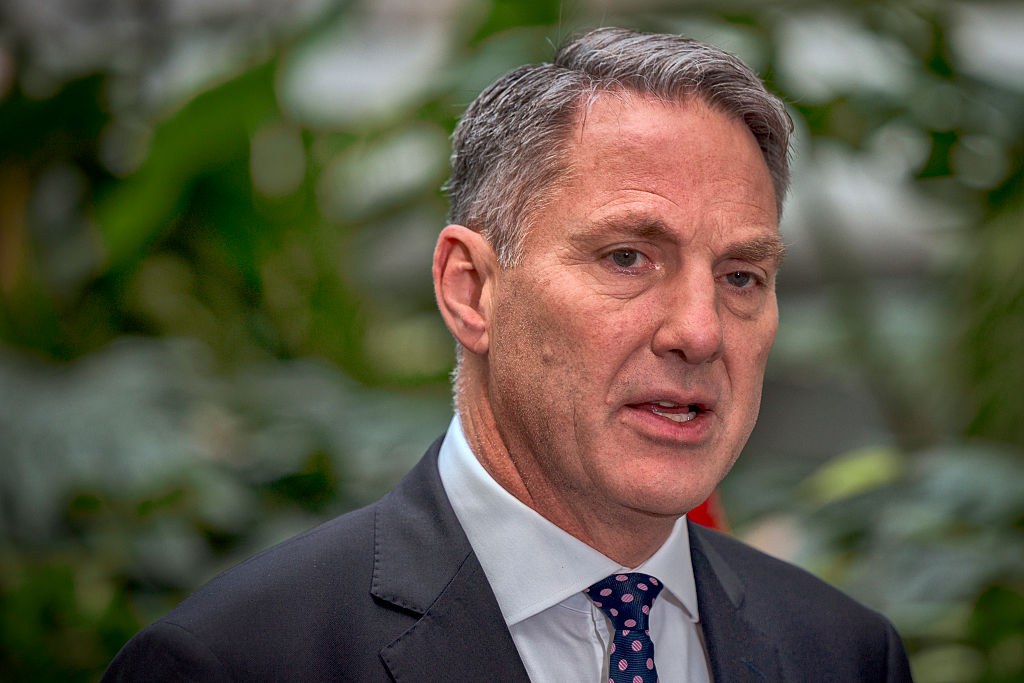
Defence Minister Richard Marles is reported to have saved $10 billion in the coming decade in the most recent Defence Integrated Investment Program (IIP).
The government announced that the Royal Australian Air Force would retire its 10-aircraft Spartan fleet in favour of a mix of commercial aircraft to support personnel and logistics.
Yet opposition defence spokesperson Senator James Paterson wanted to know what else the government was phasing out to achieve the savings.
But Air Marshal Rob Chipman, vice chief of the Australian Defence Force (ADF), told the Senate Foreign Affairs, Defence and Trade Legislation Committee that he did not know.
“I can’t accept that answer,” Paterson said.
“Surely you are integral to this process. Other than Spartans, you do not know what other reprioritisations the government has made in the IIP? If you have the information you need to answer the question.”
Chipman again said he didn’t have the information, to which Paterson replied, “That is not a credible answer. You’re the VCDF [Vice Chief of the Australian Defence Force]. This is well within your remit.”
“Government guidelines for witnesses are very clear that questions cannot be taken on notice as a way to avoid answering a question if the witness knows the answer to the question,” Paterson said.
“There’s no way the Spartans make up $5 billion of cuts over the forwards (estimates) on their own, or certainly not 10 over the medium term. So, what are the other capabilities?”
But the Defence officials appearing before the committee all said they did not to know, and Labor Senator Jenny McAllister, representing the minister, said some of the information was “commercial in confidence.”
“You know well that commercial in confidence is not an accepted ground to refuse to provide information,” Paterson replied. “This seems to be a direct contravention of the guidelines for official witnesses of the Senate. It says very clearly that questions should not be taken on notice as a way of avoiding further questions during the hearing.”
Senator Jaqui Lambie, a former soldier, accused officials of “not having a plan” to save the claimed $10 billion.
“It’s really embarrassing for me, who wore that uniform, to listen to you guys not answer these questions,” she said.
She took the officials to task over their insistence that AUKUS was progressing as planned.
“We’re not getting three submarines, mate. We’re not getting new ones, we’re getting old ones. So the United States of America, Donald Trump, has done us over. Just admit it,” she said.
Vice Admiral Mark Hammon, the Chief of the Navy, assured her that the project was on track, referring her to a statement by President Trump, after meeting Prime Minister Anthony Albanese, that AUKUS was “full steam ahead.”
Call for Transparency for the Auditor-General
Senator David Pocock, who has co-sponsored a Senate resolution asking the Australian National Audit Office (ANAO) to bring back the defence major projects report
The Auditor General Caralee McLiesh also recommended the government “urgently re-instate the annual Defence major projects report (MPR) in order to continue reviewing the Department of Defence’s major equipment acquisition projects.”
McLiesh, in a letter to the President of the Senate, said that without the report, “transparency has gone down, and so has the ANAO’s ability to provide meaningful analysis.”
Senator Pocock asked Defence officials if they had been withholding information from the ANAO.
“Why is there this culture in defence where it’s getting more and more secret?” Pocock asked.
“Why is it that we have to learn about what Australia is doing from what the U.S. and the UK are willing to tell their citizens? How, how does the secrecy actually serve the Australian people?”
Officials denied the claims, saying the ANAO had unfettered access to information, with some of it not allowed for publication due to national security or commercial-in-confidence restrictions.
Admiral David Johnston, Chief of the Defence Force, told the committee that the reason Defence put “caveats” on information is because it would help Australia’s adversaries.
“This is a security issue. If we are putting it out, they interrogate it, and they exploit it. This is about making sure that we are not making our adversaries’ jobs easier,” he said.
 Friends Read Free
Copy
Facebook
Tweet
Friends Read Free
Copy
Facebook
Tweet