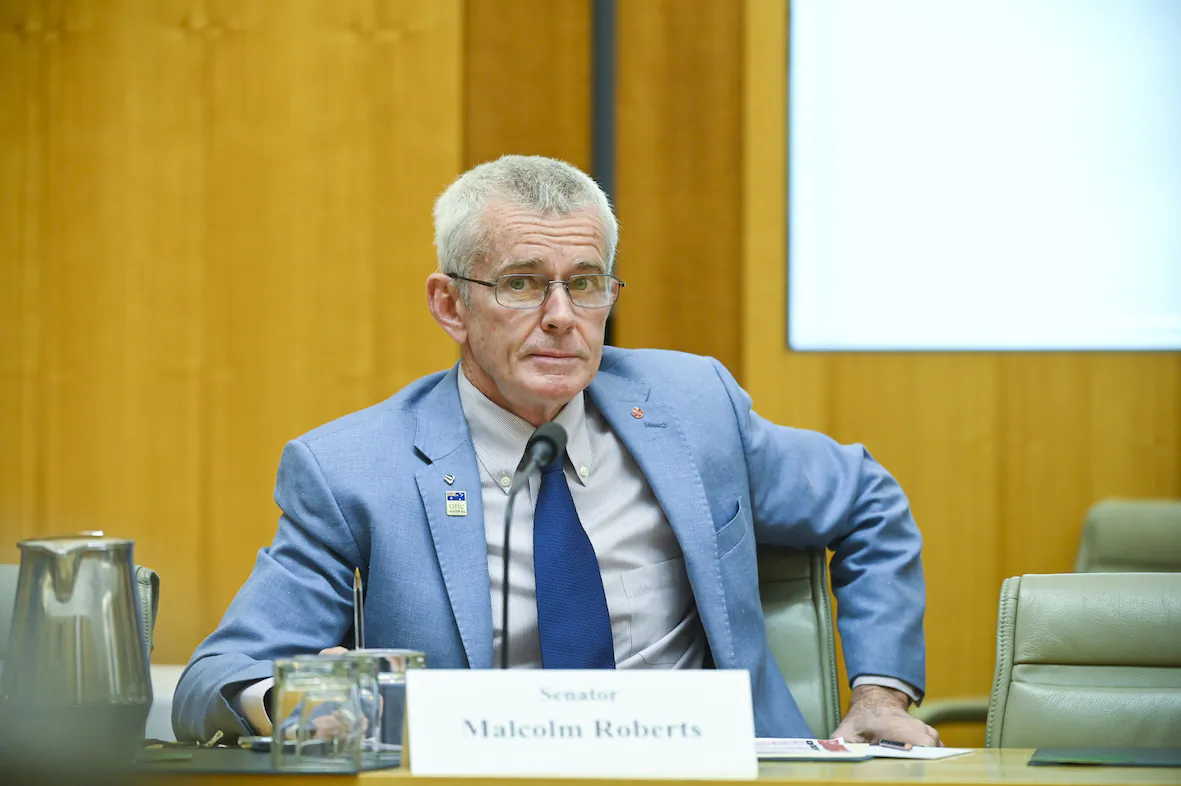

One Nation Senator Malcolm Roberts has accused the Albanese government of creating a “back door” pathway into Australia by allowing New Zealand citizens gain citizenship without first becoming permanent residents.
The issue was raised during a recent Senate Estimates hearing, where Roberts questioned Home Affairs officials about the changes introduced by Labor and applied from July 1, 2023.
Under the changes, those holding New Zealand Special Category Visas (SCVs) can apply directly for Australian citizenship without first obtaining permanent residency, provided they meet residency and other eligibility requirements, including living in Australia for four years.
A SCV is granted automatically to New Zealand citizens on arrival in Australia, subject to health and character requirements.
Home Affairs Acting First Assistant Secretary Drew Layton acknowledged the visa arrangement existed.
“Technically, that is correct,” Layton said.
Roberts also argued the arrangement effectively allows migrants who first obtain New Zealand citizenship, to later gain the Australian one without going through the skilled migration points system.
Roberts then questioned whether Australia was relying too heavily on New Zealand’s citizenship process to do its vetting, which requires five years of residence, provided applicants meet English-language requirements and pass a character check.
The senator also revealed departmental figures that showed between July 1, 2023 and June 30, 2025, about 48 percent of New Zealand citizens who later transitioned to Australian citizenship were not born in New Zealand—suggesting, in future, Australia should only grant the privilege to those born in the country.
“Do you understand the position that offering this pathway to people from foreign countries to come in through the back door in New Zealand without passing the points test is a slap in the face that those who have come here fairly waited, worked, studied, and did the right thing?” Roberts asked officials.
Minister Pushes Back One Nation’s Claims
Home Affairs officials declined to comment on the policy.
However, Environment and Water Minister Murray Watt rejected Roberts’ characterisation of the pathway.
“It’s insulting to a lot of New Zealand citizens who become Australian citizens to talk about them coming through a ‘back door,'” he said.
Watt also rejected suggestions that migrants coming through New Zealand were of a different quality.
“I’m not sure that people who, as you say, move to New Zealand and then move to Australia are necessarily of low standard, and that’s sort of what you’re implying in your question,” he said.
Watt argued the pathway was far from a quick route into Australia, saying that a person who spent five years in New Zealand and four years in Australia before becoming eligible for citizenship would have spent nine years in total, making it “a pretty slow back door.”
The minister also noted that anyone seeking Australian citizenship through the pathway must still satisfy character, identity and security requirements.
The government’s latest forecasts, released in the May 13 Budget, show net overseas migration will be 55,000 higher than previously expected across the 2025–26 and 2026–27 financial years combined, reigniting calls from the Coalition and One Nation for tighter migration controls.
 Friends Read Free
Copy
Facebook
Tweet
Friends Read Free
Copy
Facebook
Tweet