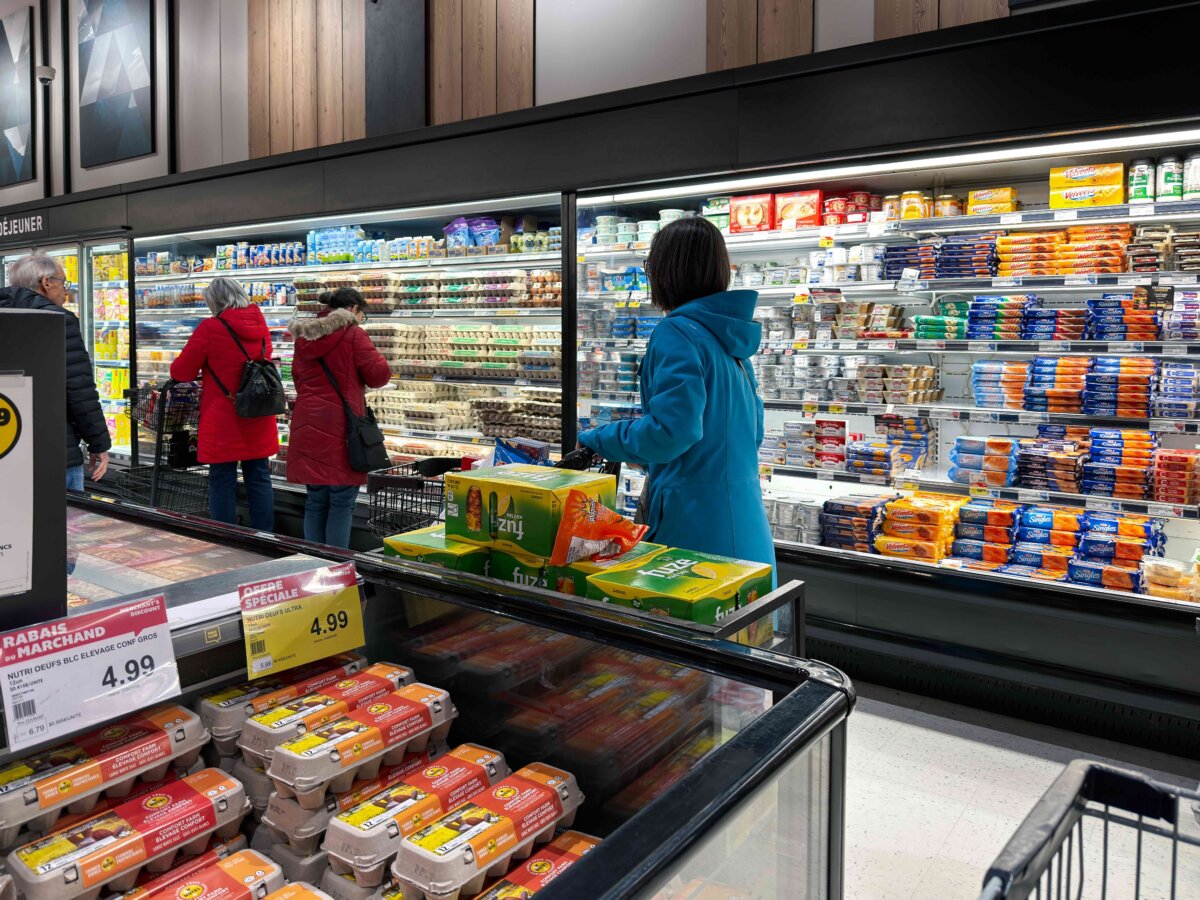

Eligible Canadians will receive extra money in their bank accounts this week as Ottawa rolls out its one-time GST top-up before the program changes to a grocery benefit next month.
The Canada Groceries and Essentials Benefit (CGEB) will replace and increase the financial aid offered to families and individuals through the Goods and Services Tax (GST) rebate, Prime Minister Mark Carney announced in January.
The benefit boost begins with a one-time 50 percent top-up on June 5, followed by a 25 percent increase to the standard quarterly GST rebate starting July 3, which will run for five years.
Carney has said the credits will provide additional support to more than 12 million low- and modest-income Canadians, helping offset the burden of sales taxes on household essentials.
The Conservatives have called the measure a “Band-Aid solution,” arguing that it does not address the root causes of the cost-of-living crisis. However, they voted in favour of the legislation introducing the program alongside the then-minority Liberals earlier this year.
According to estimates from the Parliamentary Budget Officer, the program will cost $12.4 billion over five years.
Here’s a look at what Canadians can expect to receive from the program set to run through the summer of 2031.
Eligibility and Payments
Any Canadian who is 19 or older and has filed their 2024 tax return and qualified for the GST/HST credit in January 2026 can also expect to receive the one-time top-up payment.
The payment amount is determined by an individual’s annual GST/HST credit amount for the timeframe spanning from July 2025 to June 2026, and it offers a 50 percent increase to the overall annual total, according to the Canada Revenue Agency (CRA).
For instance, if a person’s total annual GST/HST credit amounts to $400, the one-time top-up payment will be $200.
That amount can change, however. The payment is directly tied to the household’s annual adjusted family net income, marital status, and the number of eligible children, the CRA said. These adjustments determine the baseline credit, which subsequently dictates the top-up amount received.
For an individual with no children to qualify for GST payments, their income must be $56,181 or less in the 2024 tax year. The threshold to qualify increases based on the number of children a person has.
A maximum payment of $267 is available to a single individual, while a single-parent family can receive as much as $441 for one child, $533 for two children, $625 for three children, or $717 for four children.
A married couple or common-law partners without children could receive a maximum payment of $349, while two-parent households with one child could qualify for up to $441.The payment could increase to as much as $533 for families with two children, $625 for families with three children, and $717 for families with four children. Only one party in the relationship will receive the payment.
Parents who share custody of a child will split the amount they would have received if they had sole custody, the CRA said.
Receiving Payments
Payments for eligible households will be distributed on June 5 and the CRA has noted the payment may still appear on bank statements as a GST/HST credit while Canadian financial institutions update their systems to reflect the new name.
Those registered for direct deposit will see the funds credited to their accounts in the same manner as the GST/HST credit typically appears.
Those who have registered for direct deposit will have their funds transferred directly to their bank accounts, while those who have not will receive a paper cheque by mail.
No payments will be issued to individuals with an outstanding balance owed to the CRA, the agency said. Individuals may also not receive payment if they did not submit their 2024 tax return, if they were ineligible or not entitled to the GST credit in January 2026, or if a spouse or common-law partner has already received the payment.
 Friends Read Free
Copy
Facebook
Tweet
Friends Read Free
Copy
Facebook
Tweet