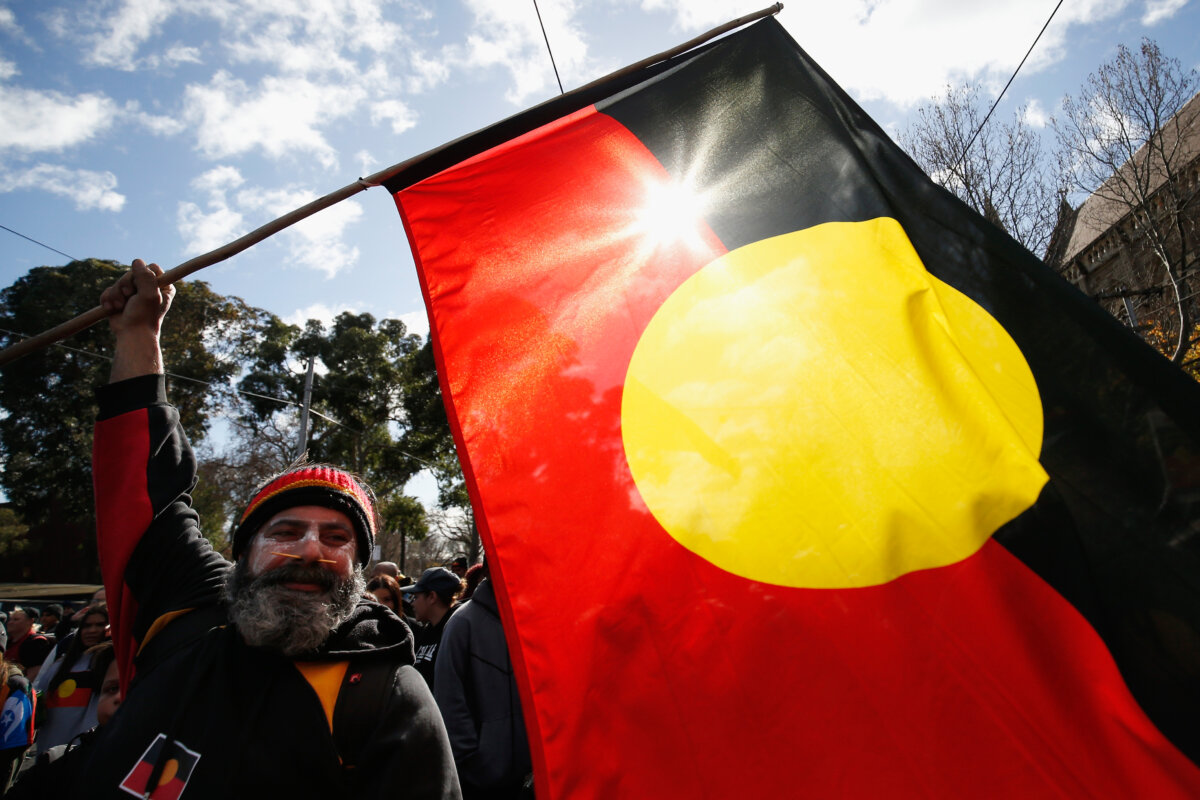

Former nurse and now-shadow health spokeswoman Georgie Crozier has called hospital rules designed to prioritise Indigenous emergency patients divisive.
Recent reports revealed that the inner-city St Vincent’s Hospital Melbourne issued a staff directive in April 2024 to fast-track care for all Indigenous patients presented to the emergency department.
Aboriginal emergency patients are given a “category 3” priority, meaning they need to be treated within 30 minutes.
The hospital says the changes were introduced to address gaps in Indigenous treatments, but MP Crozier says triaging should be based on “health and medical needs, not based on the colour of your skin or race.”
“Triaging is about risk assessment and decisions have to be made very quickly,” she said in comments sent to The Epoch Times.
“It should be made on the health needs of the individual that presents.
“Of course, Indigenous status needs to be a part of that risk assessment, but it shouldn’t be the sole criteria that somebody is seen based on the colour of their skin and race.”
St Vincent’s was nominated for the Victorian Public Healthcare Award specifically for the initiative, which noted: “First Nations patients are now seen more promptly than non-Indigenous patients.”
It’s not the first time the hospital has been awarded for such measures.
In 2022, the hospital introduced a range of measures to make the emergency department more “culturally safe,” including adding Indigenous flags that would pop up when a patient’s name was entered in, a prominent Indigenous “welcome sign,” and an Acknowledgement of Country on display.
The measures, which also included fast-tracking treatment of Indigenous patients, won the hospital the Al Spilman award for Culturally Safe Emergency Departments.
Crozier said the legislated directive to prioritise race was indicative of what Victorians could come to expect if the Indigenous Treaty and “Voice” are fully implemented.
“We don’t want more division in this state, and what we’ve seen through this policy, which the government has endorsed by the awards that have been announced … shows the extent of the division and how everyday Victorians represent to emergency departments will be missing out on care,” she said.
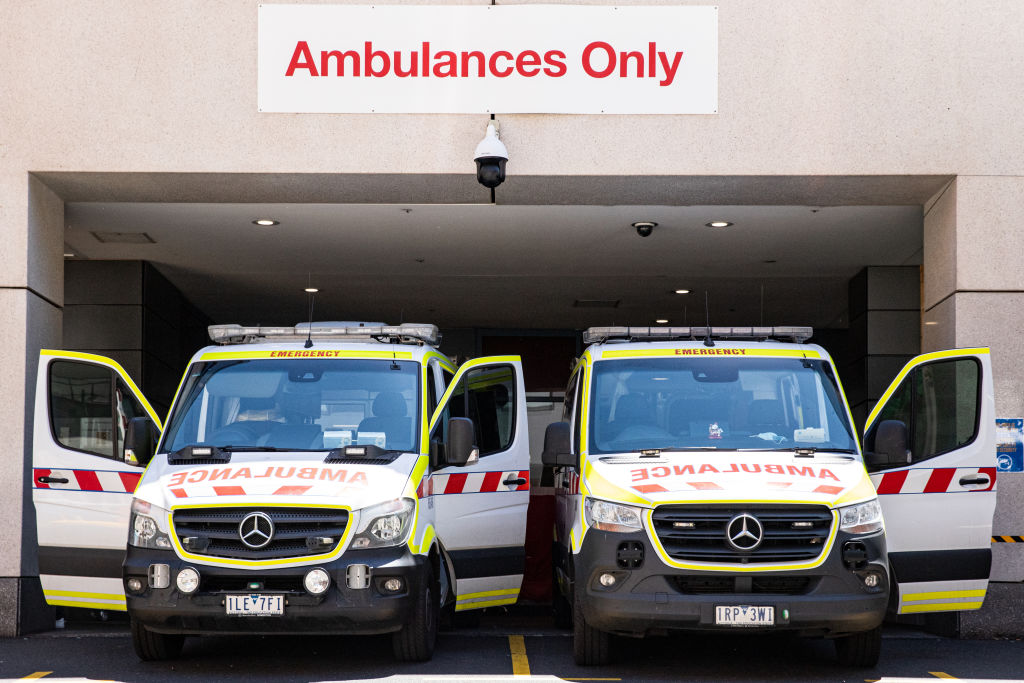
Claims Victoria’s Healthcare System Struggling
Cozier also warned about the impending closure of a co-health facility in the Melbourne suburb of Collingwood, which will cease operations in 2026.
Medical co-health services, which ease pressure on hospitals, are reportedly also set to close in the suburbs of Kensington and Fitzroy.
Earlier this month, Greens MP Gabrielle de Vietri reiterated calls for the medical facilities to be better supported.
“The writing’s been on the wall for years for co-health, and while Labor has chosen to look the other way, our community has watched this vital service crumble before our eyes,” de Vietri said in a statement.
According to data, around 65 percent of category 4 patients and 89 percent of category 5 patients are seen within the recommended emergency department wait times.
Crozier, however, said St. Vincent’s was falling behind with its response time.
“They were under 50 percent last year. They’re just now at 51 percent in the last data.
“We need to be improving the system for all Victorians.”
Hospital Says No Negative Overall Impact
A spokesperson for St. Vincent’s told The Epoch Times the policy had improved outcomes for Indigenous patients.
“Research conducted in St. Vincent’s Hospital Melbourne’s ED (emergency department) showed First Nations patients were, on average, waiting longer to be seen compared to non-Indigenous patients,” they said.
“The research also showed First Nations patients were more likely to remain engaged with care if seen within their first hour of ED presentation.”
The spokesperson said wait times for all patients were now comparable thanks to the policy, with no negative overall impact.
“[St. Vincent’s Hospital Melbourne’s] approach aligns with the National Safety and Quality Health Service standards that underpin Australia’s healthcare system, as well as Closing the Gap recommendations, both of which require health services to be culturally safe, accessible, and responsive to Aboriginal and Torres Strait Islander peoples and their needs,” they said.
Premier Stands by Policy
Victorian Premier Jacinta Allan has defended the hospital’s stance.
“First peoples aren’t being treated as quickly as they need to be,” Allan told a media conference on Oct. 29.
“The issue that is being addressed here is recognising that First Peoples have poorer outcomes, First Peoples have been waiting … longer to be treated.”
When questioned over the ethics of triaging by race, Allan again referred to Indigenous treatment outcomes.
“There has been some disadvantage in that (Indigenous) people haven’t been getting treated in that spirit of treating the sickest patients quickest,” she said.
 Friends Read Free
Copy
Facebook
Tweet
Friends Read Free
Copy
Facebook
Tweet