
The federal government was aware that Algoma Steel was restructuring and could lay off workers when it provided the company a $400 million loan a few weeks ago, according to CEO Michael Garcia.
Algoma, based in Sault Ste. Marie, Ont., provided a four-month layoff notice to 1,000 employees on Dec. 1.
The company said the 50 percent U.S. tariffs on steel have made blast-furnace steelmaking “no longer viable” and has expedited its transition to Electric Arc Furnace steelmaking. This steelmaking process requires only 1,600 employees compared to the 3,000 required for blast furnace and coke oven operations.
This was “always the future of the company,” Garcia told CTV News on Dec. 2. He said the transition was expected to take place in 2027, but came earlier due to the vital U.S. market effectively closing off.
Garcia said the federal government was aware of the company’s plan when it provided the loan in late September.
“It knows the pivot that we had to make. It knew very well the extreme pressure the company was under. I don’t think anybody would loan the company half a billion dollars without asking very detailed questions about what our business plan was,” he said.
The Ontario government had also provided a $100 million to Algoma at the same time, and under the same terms as the federal government.
Ottawa had been involved early in Algoma’s transition to a less carbon-intensive steelmaking process. The Trudeau government had announced in 2021 the company would receive up to $200 million from the Strategic Innovation Fund’s Net Zero Accelerator initiative and $220 million from the Canada Infrastructure Bank. This was expected to cover more than half of Algoma’s $703 million retrofit project.
The Liberal government has been criticized by the Tories this week for providing a lifeline to Algoma as it proceeds to lay off 1,000 workers.
Finance Minister François-Philippe Champagne said in September the federal loan would protect workers.
“This investment is about helping them adapt operations, stay competitive, and most importantly protect the jobs and the workers who drive this industry,” he stated at the time. The Epoch Times reached out to Champagne’s office for comment but didn’t immediately hear back.
Industry Minister Mélanie Joly told reporters on Dec. 2 that the Canadian steel sector had been geared towards supplying U.S. automakers before the heavy U.S. tariffs were imposed.
“In that sense, we’ve been working with [Algoma] to make sure that they were adapting their business model,” she said. “And that is why we’ve provided this fall $400 million to the company, and Ontario also provided $100 million, and the goal was to make sure that the company would get through these months while they were working on pivoting and adapting their entire operations.”
Joly said her government has been working with the company on new steel beam and steel plate plants to help support the housing and defence sectors. She said that through these investments more jobs will come back to Algoma.
“Algoma has now received orders from Irving shipyards and also from Seaspan, two important shipyards across the country. Now, is it enough? We still need to be at it,” she said.
Campaign Pledge
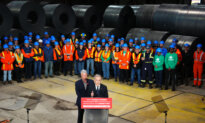
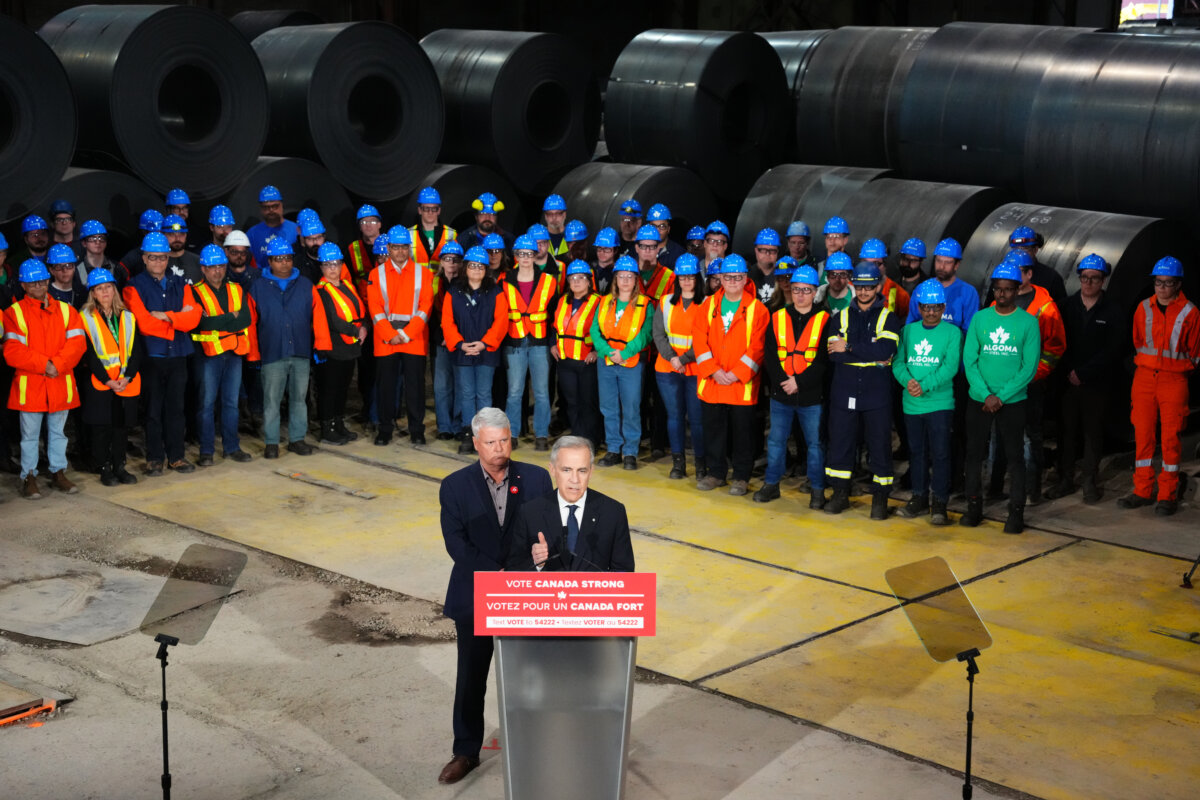
Conservatives have noted that Prime Minister Mark Carney had visited the Algoma plant in Sault Ste. Marie during the election campaign and promised to protect workers.
“We will stand with every single Canadian worker targeted by President Trump’s attacks on our country. We will stand with you,” he said at the time.
Tory MP Raquel Dancho, who serves as her party’s industry critic, said in question period Dec. 2 that now “those same workers face U.S. tariffs, no deal and now no job.”
“To add insult to injury, the Liberal government just gave Algoma Steel $400 million with no jobs guarantees, apparently,” she said.
Joly responded that she has been in touch with Algoma and the workers’ union and said the loan was offered to help the company in difficult times to help it pivot to new products and markets.
Tory Leader Pierre Poilievre earlier that day had asked the House Speaker for an emergency debate to be held in the Commons on the Algoma layoffs.
“We want to know, in an emergency debate, why the prime minister gave $400 million in tax dollars, money that came from hard-working people who are struggling to pay for their groceries and their mortgages, without getting job guarantees,” he said in making his case for holding a debate. “It rips off both taxpayers and workers. It is another bait and switch by the prime minister.”
House Speaker Francis Scarpaleggia denied the request for an emergency debate, saying without elaboration that it doesn’t meet the requirements of the Standing Orders. Emergency debates, which disrupt regular House proceedings, must typically involve an issue of national importance.
The steel industry has been hit particularly hard by the U.S. tariffs, compared to other goods being traded tariff-free under the United States-Mexico-Canada Agreement (USMCA).
Ottawa and Washington were nearing a deal on steel, aluminum, and energy when the Ontario government ran an anti-tariff TV ad south of the border, prompting U.S. President Donald Trump to cancel trade talks in late October.
Carney and Trump have had limited contact since, but could meet later this week as the prime minister travels to Washington for the FIFA World Cup draw.
Amid stalled trade talks, Carney had dismissed a question from a reporter on talks with Trump, responding “who cares” when asked on Nov. 23 when was the last time he spoke with the U.S. president. He later said that was a “poor choice of words about a serious issue.”
 Friends Read Free
Copy
Facebook
Tweet
Friends Read Free
Copy
Facebook
Tweet