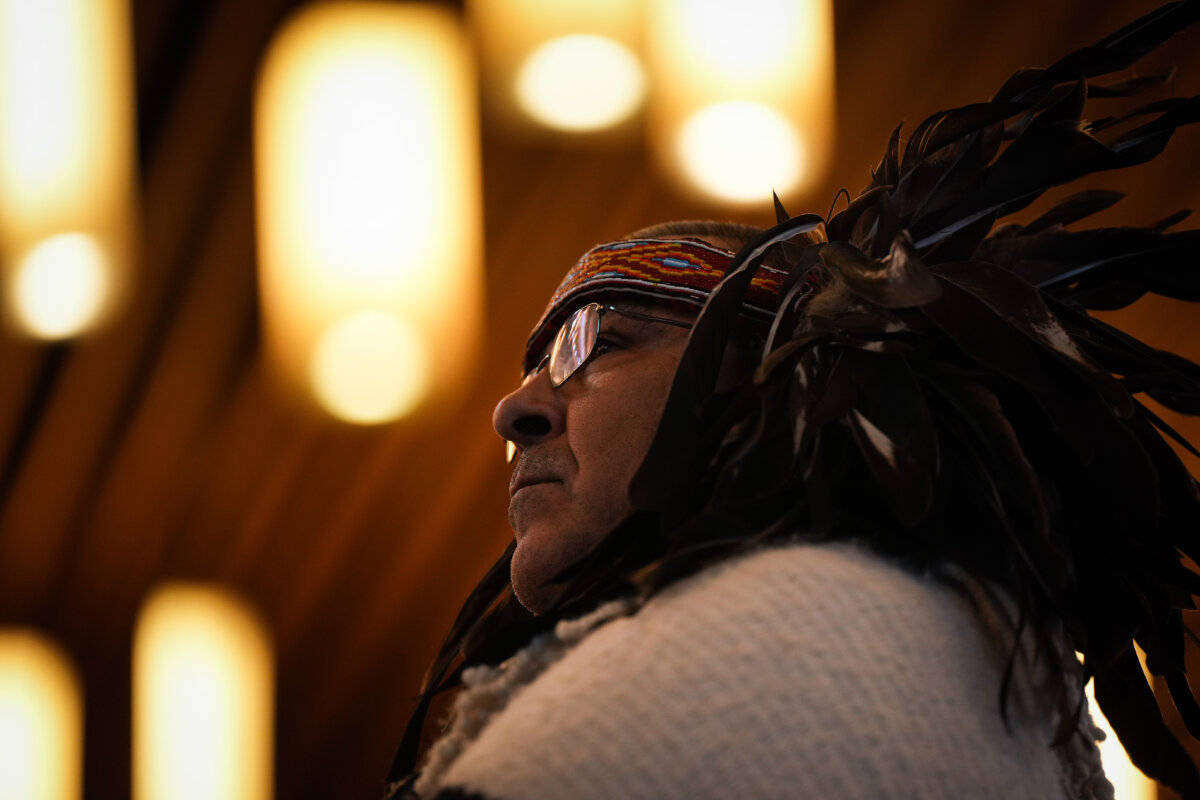

Ottawa has signed three agreements with the Musqueam Indian Band that recognize the First Nation’s Aboriginal rights and increase its control over fisheries and marine emergency management along parts of British Columbia’s south coast.
The three agreements represent “a major step forward towards reconciliation and incremental implementation of Musqueam’s Aboriginal rights” under the Constitution Act, Crown-Indigenous Relations and Northern Affairs Canada (CIRNAC) said in a Feb. 20 statement.
The first agreement “recognizes that Musqueam has Aboriginal rights,” including Aboriginal title, within its traditional territory, and establishes “a framework for incremental implementation of rights and nation-to-nation relations with Canada,” CIRNAC said.
The second agreement says Musqueam First Nation knowledge and stewardship practices will guide decision-making “to protect and manage the waters and resources within Musqueam territory,” the department said.
The third agreement supports the First Nation’s and Canada’s “shared decision-making role” in fisheries management within Musqueam territory and provides funding to the First Nation for access, fishing vessels, and equipment.
“Reconciliation is not just words, but action—where Musqueam and Canada are working to incrementally implement Musqueam’s Aboriginal rights within their territory,” Crown-Indigenous Relations Minister Rebecca Alty said in a Feb. 20 statement.
CIRNAC said the agreements “reflect a true nation-to-nation partnership with Musqueam,” and build on the First Nation’s “history of advancing recognition” of its Aboriginal rights.
The Musqueam Indian Band said in a March 1 statement that the agreement means that the federal government is “acknowledging Musqueam’s Constitutionally-protected Aboriginal rights in our traditional territories and charting an ongoing path to implementation of these rights for our future generations.”
The band added that this is not equivalent to “recognizing the legal title to the land and does not change Musqueam’s approach to private property.”
The band also cited Chief Wayne Sparrow who said in December 2025, “Musqueam is not coming for anyone’s private property. Our approach to traditional unceded territory is one of partnership and relationship with our neighbours, not trying to take away our neighbours’ private property.”
Reactions
B.C. Premier David Eby said he wasn’t briefed by the feds on the decision, but added that he’s not surprised by it as the Musqueam has had different ongoing legal cases.
“I think the lesson that the federal government is learning over the weekend is that there is a heightened environment to these conversations and these agreements right now, and they have to go above and beyond,” Eby told reporters on March 2.
The new agreements come after the B.C. Supreme Court last year granted title land rights in areas in B.C. including Richmond to the Cowichan Nation. The decision has implications for private property, and the B.C. Conservatives have criticized the provincial government for not adequately informing the public of the case, while the government has said it wasn’t properly advised on the issue by the court.
“I think the lesson that the federal government is learning over the weekend is that there is a heightened environment to these conversations, and these agreements right now, and they have to go above and beyond,” Eby said.
“It’s a lesson that the provincial government is in no position to lecture people on, we’re doing our own work to make sure we’re brining people along on this as well.”
Interim Leader of the Conservative Party of British Columbia Trevor Halford criticized Ottawa for making the agreements without speaking to the residents who live in the Metro Vancouver area.
“Without a word to the nearly 2 million residents affected, the federal government has formally recognized Musqueam Aboriginal rights and title across Metro Vancouver,” Halford said in a March 2 post on social media.
“We have seen what happens in the past when these agreements are done in secret, behind closed doors. It creates confusion, uncertainty, and division in BC.”
The new agreements come after the Musqueam Indian Band signed a “self-government” agreement with Ottawa in March 2025 that recognized the Musqueam’s “inherent right to self-government as an existing Aboriginal right.” CIRNAC said the agreement moved the First Nation “one step closer” to self-government within its reserve lands in areas including land management, natural resources, fish and fish habitat, education, and health and social services, among other areas.
The federal government also signed a deal with the Musqueam Indian Band in February 2025 to share a percentage of ground lease revenues from the Vancouver International Airport with the First Nation.
CIRNAC says the Musqueam traditional territory centres around the mouth of the Fraser River, Vancouver, and the surrounding areas.
The Musqueam Indian Band says its territory includes Vancouver, Burnaby, Richmond, New Westminster, Delta, North Vancouver, West Vancouver, Surrey, University of British Columbia Endowment Lands, Vancouver International Airport, and Coquitlam.
The federal Conservatives are calling on the federal government to immediately release the full text of its recent agreements with the Musqueam Indian Band, saying “the public has reason to be concerned” and Canadians have the right to know about commitments the government has made.
Conservative MP and crown-indigenous relations critic Jamie Schmale said in a March 2 statement that Canadians have been left guessing how property rights, land use, fisheries, and local governance will be impacted by the B.C. Supreme Court’s August ruling, which he said “threatens the property rights of Canadians.”
“Conservatives are calling for the immediate release of the full text of the agreements signed with the Musqueam Indian Band, so that Canadians can know what commitments their government has made behind closed doors,” Schmale said. “When property rights are on the table, full transparency is the minimum standard.”
Paul Rowan Brian contributed to this report.
 Friends Read Free
Copy
Facebook
Tweet
Friends Read Free
Copy
Facebook
Tweet