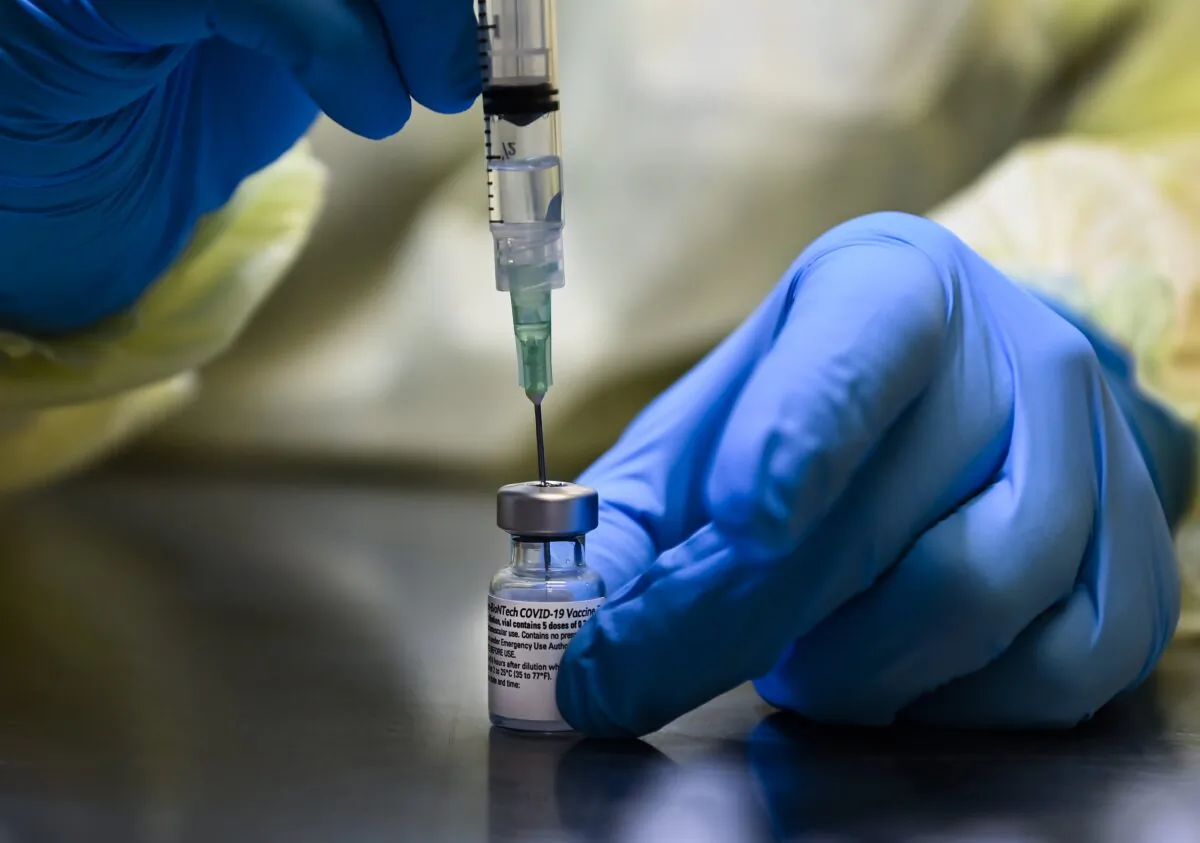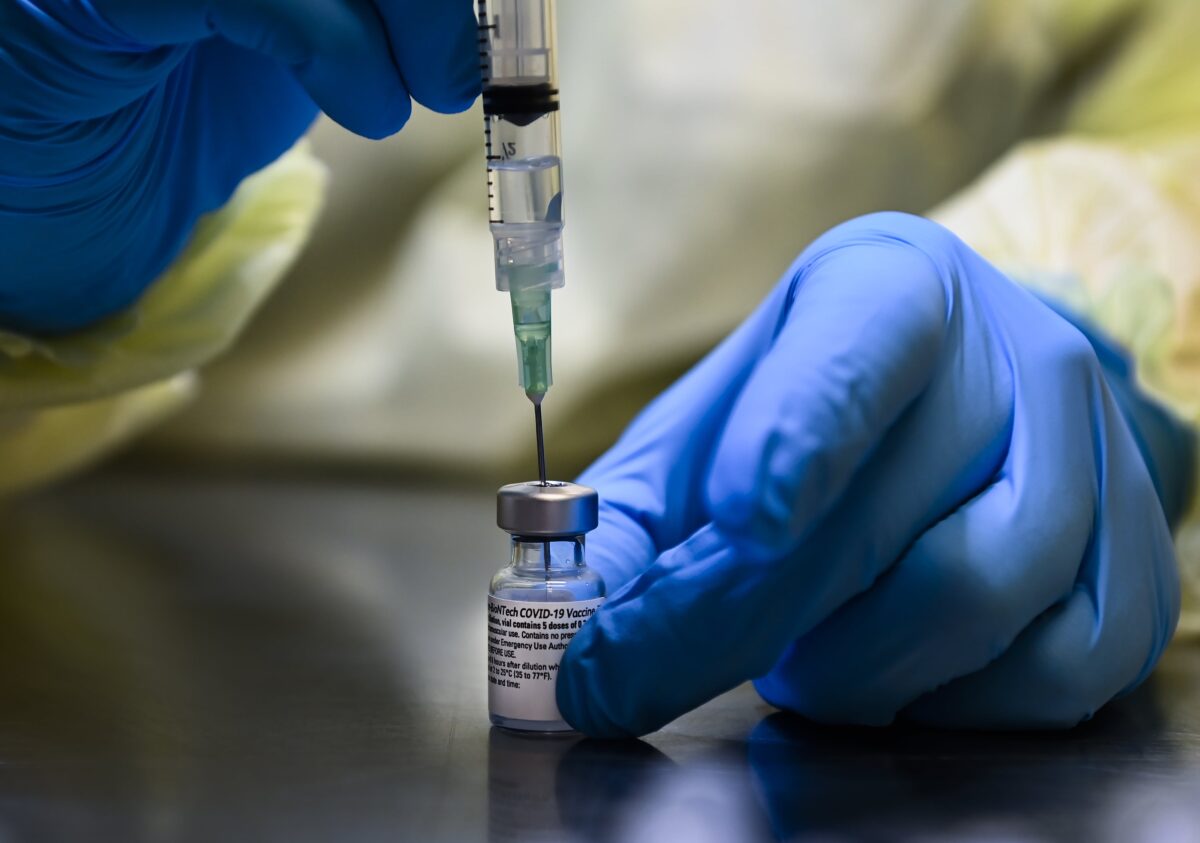

Ottawa is “trying” to improve the manner in which its Vaccine Injury Support Program offers services and financial aid to Canadians who suffered serious repercussions after receiving COVID-19 shots, Canada’s health minister says.
Marjorie Michel briefly spoke about the program while in New Brunswick this week, marking her first public response to inquiries regarding the effectiveness of the federal Vaccine Injury Support Program (VISP) since her appointment as health minister.
“It’s a third party delivering the services,” Michel said at an unrelated July 21 press conference. “We heard that some people are complaining about it. We are tracking this closely with the third party delivering services, and we will try to improve.”
Then-Prime Minister Justin Trudeau announced the creation of VISP in December 2020 as his government launched its national COVID-19 vaccination campaign. The VISP program was implemented several months later in June 2021 after the Public Health Agency of Canada outsourced its administration to Oxaro, an Ottawa consulting firm.
Vaccine injuries must be classified as serious and permanent or they must have resulted in death after the administration of a Health Canada authorized vaccine on or after Dec. 8, 2020, for Canadians to qualify for aid.
Conservative MPs on a federal health committee recently called for a special summer meeting to review the program after learning that more than 1,700 of the 3,100 claims submitted to VISP remain unresolved.
The MPs noted in a July 14 letter to the chair of the House of Commons health committee, that Oxaro was awarded more than $50 million to administer the program yet only $16.9 million of that amount was allocated for compensation. The remaining money was spent on administrative costs, the letter addressed to committee chair and Liberal MP Hedy Fry said.
The most up-to-date statistics released last week by Health Canada indicate Oxaro has now received more than $54 million from Ottawa to run the program. Approximately $18 million has been allocated for compensation and $36 million for administrative costs.
Ottawa originally earmarked $75 million in funding for the first five years of the program with $32.3 million allocated for Oxaro. The government said the funding would be used for administration costs as well as for financial support to eligible claimants and to the Government of Quebec to pursue the execution of its provincial program.
The letter from Conservative MPs Dan Mazier, Burton Bailey, Helena Konanz, and Matt Strauss also said there was no “clear indication” that Oxaro had the experience necessary to be awarded the VISP contract, noting that several employees had concerns with the firm’s professionalism and management of the program.
Michel was asked during her Moncton press conference if the government planned to renew Oxaro’s contract once it expires next year, but she did not offer a direct answer.
“Every option is on the table, for now, I will tell you. That’s my answer to you,” Michel said.
She also indirectly referenced complaints about the percentage of claims that have been dealt with successfully.
A total of 3,317 claims had been received by VISP as of June 1 while only 1,227 claims have been assessed by the Medical Review Board thus far and just 234 have been approved, according to VISP stats.
“We are tracking it. It’s unacceptable what we heard about this,” Michel said. “No, people shouldn’t wait if they really need services or to get compensation, but as I will tell you it’s more complex than this. Sometimes there’s a reason why they cannot get access to the benefits.”
Of the 3,317 claims received, 2,699 were considered “admissible,” 352 have been classified as “inadmissible,” and 266 are pending review for eligibility.
Vaccine Injuries
A number of Canadians voiced their discontent with the VISP program in 2024, telling The Epoch Times they have had to deal with extended wait times, poor communication with staff, and inadequate or non-existent compensation for their injuries.
A Canadian who experienced myocarditis following the COVID-19 vaccination said VISP is inadequately funded and has a limited workforce that is overwhelmed by the volume of applicants.
He said the compensation he received from VISP did not cover even a year’s worth of medical expenses.
Another VISP applicant who was diagnosed with a neurological disorder following the vaccine said she went through three case workers who were “dismissive and rude,” while a third person, who was diagnosed with Guillain-Barré syndrome, said he was similarly frustrated and knew of six other people going through the program who had the same experience.
A VISP spokesperson previously told The Epoch Times in a statement that an applicant’s eligibility timeline is determined by the complexity of the claim, and emphasized that all claims are verified by medical experts. If claimants disagree with the expert’s decision, a separate panel of experts will re-examine the claim, the spokesperson said.
Health Canada numbers released last year show that there were 58,712 reports of adverse side effects following immunization with 11,702 of them considered serious.
Matthew Horwood contributed to this report.
 Friends Read Free
Copy
Facebook
Tweet
Friends Read Free
Copy
Facebook
Tweet