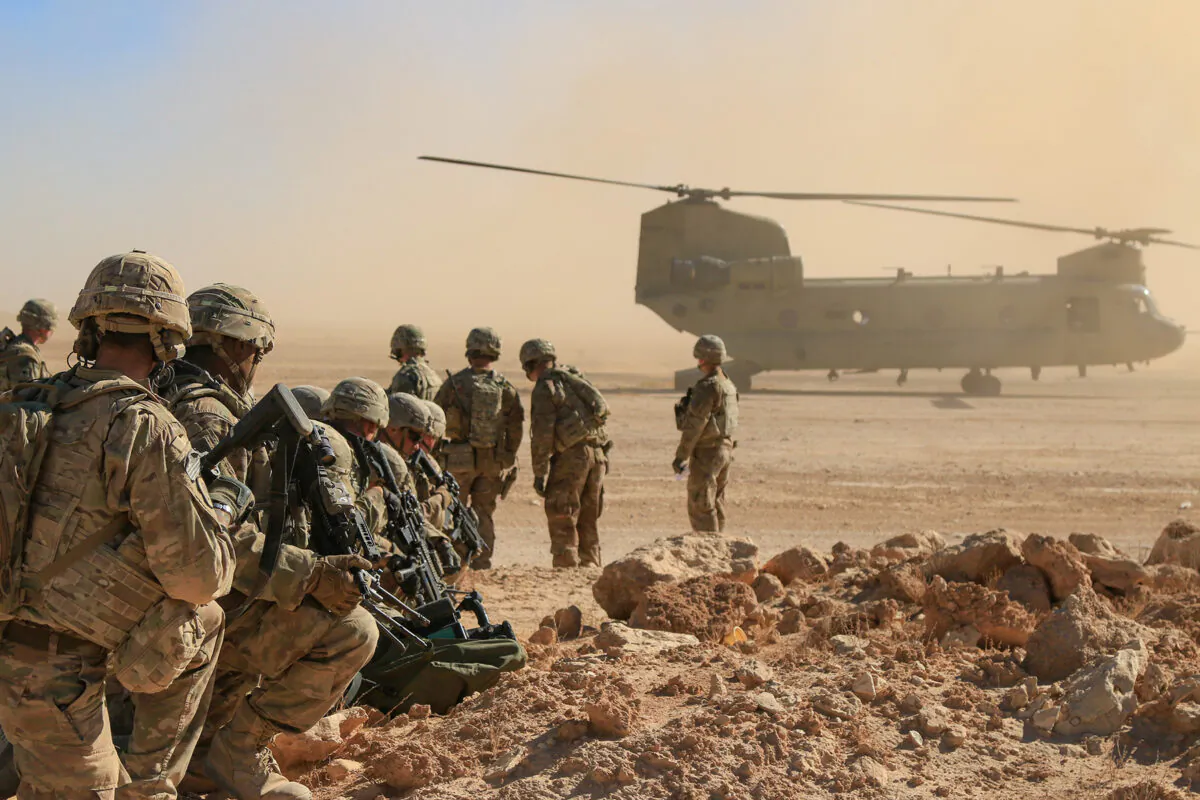

The United States and its coalition partners are set to reduce their military presence in Iraq, the Department of War has announced, citing a diminished threat posed by the ISIS terrorist group.
“In accordance with the President’s guidance and in alignment with the U.S.–Iraq Higher Military Commission and the joint statement issued on Sept. 27, 2024, the United States and Coalition partners will reduce its military mission in Iraq,” the department said in a Sept. 30 statement.
“[The planned reduction] reflects our combined success in fighting ISIS and marks an effort to transition to a lasting U.S.–Iraq security partnership in accordance with U.S. national interests, the Iraqi Constitution, and the U.S.-Iraq Strategic Framework Agreement.”
U.S. troops were first deployed to Iraq in 2003, when the United States invaded the country and overthrew the Baathist regime of Iraqi leader Saddam Hussein.
U.S. forces withdrew in 2011, but returned three years later to fight ISIS, which had overrun vast swaths of Iraq and neighboring Syria.
Approximately 2,500 U.S. troops are currently deployed in Iraq, and about 900 others remain stationed in northeastern Syria.
The deployments are part of a U.S.-led coalition established in 2014 to fight ISIS.
In addition to the United States, the coalition is made up of dozens of countries, including the UK, France, Germany, Canada, and a number of Middle Eastern nations.
‘Responsible Transition’
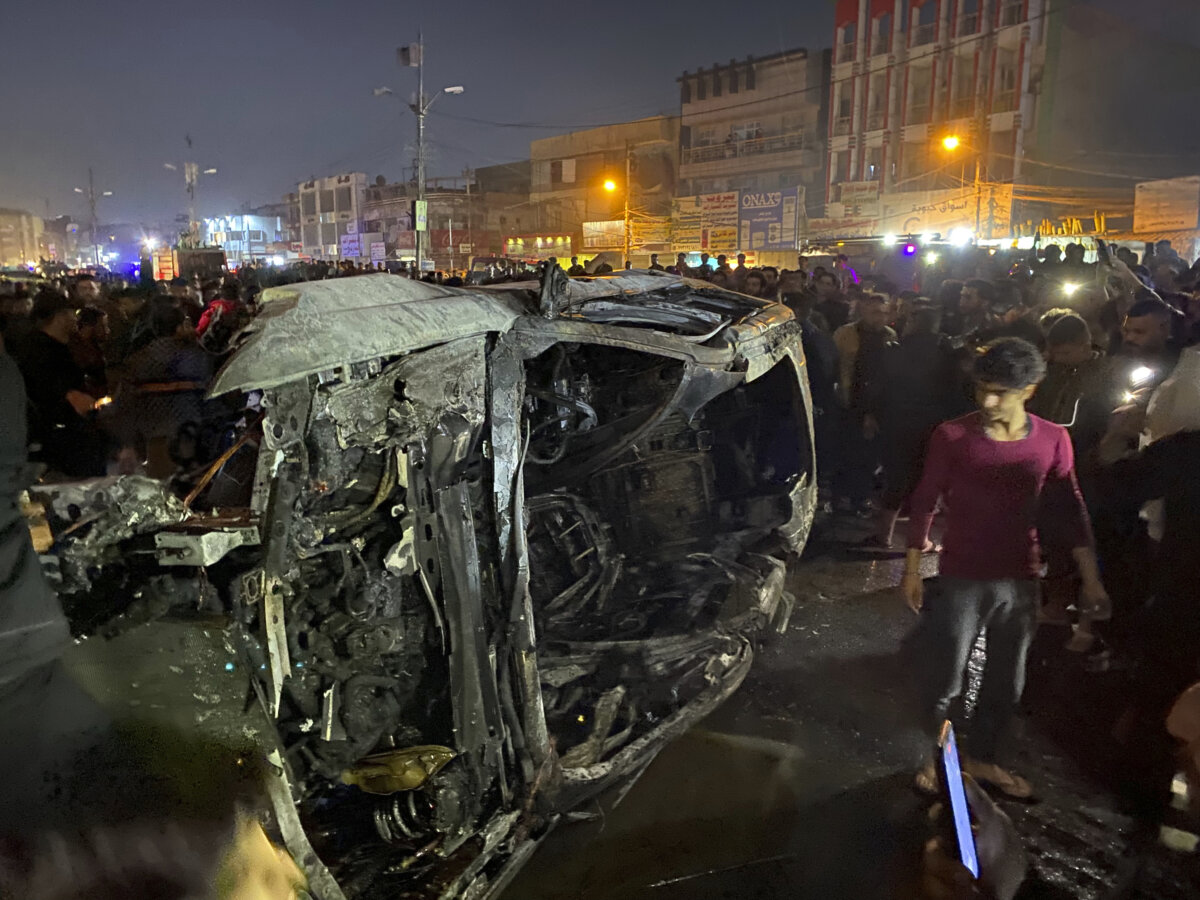
Iraq has pushed for an end to the coalition’s mandate since early 2024, when the United States launched a wave of deadly drone and missile strikes—including several in Baghdad—against Iraqi Shiite militia groups.
Washington regards several Iraqi Shiite militias, which are loosely affiliated with the Baghdad government, as terrorist groups.
The strikes coincided with a string of militant attacks on U.S. bases in Iraq and Syria.
After one U.S. strike killed a militia leader in Baghdad, Iraqi Prime Minister Mohammed Shia’ al-Sudani declared his “firm position on ending the existence of the international coalition [in Iraq] after the justifications for its existence have ended.”
Shortly afterward, U.S. and Iraqi officials began holding talks with the stated aim of setting a timeline for the phased withdrawal of coalition personnel from the country.
In late 2024, U.S. and Iraqi officials announced that they had reached an agreement on a tentative timeline for ending the coalition’s mandate in Iraq.
“We are now on the brink of transitioning the relationship between Iraq and members of the international coalition to a new level, focusing on bilateral relations in military, security, economic, and cultural areas,” Farhad Alaaldin, an adviser to al-Sudani, said in September 2024.
Later that month, Baghdad and Washington jointly announced that the coalition’s mission in Iraq would wind down “over the next twelve months,” ending “no later than the end of September 2025.”
In the joint statement, they further asserted that the U.S.-led coalition’s presence in northeastern Syria would “continue until September 2026.”
Once the mandate ends in Iraq, the two governments stated, Baghdad’s relations with coalition members will transition to “bilateral security partnerships in a manner that supports Iraqi forces and maintains pressure on ISIS.”
According to this week’s Pentagon statement, Washington’s post-mandate partnership with Baghdad will “support U.S. and Iraqi security” while helping Iraq to “realize economic development, foreign investment, and regional leadership.”
“[Washington] will continue close coordination with the Government of Iraq and Coalition members to ensure a responsible transition,” the Pentagon stated.
On Oct. 1, the Iraqi Kurdish Rudaw news agency reported that U.S. personnel in Iraq had already begun relocating to Erbil, the capital of northern Iraq’s semi-autonomous Kurdish region.
The Epoch Times could not independently verify the assertion.
Reuters contributed to this report.
 Friends Read Free
Copy
Facebook
Tweet
Friends Read Free
Copy
Facebook
Tweet